Tacrolimus
Tacrolimus is a macrolide immunosuppressant and calcineurin inhibitor used primarily to prevent and treat immune-mediated injury after solid-organ transplantation.
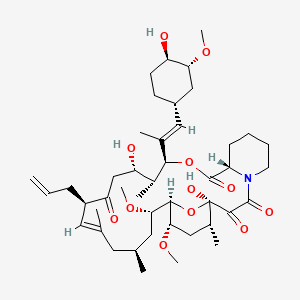
Tacrolimus is a macrolide immunosuppressant and calcineurin inhibitor used primarily to prevent and treat immune-mediated injury after solid-organ transplantation. It is central to maintenance immunosuppression in kidney, liver, and lung transplantation, where it is commonly combined with agents such as mycophenolate mofetil and glucocorticoids including prednisone. Tacrolimus may also be used in selected immune-mediated disorders and as a topical Therapy for inflammatory skin disease.
Tacrolimus exerts its principal effect by binding to the intracellular immunophilin FKBP12. The tacrolimus–FKBP12 complex inhibits calcineurin, a calcium- and calmodulin-dependent phosphatase required for activation of nuclear factor of Activated T Cells (NFAT). Calcineurin inhibition reduces NFAT-dependent transcription of interleukin-2 and other cytokines, thereby suppressing T-cell activation and proliferation. This mechanism distinguishes tacrolimus from cyclosporine while placing both drugs in the calcineurin-inhibitor class.
Systemic tacrolimus has a narrow therapeutic window and substantial pharmacokinetic variability. Dosing is therefore generally individualized using whole-blood trough-concentration monitoring, together with assessment of renal function, liver function, electrolytes, infection risk, and evidence of graft rejection or drug toxicity. Important toxicities include nephrotoxicity, neurotoxicity, hypertension, hyperglycemia, and increased susceptibility to infection and malignancy. Tacrolimus is metabolized predominantly through CYP3A enzymes and is transported by p-glycoprotein; consequently, its exposure can be altered by numerous medicines and dietary substances. Genetic variation affecting tacrolimus metabolism, particularly in CYP3A5, is being investigated as a basis for pre-emptive dose selection.
Where the papers sit
11 papers from the last 6 months study tacrolimus directly · updated from PubMed 14 Nov 2026
Study type 1 clinical trial · 5 observational · 2 human data · 2 preclinical · 1 unclassified
Themes 3 themes · 1 new direction
-
Transplant Immunosuppression Complications
Transplant immunosuppression is being examined across pharmacokinetics, metabolic toxicity, infection treatment and post-transplant disease. Tacrolimus-associated diabetes is linked to the hepatic Srebp1-Acaca/Scd1 pathway, with L-carnitine explored as mitigation. Other work addresses oral absorption after kidney-pancreas transplantation, antifungal interactions, immune-related sclerosing cholangitis and malignancy after liver transplantation. The set supports individualized drug selection and monitoring rather than one unified therapeutic direction.
6 papers · 54.5%
-
Tacrolimus for Ocular Surface Disease
Topical tacrolimus formulations are moving toward longer ocular-surface retention and broader repair of corneal and conjunctival injury. Cationic nanoemulsions target dry eye and allergic conjunctivitis, while cross-linked hyaluronate improves evaporative dry eye. Nanocrystal-loaded glycyrrhizic acid hydrogel extends investigation to corneal alkali burns. Recurring endpoints include hyperemia, tear-film function and corneoconjunctival integrity.
3 papers · 27.3%
-
Tacrolimus in Hematopoietic Transplantation
Tacrolimus management in allogeneic hematopoietic cell transplantation is moving toward individualized exposure prediction and safer regimen transitions. Population pharmacokinetic models support dose estimation in transplant recipients. Letermovir coadministration is being assessed through changes in concentration-to-dose ratios before and after intravenous-to-oral conversion. Drug interactions and conversion timing remain central to maintaining graft-versus-host disease prophylaxis.
2 papers · 18.2%
Tacrolimus is identified as a direct antifungal candidate against dermatophytes
The in-vitro study of clinical dermatophyte isolates, including Trichophyton indotineae, found that tacrolimus itself exerted moderate inhibitory effects against all tested species and could interact with conventional and nanoformulated antifungals 42634381Aug. Whereas the other papers treat tacrolimus as an immunosuppressant, an immunosuppressive prophylactic or treatment, a formulation target, or a source of toxicity, this study assigns it a direct antidermatophyte role through fungal growth inhibition. That expands tacrolimus from an immunomodulatory drug into a candidate component of antifungal therapy, although the evidence remains in vitro.
Papers
The 11 papers from the last 6 months that study tacrolimus directly, newest first, by theme and by study type. Study types come from PubMed publication types and MeSH headings.
By theme
Transplant Immunosuppression Complications (6)
- L-carnitine Alleviates Tacrolimus-Induced Diabetes Mellitus by Regulating the Hepatic Srebp1-Acaca/Scd1 Pathway. The Journal of nutritional biochemistry · 5 Nov 2026 PMID 42988016
- In Vitro Interaction of Tacrolimus (FK506) with Conventional and Nanoformulated Antifungal Drugs Against Clinical Dermatophyte Isolates Including Trichophyton indotineae. Assay and drug development technologies · 24 Aug 2026 PMID 42634381
- Differential Oral Absorption Pharmacokinetics of Tacrolimus in Simultaneous Kidney-Pancreas Transplant Compared to Kidney Transplant Recipients. Clinical pharmacokinetics · 13 Aug 2026 PMID 42593633
- Multicentre, controlled, randomised and single-blind, adaptive phase IV protocol to evaluate effectiveness and cost-effectiveness of a pre-emptive genotyping strategy to optimise tacrolimus dosage in a pretransplant chronic kidney disease population cohort: iPHARMGx TRANSPGx nested clinical trial. BMJ open · 3 Aug 2026 PMID 42547238
- Everolimus and de novo malignancies after liver transplantation: A nationwide emulated trial using real-world data. JHEP reports : innovation in hepatology · 7 Jul 2026 PMID 42413767
- Salvage tacrolimus therapy for steroid-refractory immune-related adverse event-associated sclerosing cholangitis. Clinical journal of gastroenterology · 12 Jun 2026 PMID 42283999
Tacrolimus for Ocular Surface Disease (3)
- Compounded 0.03% Tacrolimus in Cross-Linked Hyaluronate Improves Ocular Surface Health in Dogs With Evaporative Dry Eye Disease. Veterinary ophthalmology · 22 Aug 2026 PMID 42629626
- Tacrolimus cationic nanoemulsion enhances ocular surface retention for the treatment of dry eye disease and allergic conjunctivitis. European journal of pharmaceutics and biopharmaceutics : official journal of Arbeitsgemeinschaft fur Pharmazeutische Verfahrenstechnik e.V · 28 Jul 2026 PMID 42520946
- Tacrolimus nanocrystal-loaded glycyrrhizic acid hydrogel for the treatment of corneal alkali burn. Journal of controlled release : official journal of the Controlled Release Society · 30 Jun 2026 PMID 42379310
Tacrolimus in Hematopoietic Transplantation (2)
- Evaluation and Extrapolation of a Tacrolimus Population Pharmacokinetic Model in Adult Recipients of Allogeneic Hematopoietic Cell Transplantation Receiving Post-Transplant Cyclophosphamide. Journal of clinical pharmacology · 30 Sept 2026 PMID 42811457
- Letermovir coadministration and tacrolimus concentration-to-dose ratios before and after intravenous-to-oral conversion in allogeneic hematopoietic stem cell transplant recipients receiving isavuconazole. Japanese journal of clinical oncology · 18 Aug 2026 PMID 42611513
By study type
Clinical trials (1)
- Multicentre, controlled, randomised and single-blind, adaptive phase IV protocol to evaluate effectiveness and cost-effectiveness of a pre-emptive genotyping strategy to optimise tacrolimus dosage in a pretransplant chronic kidney disease population cohort: iPHARMGx TRANSPGx nested clinical trial. BMJ open · 3 Aug 2026 PMID 42547238
Observational studies and case reports (5)
- Compounded 0.03% Tacrolimus in Cross-Linked Hyaluronate Improves Ocular Surface Health in Dogs With Evaporative Dry Eye Disease. Veterinary ophthalmology · 22 Aug 2026 PMID 42629626
- Letermovir coadministration and tacrolimus concentration-to-dose ratios before and after intravenous-to-oral conversion in allogeneic hematopoietic stem cell transplant recipients receiving isavuconazole. Japanese journal of clinical oncology · 18 Aug 2026 PMID 42611513
- Differential Oral Absorption Pharmacokinetics of Tacrolimus in Simultaneous Kidney-Pancreas Transplant Compared to Kidney Transplant Recipients. Clinical pharmacokinetics · 13 Aug 2026 PMID 42593633
- Everolimus and de novo malignancies after liver transplantation: A nationwide emulated trial using real-world data. JHEP reports : innovation in hepatology · 7 Jul 2026 PMID 42413767
- Salvage tacrolimus therapy for steroid-refractory immune-related adverse event-associated sclerosing cholangitis. Clinical journal of gastroenterology · 12 Jun 2026 PMID 42283999
Human data, design not indexed (2)
- Evaluation and Extrapolation of a Tacrolimus Population Pharmacokinetic Model in Adult Recipients of Allogeneic Hematopoietic Cell Transplantation Receiving Post-Transplant Cyclophosphamide. Journal of clinical pharmacology · 30 Sept 2026 PMID 42811457
- In Vitro Interaction of Tacrolimus (FK506) with Conventional and Nanoformulated Antifungal Drugs Against Clinical Dermatophyte Isolates Including Trichophyton indotineae. Assay and drug development technologies · 24 Aug 2026 PMID 42634381
Preclinical: animal, cell and lab studies (2)
- Tacrolimus cationic nanoemulsion enhances ocular surface retention for the treatment of dry eye disease and allergic conjunctivitis. European journal of pharmaceutics and biopharmaceutics : official journal of Arbeitsgemeinschaft fur Pharmazeutische Verfahrenstechnik e.V · 28 Jul 2026 PMID 42520946
- Tacrolimus nanocrystal-loaded glycyrrhizic acid hydrogel for the treatment of corneal alkali burn. Journal of controlled release : official journal of the Controlled Release Society · 30 Jun 2026 PMID 42379310
Unclassified: not yet indexed with MeSH (1)
- L-carnitine Alleviates Tacrolimus-Induced Diabetes Mellitus by Regulating the Hepatic Srebp1-Acaca/Scd1 Pathway. The Journal of nutritional biochemistry · 5 Nov 2026 PMID 42988016
Written from 11 PubMed abstracts, each one listed by PMID above. Published: 2026-08-20. Drafted by language models from published abstracts; not medical advice.