Paracetamol
Paracetamol, also known as acetaminophen and abbreviated as APAP in many biomedical studies, is a widely used over-the-counter analgesic and antipyretic.
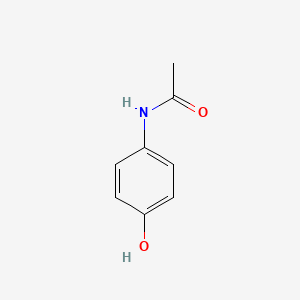
Paracetamol, also known as acetaminophen and abbreviated as APAP in many biomedical studies, is a widely used over-the-counter analgesic and antipyretic. It is commonly employed for the relief of fever and mild to moderate pain, and it is frequently studied in the context of drug safety because of its well-known potential for dose-dependent liver injury. In toxicology and hepatology research, paracetamol is one of the standard agents used to model acute liver injury, liver necrosis, oxidative stress, reactive oxygen species generation, mitochondrial damage, and downstream hepatocyte apoptosis.
At the mechanistic level, paracetamol toxicity is often linked to depletion of glutathione, disruption of mitochondrial function, inflammatory signaling, and activation of stress-response pathways such as HIF-1α, Keap1-Nrf2, NF-κB, NLRP3 inflammasome, and JAK2/STAT3 signaling. These pathways are frequently explored in experimental systems involving hepatocyte, Kupffer cell, and liver organoid models, as well as in studies of protective interventions against acute liver injury and fibrosis. Beyond toxicology, paracetamol is also used as a pharmaceutical reference compound in formulation development and analytical chemistry.
Rebuilt from PubMed 18 Sept 2026 · no new papers today
Where the papers sit
12 papers study paracetamol directly. The themes below are drawn from those 12. 1 new direction follows.
-
Acetaminophen Liver Injury : Acetaminophen toxicity research is moving from animal injury models toward human iPSC organoids, automated spheroids and organ-on-chip biomarkers. HIF-1α signaling, mitochondrial damage, MASH susceptibility and oxidative metabolism recur alongside testing Qinggan therapies and fomepizole. 7 papers · 58.3%
-
Spectroscopic and Thermal Drug Analysis : Rapid Raman assay is expanding alongside calorimetry and particle–pore characterization of paracetamol formulations. The work is moving toward portable quality control while tracking dissolution, molecular mobility and physical stability. 3 papers · 25%
-
Electrochemical Drug Sensing : Carbon-based filaments and Ni-MOF microcapsules are being used to improve electrochemical detection of paracetamol, levofloxacin and heavy metals. Detection limits, reproducibility and multiplex analysis remain central endpoints. 2 papers · 16.7%
Acetaminophen is presented as a modulator of probiotic gut-microbial dynamics
The study of acetaminophen’s effects on Lactococcus lactis in monoculture and synthetic gut-microbiota co-culture treated the drug not as an analgesic formulation, toxicity challenge, metabolic substrate, or analytical target, but as an environmental factor affecting microbial ecology. It found that acetaminophen altered the growth kinetics and metabolite production of the probiotic bacterium, including in interaction with Clostridium butyricum. This extends paracetamol’s role into direct modulation of gut-microbial community behavior, a category not used by the other papers 42579196Aug.
Recent Findings on paracetamol
Acetaminophen Liver Toxicity: Acetaminophen toxicity research increasingly uses human-relevant liver organoids, automated spheroids, and multiorgan chips to improve translational biomarker discovery and assay reproducibility 42695873Sep42504825Jul42481604Jul. MASH-derived organoids showed greater steatosis, inflammation, fibrosis, and acetaminophen-induced toxicity, while automated HepG2 spheroids produced reproducible dose-dependent changes in viability, LDH release, and ALT activity 42504825Jul42481604Jul. Organ-chip proteomic and metabolomic profiles largely matched published human omics data and identified acetaminophen metabolites and biotransformation products 42695873Sep. Human volunteers given fomepizole two hours after an overdose showed 60–70% lower NAPQI formation, whereas QGLDC protected against mitochondrial damage-triggered hepatocyte apoptosis through inhibition of aberrant HIF-1α signaling 42446031Jul42044776Apr. Acetaminophen also impaired Lactococcus lactis growth kinetics while leaving Clostridium butyricum growth unaffected, and lactic acid production remained stable despite reduced probiotic biomass 42579196Aug. Traditional-medicine research additionally frames SBWNHQGP protection around the Keap1-Nrf2 pathway 41887383Mar.
Paracetamol Formulation Characterization: Cyclodextrin nanofibers and mesoporous silica formulations modify acetaminophen’s dissolution, molecular mobility, and physical stability through different material designs 42480728Jul42704139Sep. Hydroxypropyl-β-cyclodextrin nanofibers amorphized the acetaminophen-containing triple-drug combination and improved disintegration, dissolution, and drug release compared with powder formulations 42480728Jul. Mesoporous silica produced opposing stability effects: 2.5-nm pores accelerated crystallization, whereas 17- and 21-nm pores strongly stabilized amorphous acetaminophen by increasing the intermediate molecular fraction 42704139Sep. Hand-held Raman spectroscopy with a PLS algorithm extended at-line process analytical technology to paracetamol infusion solutions, delivering assay results in about one minute with R² of 0.999 and Q² of 0.992 42711472Sep.
Electrochemical Drug Detection: Carbon-based composite sensors are being engineered for rapid, sensitive paracetamol measurement alongside other pharmaceutical or environmental analytes 42734674Sep42128565May. A 3D-printed G/Bi₂O₃NPs/PLA electrode increased paracetamol oxidation current, achieved a 0.006 µmol L⁻¹ detection limit, and maintained precision and inter-electrode reproducibility below 5% while also detecting Pb(II) 42734674Sep. Multi-compartmental Ni-MOF@C microcapsules enabled simultaneous paracetamol and levofloxacin detection in human serum, with detection limits of 1.86 and 2.10 µM, respectively, plus favorable selectivity, stability, and reproducibility 42128565May.
Written from 12 PubMed abstracts, each one cited by PMID above. Published: 2026-08-13. Last written: 2026-09-16 by GPT. Drafted by language models from published abstracts; not medical advice.