metformin
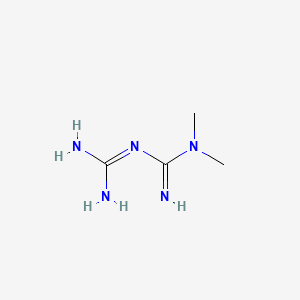
Overview
Metformin is an oral small-molecule drug of the biguanide class and the standard first-line pharmacotherapy for type 2 diabetes mellitus. It lowers blood glucose primarily by suppressing hepatic gluconeogenesis and improving peripheral insulin sensitivity, and because it does not directly stimulate insulin secretion it carries a low intrinsic risk of hypoglycemia. In practice it serves as the backbone of combination regimens alongside agents such as sodium-glucose cotransporter-2 (SGLT2) inhibitors including empagliflozin, dipeptidyl peptidase-4 inhibitors, glucagon-like peptide-1 agonists, and Insulin Therapy. Its principal safety concern is lactic acidosis, a rare but serious complication associated with impaired drug clearance; for this reason dosing is guided by glomerular filtration rate and the drug is generally avoided in advanced renal failure and dialysis, where metformin-associated lactic acidosis and encephalopathy have been reported. Nitrosamine impurity findings in certain tablet formulations have also drawn regulatory attention.
At the molecular level, metformin is generally described as an inhibitor of mitochondrial electron transport chain complex I, which raises the cellular AMP-to-adenosine triphosphate ratio and activates AMP-activated protein kinase, including through the upstream kinase CaMKKβ. AMPK activation, mediated in part by the AMPKα1 subunit, restrains mTORC1 signaling and shifts cells toward catabolic metabolism, with additional AMPK-independent effects reported. These energy-sensing actions underlie broad interest in repurposing metformin beyond glycemic control: preclinical and computational studies examine it in Cancers such as hepatocellular carcinoma, head and neck squamous cell carcinoma, and breast cancer, where PI3K/AKT/mTOR, JAK2/STAT3, and glycolytic pathways are implicated, and in neurodegeneration and cognitive impairment, inflammatory disease, chronic pain, age-related bone loss, and tissue repair. Reported downstream effects include modulation of autophagy and mitophagy, ferroptosis, reactive oxygen species and oxidative stress, NLRP3 inflammasome activity and proinflammatory cytokine release, apoptotic regulators such as Bcl-2 and caspase-3, and macrophage inflammatory polarization. These repurposing applications remain investigational rather than established indications.
New Publications Today (1)
- PMID 42595905 — The Association Between Type 2 Diabetes and Bone Microarchitecture Assessed by HR-pQCT.
Recent Publications Summary (latest 30 papers)
Recent studies continue to expand metformin's therapeutic applications beyond glucose control in type 2 diabetes. In diabetic complications, metformin demonstrated protective effects in diabetic nephropathy through inhibition of the MAPK14-SLC7A11-GPX4 axis and suppression of podocyte ferroptosis 42547585Aug, while bone health investigations revealed metformin-containing regimens were associated with distinct microarchitectural patterns in type 2 diabetic patients 42595905Aug. Metformin also showed efficacy in liver-adipose co-culture models for metabolic dysfunction, mitigating olanzapine-induced lipid accumulation and glucose dysregulation 42102059May, and demonstrated synergistic antidiabetic effects when combined with dorzolamide, achieving 48% blood glucose reduction compared to 28–32% for monotherapies 42129170May.
Metformin's anticancer potential emerged as a central theme across multiple malignancies. In hepatocellular carcinoma, cumulative metformin exposure was associated with reduced HCC risk after hepatitis C virus sustained virological response, particularly in patients with type 2 diabetes 42499017Jul, and mechanistic studies identified metformin's capacity to suppress lipid accumulation and proliferation through downregulation of the m6A methyltransferase METTL3, thereby inhibiting the ACC1/FASN lipogenic axis 42070116May. Computational docking revealed favorable binding interactions between metformin and oncogenic targets including EGFR, MAPK3, MMP9, and PRKACA in head and neck cancer 42331865Jun42470472Jul, while metformin potentiated methylene blue-mediated photodynamic therapy in oral squamous cell carcinoma 42324424Jun. In breast cancer patients with type 2 diabetes, metformin use correlated with improved pathological parameters and clinical outcomes 42528302Jul, and combination therapy with ivermectin synergistically inhibited MCF-7 cell proliferation through PI3K/AKT/mTOR pathway suppression 42138203May. At the molecular level, metformin was identified as targeting ATP5I, a structural subunit of ATP synthase, disrupting F₁F₀-ATP synthase oligomerization and mitochondrial oxidative phosphorylation in cancer cells 42138716May.
Metformin's neuroprotective and anti-inflammatory properties extended its therapeutic relevance to neurological disorders. Metformin partially ameliorated autism-spectrum-related behaviors in maternal separation-stressed mice by combating hippocampal neuroinflammation and oxidative stress 42224401Jun, and demonstrated analgesic potential through AMPK activation and mTOR/MAPK inhibition in pain pathways, prompting systematic review of its efficacy across acute and chronic pain conditions 42468965Jul. In traumatic brain injury, a biodegradable hydrogel incorporating metformin promoted endogenous neural stem cell recruitment (14.8-fold increase) and neuronal differentiation (11.3-fold enhancement), achieving 78% reduction in tissue defect volume 42213827May, while a magnetoelectric-stimulated metformin-collagen hydrogel with MnFe₂O₄@Ba₀.₈₅Ca₀.₁₅Ti₀.₉Zr₀.₁O₃ nanoparticles enhanced neurogenesis through microglia M1 polarization suppression 42300462Jun. Metformin also showed promise for epilepsy prevention and seizure control in non-diabetic populations following brain insults 42128620May and attenuated age-related ciliary muscle senescence by downregulating GSK-3β to restore cell-cycle progression and autophagy 42118039May. A case report documented metformin-associated encephalopathy with lactic acidosis in a hemodialysis patient, highlighting contraindications in renal failure 42289604Jun.
Advanced drug delivery systems and combination therapies enhanced metformin's bioavailability and therapeutic efficacy. pH-responsive phytoglycogen hydrogels achieved 39 mg/g loading capacity with 97.5% encapsulation efficiency for intestinal-targeted metformin delivery, with hydrogen bonding stabilization confirmed by spectroscopic analyses 42184840May, and PLGA-PEG nanoparticle formulations were developed for thyroid cancer applications 42207379May. A reactive oxygen species-responsive microneedle patch incorporating cerium-metformin complexes demonstrated sustained antioxidant and immunomodulatory effects in periodontitis therapy, driving macrophage polarization via AMPK activation and NF-κB suppression 42178084May. Emerging evidence suggested metformin as a potential agent for HIV silencing through DDIT4 induction 42119366May, while combined metformin and taurine supplementation attenuated age-related bone loss and preserved bone marrow mesenchymal stem cell function 42364025Jun. Comparative phytochemical screening demonstrated that Diospyros sylvatica fractions reduced blood glucose by 50.14% and 36.60%, comparable to metformin's 64.02% reduction 42218796May, and HTD1801 as an add-on to metformin was being evaluated for patients with inadequate glycemic control on metformin monotherapy 42251702Jun.
What Changes, What Holds
1. ferroptosis inhibition in diabetic nephropathy confirms tissue-protective mechanisms in diabetes complications
REINFORCES Podocyte ferroptosis suppression 42547585Aug applies a documented downstream effect to a specific diabetic complication rather than establishing new mechanism. Bone microarchitecture patterns 42595905Aug, liver-adipose metabolic effects, and synergy with dorzolamide all extend the combination and tissue-protective applications already embedded in the Overview's repurposing framework. Established mechanisms stand intact; scope has merely broadened.
2. ATP synthase disruption adds a mitochondrial energy-sensing target to metformin's mechanism
NEW DIRECTION Direct ATP5I-mediated disruption of F₁F₀-ATP synthase oligomerization 42138716May identifies an additional mitochondrial pathway for energy stress beyond the established complex I inhibition, potentially explaining AMP-to-ATP ratio shifts through reduced ATP production rather than impaired synthesis alone. Concurrent METTL3 downregulation 42070116May and EGFR/MAPK targeting in head-and-neck Cancers reveal mechanistic heterogeneity across tumour types, raising questions about whether suppression reflects primary effects or context-dependent metabolic vulnerabilities.
3. Neuroprotection extends to autism, pain, epilepsy, and sensory aging beyond established neurodegeneration domains
NEW DIRECTION Autism-spectrum behavioral rescue in maternal-stress models 42224401Jun and analgesic efficacy 42468965Jul represent applications outside the cognitive and neurodegenerative domains the Overview covers. Seizure prevention in non-diabetic populations 42128620May and ciliary muscle senescence reversal 42118039May further expand neurological scope. Advanced delivery systems in traumatic brain injury 42213827May hint that local tissue concentration enables efficacy that systemic administration alone may not achieve.
4. Advanced drug-delivery systems represent technical progress enabling periodontitis and emerging clinical applications
METHOD pH-responsive hydrogels, nanoparticle formulations, and magnetoelectric-stimulated scaffolds 42300462Jun advance bioavailability and local delivery rather than revealing new biology. Emerging applications to periodontitis 42178084May and HIV silencing via DDIT4 remain preliminary; taurine combination strategies for bone loss 42364025Jun mirror established pairing approaches. These technical refinements may expand the efficacy ceiling but leave mechanistic understanding of metformin itself unchanged.
Overview update candidates: none.
metformin
Background Contexts
In the literature, the biological baseline, pathological conditions, or disease models commonly surrounding metformin are described as follows:
- type 2 diabetes (Disease) — 12 papers: PMIDs 42595905, 42563367, 42532080, 42532079, etc.
- diabetic nephropathy (Disease) — 3 papers: PMIDs 42547585, 42069296, 41991506
- hyperinsulinemic T2D patients (Disease) — 3 papers: PMIDs 42330299, 42251702, 42036072
- obesity (Disease) — 3 papers: PMIDs 42307179, 42102059, 42009100
- overt diabetes (Disease) — 3 papers: PMIDs 42259339, 41990533, 41967351
- sodium-glucose cotransporter-2 inhibitor (Therapy) — 3 papers: PMIDs 42532080, 42532079, 42251769
- Type 2 diabetes mellitus (Disease) — 3 papers: PMIDs 42528302, 42314528, 41905460
- body mass index (Clinical Metric) — 2 papers: PMIDs 42532080, 42532079
- breast cancer (Disease) — 2 papers: PMIDs 42528302, 41655906
- diabetes status (Disease) — 2 papers: PMIDs 42289604, 42129170
- glucagon-like peptide 1 receptor agonist (Therapy) — 2 papers: PMIDs 42314528, 42251769
- hepatocellular carcinoma (Disease) — 2 papers: PMIDs 42499017, 42470472
Methodologies & Technologies Used
Researchers utilize the following experimental methods, imaging platforms, computational models, or biological reagents to study metformin:
- western blot (Technology) — 3 papers: PMIDs 42470472, 42424918, 42138203
- Age (Other) — 2 papers: PMIDs 42595905, 42314528
- glimepiride (Therapy) — 2 papers: PMIDs 42449436, 41665872
- glucose tolerance test (Technology) — 2 papers: PMIDs 42466701, 42218796
- high performance thin layer chromatography (Technology) — 2 papers: PMIDs 42129170, 41990533
- hydrogel scaffold (Technology) — 2 papers: PMIDs 42213827, 41894849
- In Vitro (Other) — 2 papers: PMIDs 42424918, 41990533
- IR-HepG2 cells (Cell Line) — 2 papers: PMIDs 42102059, 42070116
- mice (Organism) — 2 papers: PMIDs 42424918, 42070307
- molecular docking studies (Technology) — 2 papers: PMIDs 42331865, 42218796
- propensity score matching (Technology) — 2 papers: PMIDs 42314528, 41905460
- Randomisation and Trial Supplies Management System (Technology) — 2 papers: PMIDs 42532080, 42532079
Molecular Interventions & Targets
The primary molecular pathways, regulatory genes, enzymes, or therapeutic agents actively targeted and manipulated in relation to metformin include:
- AMP-activated protein kinase alpha 1 (AMPKα1) (Protein) — 6 papers: PMIDs 42468965, 42390621, 42069296, 41990533, etc.
- Insulin Therapy (Therapy) — 3 papers: PMIDs 42330299, 42159385, 41987878
- orforglipron (Chemical) — 3 papers: PMIDs 42259339, 42251769, 41765029
- sodium glucose cotransporter-2 (SGLT2) inhibitors (Therapy) — 3 papers: PMIDs 42113804, 41987878, 41587770
- ACE inhibitor (Therapy) — 2 papers: PMIDs 41905460, 41713660
- Amylin Receptor (Protein) — 2 papers: PMIDs 42532080, 42532079
- CALCR (Protein) — 2 papers: PMIDs 42532080, 42532079
- DNA damage inducible transcript 4 (DDIT4) (Protein) — 2 papers: PMIDs 42119366, 41864210
- empagliflozin (Therapy) — 2 papers: PMIDs 42036072, 41665872
- glomerular filtration rate (Clinical Metric) — 2 papers: PMIDs 42470472, 41643235
- glucagon-like peptide 1 receptor agonist (Therapy) — 2 papers: PMIDs 42563367, 42314528
- glucagon-like peptide-1 agonist (Therapy) — 2 papers: PMIDs 42307179, 41987878
Observed Outcomes & Phenotypes
The phenotypic changes, physiological endpoints, or clinical metrics observed and measured in connection with metformin include:
- proinflammatory cytokine (Biological Process) — 6 papers: PMIDs 42224401, 42161227, 42067052, 42025984, etc.
- hemoglobin A1c (Clinical Metric) — 5 papers: PMIDs 42532080, 42532079, 42449436, 42259339, etc.
- reactive oxygen species (Chemical) — 4 papers: PMIDs 42138203, 42070766, 41911662, 41894849
- oxidative phosphorylation (Biological Process) — 3 papers: PMIDs 42213834, 42138716, 42025984
- serious adverse event (Clinical Metric) — 3 papers: PMIDs 42532080, 42532079, 42468965
- adverse event (Clinical Metric) — 2 papers: PMIDs 42532080, 42532079
- alkaline phosphatase (Protein) — 2 papers: PMIDs 42449436, 41967351
- AMPK/mTOR signaling pathway (Pathway) — 2 papers: PMIDs 42424918, 41894849
- apoptotic process (Biological Process) — 2 papers: PMIDs 42424918, 41643235
- blood glucose (Clinical Metric) — 2 papers: PMIDs 42547585, 41990533
- blood glucose levels (Clinical Metric) — 2 papers: PMIDs 42289604, 42129170
- body weight (Clinical Metric) — 2 papers: PMIDs 42529834, 42251769
General Takeaways & Clinical Potentials
The high-level concepts, clinical translations, and overarching conclusions proposed in the research surrounding metformin are summarized below:
- hemoglobin A1c (Clinical Metric) — 2 papers: PMIDs 42532080, 42532079
- Type 2 diabetes mellitus (Disease) — 2 papers: PMIDs 42528302, 42499017
- Zenagamtide (Therapy) — 2 papers: PMIDs 42532080, 42532079
- 21 Hydroxylase Deficiency (Disease) — 1 paper: PMIDs 42529834
- alveolar bone regeneration (Biological Process) — 1 paper: PMIDs 41894849
- AMPK activators (Chemical) — 1 paper: PMIDs 41833148
- AMPK ADaM site (Other) — 1 paper: PMIDs 41967351
- AMPK-Nrf2 axis (Pathway) — 1 paper: PMIDs 42390621
- Amylin-Based Therapy (Therapy) — 1 paper: PMIDs 42532080
- Anti-Ferroptosis Therapies (Therapy) — 1 paper: PMIDs 42547585
- antibacterial-immunoregenerative cascade (Other) — 1 paper: PMIDs 42178084
- antigenic stimulation (Biological Process) — 1 paper: PMIDs 42374618