Empagliflozin
Empagliflozin is a selective inhibitor of sodium-glucose cotransporter-2 (SGLT2), the transporter that reabsorbs most filtered glucose in the proximal tubule.
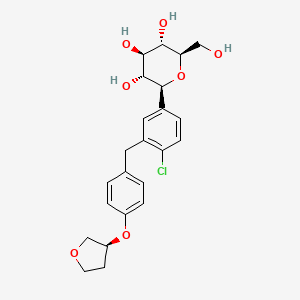
Empagliflozin is a selective inhibitor of sodium-glucose cotransporter-2 (SGLT2), the transporter that reabsorbs most filtered glucose in the proximal tubule. Blocking it lowers the renal threshold for glucose, so glucose is excreted in the urine and blood levels fall without any action on insulin secretion — which is why the drug does not cause hypoglycemia by itself and works regardless of remaining β-cell function. glucose lost in the urine carries water and sodium with it, producing a mild osmotic diuresis and natriuresis, and the restored sodium delivery to the macula densa reactivates tubuloglomerular feedback, constricting the afferent arteriole and lowering intraglomerular pressure. That last effect explains the characteristic early dip in estimated glomerular filtration rate that precedes long-term renal preservation, and is the leading account of why the class protects kidneys.
Originally approved for type 2 diabetes, empagliflozin's indications now extend to heart failure with reduced or preserved ejection fraction and to chronic kidney disease, in both cases with benefit in patients who do not have diabetes at all — evidence that the cardiorenal effect is not a consequence of glucose lowering. Proposed mechanisms include reduced preload and afterload, a shift in myocardial fuel use toward ketone bodies, reduced cardiac fibrosis and inflammation, and effects on sodium-hydrogen exchange. Its action is complementary to agents working through other pathways, such as dipeptidyl peptidase-4 (DPP-4) inhibitors, which enhance glucose-dependent insulin secretion, and metformin, which chiefly suppresses hepatic glucose production and improves insulin sensitivity, making it a frequent combination partner.
The predictable adverse effects follow from the mechanism: glucose in the urine promotes genital mycotic infection, the diuresis can cause volume depletion and hypotension in patients already on diuretics, and shifting metabolism toward fat oxidation while glucose is excreted can precipitate ketoacidosis at near-normal blood glucose, which is easy to miss and warrants perioperative interruption. Beyond glycemic control, reported pleiotropic actions across cardiovascular, renal and gut tissue — modulation of AMPK/mTOR signaling, reduced proinflammatory cytokines, attenuated oxidative stress — are pursued as explanations for benefits that exceed what SGLT2 inhibition alone would predict, though the boundary between class effect and off-target action remains unsettled.
Where the papers sit
11 papers from the last 6 months study empagliflozin directly · updated from PubMed 15 Nov 2026
Study type 2 clinical trials · 1 observational · 1 human data · 4 preclinical · 3 unclassified
Themes 3 themes
-
Cardiometabolic Drug Assessment
Empagliflozin quantification is being refined through LC-MS/MS and synchronous fluorescence assays for products and plasma. Clinical work links empagliflozin and semaglutide to endothelial markers in type 2 diabetes. Mechanistic studies instead examine advanced glycation end-products, mitochondrial oxidative damage and PANoptosis in myocardial injury. The cluster therefore has no single therapeutic direction, combining assays with vascular and cardiac biology.
4 papers · 36.4%
-
Heart Failure and Brain Research
Heart-failure care is moving toward earlier post-discharge SGLT2 inhibitor initiation and direct comparison of dapagliflozin with empagliflozin. Outcomes center on one-year mortality, acute-care use, hospitalisation and major adverse cardiovascular events in reduced ejection fraction. The cluster also contains nose-to-brain lipid carriers for Alzheimer disease and hyponatremia-related brain-derived neurotrophic factor findings. These CNS studies remain exploratory and do not establish a unified cardiovascular direction.
4 papers · 36.4%
-
Metformin Combination Therapy
Metformin-based treatment is being evaluated through fixed-dose empagliflozin combinations and head-to-head comparisons with dapagliflozin and DPP-4 inhibitors. Real-world studies emphasize glycaemic outcomes, treatment effectiveness and safety, including ketoacidosis. Preclinical Parkinsonism work extends the combination question toward neuroprotection involving PI3K and PPARγ signalling. The shared direction is broader comparative and combination use, while clinical benefits across settings remain to be established.
3 papers · 27.3%
Papers
The 11 papers from the last 6 months that study empagliflozin directly, newest first, by theme and by study type. Study types come from PubMed publication types and MeSH headings.
By theme
Cardiometabolic Drug Assessment (4)
- Effects of semaglutide and empagliflozin on markers of endothelial function in persons with type 2 diabetes: A post hoc analysis of a randomized clinical trial. Journal of diabetes and its complications · 1 Sept 2026 PMID 42679726
- Development and validation of a stability-indicating LC-MS/MS method for simultaneous estimation of empagliflozin and metoprolol in pharmaceutical dosage forms with forced degradation studies and computational assessment of degradation products. The Analyst · 29 Jul 2026 PMID 42523027
- Advanced glycation end-products exacerbate myocardial ischemia/reperfusion injury by promoting mitochondrial oxidative damage and PANoptosis in diabetes mellitus. Redox biology · 23 May 2026 PMID 42176503
- Eco-friendly second-derivative synchronous fluorescence method for the determination of empagliflozin and sitagliptin in tablets and plasma samples. Scientific reports · 20 May 2026 PMID 42162103
Heart Failure and Brain Research (4)
- Early versus delayed or no empagliflozin initiation after hospitalisation for heart failure in the United States: A target trial emulation. ESC heart failure · 22 Sept 2026 PMID 42770322
- Hyponatremia correction is associated with increased brain-derived neurotrophic factor levels: A pilot secondary analysis of a randomized, double-blind, placebo-controlled, crossover trial. Journal of neuroendocrinology · 29 Jul 2026 PMID 42522233
- Comparative effectiveness of dapagliflozin vs. empagliflozin on major adverse cardiovascular events in patients with heart failure with reduced ejection fraction: A real-world prospective cohort study. British journal of clinical pharmacology · 26 Jun 2026 PMID 42357835
- Nose-to-brain delivery of empagliflozin-loaded nanostructured lipid carriers incorporated in-situ gel: Biopharmaceutical evaluation for Alzheimer's disease. European journal of pharmaceutics and biopharmaceutics : official journal of Arbeitsgemeinschaft fur Pharmazeutische Verfahrenstechnik e.V · 20 Jun 2026 PMID 42323146
Metformin Combination Therapy (3)
- Effectiveness and Safety of Fixed-Dose Combination Metformin and Empagliflozin in Type 2 Diabetes: A Prospective, Multicenter, Real-World Study From China. Journal of diabetes · 28 Sept 2026 PMID 42802896
- Neuroprotective effects of empagliflozin and metformin combined therapy on rotenone induced Parkinsonism in Wistar rats via PI3K and PPARγ modulation. Scientific reports · 9 Sept 2026 PMID 42711364
- Head-to-head comparative effectiveness of empagliflozin versus dapagliflozin and DPP-4 inhibitors on clinical and metabolic outcomes: a nationwide propensity-matched study. Scientific reports · 24 Jun 2026 PMID 42342812
By study type
Clinical trials (2)
- Effects of semaglutide and empagliflozin on markers of endothelial function in persons with type 2 diabetes: A post hoc analysis of a randomized clinical trial. Journal of diabetes and its complications · 1 Sept 2026 PMID 42679726
- Hyponatremia correction is associated with increased brain-derived neurotrophic factor levels: A pilot secondary analysis of a randomized, double-blind, placebo-controlled, crossover trial. Journal of neuroendocrinology · 29 Jul 2026 PMID 42522233
Observational studies and case reports (1)
- Effectiveness and Safety of Fixed-Dose Combination Metformin and Empagliflozin in Type 2 Diabetes: A Prospective, Multicenter, Real-World Study From China. Journal of diabetes · 28 Sept 2026 PMID 42802896
Human data, design not indexed (1)
- Eco-friendly second-derivative synchronous fluorescence method for the determination of empagliflozin and sitagliptin in tablets and plasma samples. Scientific reports · 20 May 2026 PMID 42162103
Preclinical: animal, cell and lab studies (4)
- Neuroprotective effects of empagliflozin and metformin combined therapy on rotenone induced Parkinsonism in Wistar rats via PI3K and PPARγ modulation. Scientific reports · 9 Sept 2026 PMID 42711364
- Development and validation of a stability-indicating LC-MS/MS method for simultaneous estimation of empagliflozin and metoprolol in pharmaceutical dosage forms with forced degradation studies and computational assessment of degradation products. The Analyst · 29 Jul 2026 PMID 42523027
- Nose-to-brain delivery of empagliflozin-loaded nanostructured lipid carriers incorporated in-situ gel: Biopharmaceutical evaluation for Alzheimer's disease. European journal of pharmaceutics and biopharmaceutics : official journal of Arbeitsgemeinschaft fur Pharmazeutische Verfahrenstechnik e.V · 20 Jun 2026 PMID 42323146
- Advanced glycation end-products exacerbate myocardial ischemia/reperfusion injury by promoting mitochondrial oxidative damage and PANoptosis in diabetes mellitus. Redox biology · 23 May 2026 PMID 42176503
Unclassified: not yet indexed with MeSH (3)
- Early versus delayed or no empagliflozin initiation after hospitalisation for heart failure in the United States: A target trial emulation. ESC heart failure · 22 Sept 2026 PMID 42770322
- Comparative effectiveness of dapagliflozin vs. empagliflozin on major adverse cardiovascular events in patients with heart failure with reduced ejection fraction: A real-world prospective cohort study. British journal of clinical pharmacology · 26 Jun 2026 PMID 42357835
- Head-to-head comparative effectiveness of empagliflozin versus dapagliflozin and DPP-4 inhibitors on clinical and metabolic outcomes: a nationwide propensity-matched study. Scientific reports · 24 Jun 2026 PMID 42342812
Written from 11 PubMed abstracts, each one listed by PMID above. Published: 2026-06-14. Last written: 2026-09-24 by GPT. Corrections: 2026-08-08 by GPT. Drafted by language models from published abstracts; not medical advice.