glutathione
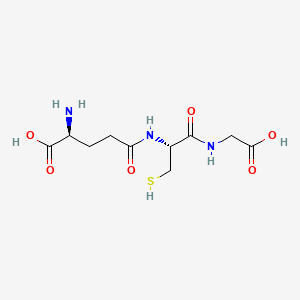
Overview
Glutathione (GSH) is a small thiol-containing tripeptide composed of glutamate, cysteine, and glycine. It is one of the most abundant intracellular antioxidants in mammalian cells and is central to redox homeostasis, detoxification, and protection against oxidative damage. By directly scavenging reactive species and serving as a substrate for glutathione peroxidases and glutathione S-transferases (GSTs), it helps regulate lipid peroxidation, protein oxidation, and cellular responses to electrophilic stress.
In biomedical research, glutathione is frequently treated as both a biomarker and a functional target. Elevated or depleted GSH levels are used to characterize oxidative stress, ferroptosis susceptibility, inflammatory injury, and drug resistance. Because many tumors maintain high intracellular GSH to buffer oxidative stress, glutathione has become a major focus in cancer nanomedicine and redox-responsive drug delivery, where GSH-cleavable disulfide bonds, GSH-triggered release systems, and GSH depletion strategies are used to amplify photodynamic therapy, chemodynamic therapy, cuproptosis, and ferroptosis.
Recent Publications Summary
Recent publications positioned glutathione (GSH) as a central redox regulator and therapeutic target across cancer, infection, neurotoxicity, sepsis, and biomaterial-based sensing. Several studies exploited elevated GSH in the tumor microenvironment or biofilm milieu to weaken antioxidant defenses and amplify reactive oxygen species (ROS)-based therapies. For example, a microneedle patch combined a GSH-scavenging copper porphyrin nanosheet with the GSH synthesis inhibitor L-buthionine sulfoximine to enhance photodynamic eradication of diabetic wound biofilms 42300219Jun. In colorectal and hepatocellular cancer models, GSH depletion was used to intensify ferroptosis and immunogenic stress, including a bioorthogonal Cu-MOF platform that triggered in situ drug synthesis and GSH consumption for xCT-driven ferroptosis 41780681Mar, and a glutathione-responsive phototheranostic system in which high GSH cleaved a linker to release sorafenib and support imaging-guided photoimmunotherapy-ferroptosis therapy 41564609Jan. Other nanoplatforms similarly leveraged GSH depletion to boost photodynamic, sonodynamic, or chemodynamic effects and to promote immunogenic cell death and checkpoint blockade responses 42133129May41981590Apr41952381Apr41918284Apr41734864Feb41525757Jan.
Beyond oncology, glutathione was investigated as a protective antioxidant and redox modulator in neurobiology and systemic inflammation. In a rat model of MDMA exposure, oral glutathione was evaluated for its ability to mitigate oxidative stress, neuroinflammation, apoptosis, and hippocampal injury, with outcomes assessed using oxidative biomarkers, cytokines, neurotransmitter-related measures, and histology 42090092May. In older adults, creatine plus β-hydroxy-β-methylbutyrate supplementation was associated with preserved glutathione redox balance during exercise training, supporting a role for GSH-related indices in age-associated redox homeostasis 41712056Feb. In sepsis, glutathione was incorporated into mannose-functionalized nanoparticles to support redox homeostasis and mitochondrial protection in hyperactivated macrophages while complementing polo-like kinase 1 inhibition 41869781Mar. A related study in neutrophil-like cells showed that P2X7 receptor signaling stimulated MRP1/ABCC1-mediated glutathione efflux, which was linked to neutral sphingomyelinase activation and exosome release 41856059Mar.
Several reports also focused on glutathione as a biochemical readout or sensing target. A bioinspired hydrogel-functionalized junction field-effect transistor was developed for highly sensitive glutathione detection, using GSH-responsive hydrogel network disruption to alter microchannel resistance and gate voltage distribution 41861117Mar. Near-infrared phosphorescent Ir(III) complexes were designed as multifunctional probes that selectively reacted with GSH for intracellular and extracellular detection while also depleting mitochondrial GSH to amplify PDT-induced ROS and cell death 41941352Apr. In tumor organoids, mass spectrometry imaging mapped glutathione alongside other metabolites to compare immune-sensitive and immune-resistant phenotypes, linking metabolic adaptation to immune resistance 41920069Apr. Finally, a structure-activity study of covalent warheads showed that intrinsic reactivity toward GSH poorly predicted GST-catalyzed conjugation, whereas GST kcat/KM values correlated with compound half-life in human liver cytosol, highlighting glutathione conjugation as a tunable determinant of metabolic liability in drug design 42062179Apr.
What Changes, What Holds
1. GSH depletion is being used as a therapeutic lever beyond simple redox buffering
NEW DIRECTION The new work extends glutathione from a biomarker and antioxidant target into an actively manipulated vulnerability in infection and cancer, especially where elevated GSH is treated as something to consume or block to improve ROS-based killing 42300219Jun41780681Mar. That sits alongside, rather than against, the established view of GSH as a protector against oxidative damage; the unresolved issue is how broadly this depletion strategy can be applied without worsening normal-tissue redox stress.
2. Glutathione is also being tested as a protective intervention in systemic stress states
REINFORCES Oral supplementation in neurotoxicity and redox-preservation findings in exercise training support the baseline view that GSH-related indices track and may help buffer oxidative injury and inflammatory stress 42090092May41712056Feb. The sepsis and neutrophil studies add mechanistic depth by linking GSH handling to mitochondrial protection and efflux pathways, but they do not displace the established account of glutathione as a central antioxidant and redox regulator.
3. GSH is emerging as a practical sensing target and metabolic readout, not just a biochemical marker
NEW DIRECTION The new sensing and imaging work broadens the Overview’s biomarker framing by showing glutathione can be used as an analyte for device-based detection and as a spatial readout of metabolic state in tumors 41861117Mar41920069Apr. The drug-design study also sharpens how GSH conjugation should be interpreted: intrinsic reactivity alone is not enough, and GST-mediated handling may better predict metabolic liability 42062179Apr.
glutathione
Background Contexts
In the literature, the biological baseline, pathological conditions, or disease models commonly surrounding glutathione are described as follows:
- ferroptosis (Biological Process) — 6 papers: PMIDs 42142137, 42090009, 41946426, 41918284, etc.
- reactive oxygen species (Chemical) — 4 papers: PMIDs 42053112, 41981590, 41941352, 41525757
- triple-negative breast cancer (Disease) — 4 papers: PMIDs 42023556, 41992775, 41946426, 41650740
- Alzheimer's disease (Disease) — 3 papers: PMIDs 42267754, 42113396, 41881284
- photochemotherapy (Biological Process) — 3 papers: PMIDs 41941352, 41918284, 41525757
- immunogenic cell death (Biological Process) — 2 papers: PMIDs 42133129, 41918284
- tumor microenvironment (Biological Process) — 2 papers: PMIDs 41952381, 41512497
- active cancer (Disease) — 1 paper: PMIDs 42049349
- advanced dementia (Disease) — 1 paper: PMIDs 41628818
- advanced melanoma (Disease) — 1 paper: PMIDs 41940349
- age-related neurodegenerative diseases (Biological Process) — 1 paper: PMIDs 42053112
- Aging Populations and Management (Organism) — 1 paper: PMIDs 41712056
Methodologies & Technologies Used
Researchers utilize the following experimental methods, imaging platforms, computational models, or biological reagents to study glutathione:
- superoxide dismutase (Protein) — 4 papers: PMIDs 42213222, 42115237, 42053112, 41610723
- proinflammatory cytokine (Biological Process) — 3 papers: PMIDs 42267754, 42213222, 42053112
- tumour necrosis factor-α (Protein) — 3 papers: PMIDs 42213222, 42053112, 42021540
- Wistar Rat (Organism) — 3 papers: PMIDs 42213222, 42090092, 41628818
- Brain derived neurotrophic factor (Protein) — 2 papers: PMIDs 42213222, 42053112
- Cell Counting Kit-8 (CCK-8) (Technology) — 2 papers: PMIDs 42090009, 41610723
- malondialdehyde (Biological Process) — 2 papers: PMIDs 42115237, 41610723
- (2-hydroxypropyl)-β-cyclodextrin (Chemical) — 1 paper: PMIDs 42028639
- (S)-(−)-colchicine (Therapy) — 1 paper: PMIDs 42113396
- 3'-O-(4-benzoyl)benzoyladenosine 5'-triphosphate (Chemical) — 1 paper: PMIDs 41856059
- 3-[(3-hydrazinyl-3-oxopropyl)disulfanyl] propanehydrazide (Chemical) — 1 paper: PMIDs 41861117
- 3-nitropropionic acid (Chemical) — 1 paper: PMIDs 42213222
Molecular Interventions & Targets
The primary molecular pathways, regulatory genes, enzymes, or therapeutic agents actively targeted and manipulated in relation to glutathione include:
- reactive oxygen species (Chemical) — 4 papers: PMIDs 42300219, 41952381, 41918284, 41734864
- GPX4 (Protein) — 3 papers: PMIDs 42133129, 41946426, 41918284
- hydrogen peroxide (Chemical) — 2 papers: PMIDs 41952381, 41839262
- Iron ions (FeIII) (Chemical) — 2 papers: PMIDs 41952381, 41747340
- quercetin (Chemical) — 2 papers: PMIDs 42021540, 41946426
- resveratrol (Chemical) — 2 papers: PMIDs 42142137, 42114733
- silibinin A (Therapy) — 2 papers: PMIDs 42107090, 42062034
- sorafenib (Therapy) — 2 papers: PMIDs 41946426, 41650740
- (E)-chlorogenic acid (Chemical) — 1 paper: PMIDs 42300531
- (E)-cinnamaldehyde (Chemical) — 1 paper: PMIDs 41918284
- 3, 4, 5-trihydroxycinnamic aldehyde (Chemical) — 1 paper: PMIDs 41918284
- 4-allyl pyrocatechol (Therapy) — 1 paper: PMIDs 42267754
Observed Outcomes & Phenotypes
The phenotypic changes, physiological endpoints, or clinical metrics observed and measured in connection with glutathione include:
- reactive oxygen species (Chemical) — 10 papers: PMIDs 42107090, 42045161, 42023556, 42008845, etc.
- malondialdehyde (Biological Process) — 8 papers: PMIDs 42143655, 42113396, 42107090, 42090092, etc.
- superoxide dismutase (Protein) — 7 papers: PMIDs 42113396, 42107090, 42090092, 42017543, etc.
- lipid peroxidation (Biological Process) — 4 papers: PMIDs 42190987, 42008845, 41833522, 41534499
- proinflammatory cytokine (Biological Process) — 4 papers: PMIDs 42090092, 42030082, 41968889, 41543144
- acetyl cholinesterase (Protein) — 3 papers: PMIDs 42113396, 42090092, 42053112
- acetylcholinesterase (Protein) — 3 papers: PMIDs 42190987, 41881284, 41628818
- GPX4 (Protein) — 3 papers: PMIDs 42142137, 42090009, 41638079
- oxidative stress (Biological Process) — 3 papers: PMIDs 42113396, 42062034, 42053112
- apoptotic markers (Clinical Metric) — 2 papers: PMIDs 42090092, 41968889
- catalase (Protein) — 2 papers: PMIDs 42107090, 41628818
- dopamine (Chemical) — 2 papers: PMIDs 42190987, 42090092
General Takeaways & Clinical Potentials
The high-level concepts, clinical translations, and overarching conclusions proposed in the research surrounding glutathione are summarized below:
- cancer immunotherapy (Biological Process) — 4 papers: PMIDs 41952381, 41948866, 41839262, 41638079
- ferroptosis (Biological Process) — 3 papers: PMIDs 42142137, 41952381, 41780681
- antitumor immune responses (Biological Process) — 2 papers: PMIDs 41918284, 41780681
- cancer immunity (Biological Process) — 2 papers: PMIDs 42023556, 41920069
- neuroprotection (Biological Process) — 2 papers: PMIDs 41968889, 41881284
- 3-NPA-induced brain dysfunction (Other) — 1 paper: PMIDs 42213222
- Advanced Wound Dressing Applications (Other) — 1 paper: PMIDs 41543144
- advanced wound dressings (Other) — 1 paper: PMIDs 41972423
- antioxidant and anti-inflammatory protection (Biological Process) — 1 paper: PMIDs 42107090
- antitumor mechanisms of ALC in CRC (Other) — 1 paper: PMIDs 41610723
- apoptotic process (Biological Process) — 1 paper: PMIDs 41941352
- biotin-conjugated nanomicellar carrier (Other) — 1 paper: PMIDs 42011733