doxorubicin
Overview
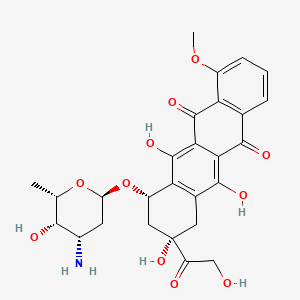
Doxorubicin is an anthracycline chemotherapeutic agent used as a cytotoxic therapy across a broad range of malignancies, including breast cancer, diffuse large B-cell lymphoma, osteosarcoma and other sarcomas, leukemias, hepatocellular carcinoma, and other solid tumors. It is given intravenously, most often as part of multi-agent regimens — for example alongside cyclophosphamide, rituximab, and prednisone in lymphoma, or with paclitaxel, carboplatin, or gemcitabine in solid tumors — and is also formulated as a liposomal preparation to alter its distribution and toxicity profile. Its antitumor activity derives principally from intercalation into human DNA and poisoning of topoisomerase II, which stabilizes cleavage complexes and produces double-strand breaks, stalling replication and driving TP53-dependent DNA damage responses and apoptosis. Redox cycling of the quinone moiety generates reactive oxygen species, contributing both to tumor cell killing — including through ferroptosis and glutathione depletion via the Nrf2–SLC7A11–GSH axis — and to off-target injury. Doxorubicin is intrinsically fluorescent, which has made it a convenient model cargo in nanomedicine, prodrug, and drug-delivery imaging studies.
Clinical use is constrained by cumulative dose-dependent cardiotoxicity and by acquired resistance. Resistance mechanisms include efflux by P-glycoprotein, enhanced antioxidant capacity through glutathione and superoxide dismutase, anti-apoptotic signaling via Bcl-2, and cytoskeletal and focal adhesion remodeling. Resistance is also shaped by the tumor microenvironment: cancer-associated fibroblasts, macrophages, and reprogrammed tumor endothelial cells supply angiocrine and NF-κB-dependent cytokine signals, while inflammatory and invasive mediators such as TNF-α, MMP-2, MMP-9, COX-2, and VEGFR2 signaling accompany adaptive escape. These limitations motivate ongoing work on nanoparticle and hyaluronan-based delivery, prodrug design, and combinations with targeted agents such as sorafenib, with immune checkpoint blockade including anti-PD-1 antibodies such as pembrolizumab and nivolumab, with antibody–drug conjugates, and with radiotherapy or physical modalities intended to potentiate doxorubicin-induced cell death.
New Publications Today (1)
- PMID 42599562 — Doxorubicin-loaded chitosan-silver nanocarrier elicits chemoresistance in liver cancer cells.
Recent Publications Summary (3 months)
Recent studies advanced doxorubicin delivery through diverse nanocarrier platforms designed to improve efficacy and minimize systemic toxicity. chitosan-silver nanoparticles were synthesized with high encapsulation efficiency and sustained release kinetics 42599562Aug, while magnetic iron oxide nanoparticles functionalized with doxorubicin and tumor-targeting aptamers (AS1411) demonstrated reduced cancer cell viability in both 2D and 3D breast cancer models 42545398Aug. PEGylated liposomal doxorubicin was tracked in vivo with unprecedented resolution, revealing that the drug remained largely encapsulated in the bloodstream (>99%) but underwent time-dependent release in liver tissues and distinct pharmacokinetics within tumor interstitium 42503863Jul. Additional delivery platforms included zwitterionic nanogels with thermo- and redox-responsiveness 42475274Jul, biopolymer-modified vaterite particles enabling tunable drug release 42331154Jun, lactate-responsive nanomachines using mesoporous silica capped with cyclodextrin-lactate oxidase complexes 42300004Jun, DNA nanoflowers integrated with Mn:CuS nanoparticles 42300245Jun, engineered exosomes as biomimetic nanoplatforms 42290533Jun, and tumor cell membrane-coated nanoparticles leveraging homologous targeting 42223068Jun.
Mechanisms of doxorubicin resistance emerged as a major clinical challenge. Paradoxically, chitosan-silver nanocarriers exhibited significantly lower cytotoxicity than free doxorubicin at sub-toxic concentrations, attributed to strong activation of PI3K/AKT/mTOR and NF-κB signaling cascades accompanied by upregulated autophagy markers and reduced Caspase-3 expression 42599562Aug. In hepatoma cells under doxorubicin-resistant conditions, downregulated SRC was identified as a therapeutic marker while upregulated CD93 emerged as a resistant marker 42482449Jul. Proteomic and transcriptomic analyses revealed that paxillin orchestrates doxorubicin resistance via cytoskeletal remodeling and extracellular matrix stiffening, serving as a prognostic biomarker for poor outcomes in chemotherapy-treated breast cancer patients 42313513Jun. tumor endothelial cell reprogramming during prolonged doxorubicin exposure was identified as a novel resistance mechanism, with endothelial subclusters displaying NF-κB-dependent cytokine activation and elevated drug clearance markers 42329467Jun.
Multiple studies investigated doxorubicin in combination with complementary therapeutic modalities to enhance efficacy. The antimicrobial peptide nisin demonstrated synergistic cytotoxic effects with doxorubicin against breast cancer cells via enhanced membrane permeabilization 42335141Jun, while the bioactive Ctn-2 peptide combined with doxorubicin increased sub-G1 populations without further elevating reactive oxygen species levels 42501149Jul. Pulsed electromagnetic fields enhanced doxorubicin-induced mitotic slippage in MDA-MB-231 breast cancer cells 42373288Jun. Nanoplatform-based combinations achieved synergistic effects: iminoboronate-based micelles co-loaded with doxorubicin and epigallocatechin gallate suppressed tumor recurrence while promoting wound healing 42397949Jul; Prussian blue nanocubes co-loaded with doxorubicin and PD-1/PD-L1 inhibitors induced robust pyroptotic cell death (~86%) via the CASP3/NF-κB/IL-1β pathway 42299821Jun; DNA nanoplatforms integrating quantum dots and doxorubicin with antisense oligonucleotides enabled synergistic photothermal/chemodynamic/chemotherapy in multidrug-resistant breast cancer 42281380Jun; and GelMA microspheres co-encapsulating MXene photothermal agents with doxorubicin enhanced therapeutic efficacy in both 2D and 3D tumor models 42251874Jun. In diffuse large B-cell lymphoma, doxorubicin combined with paclitaxel was identified as a potentially synergistic drug repurposing strategy 42235267Jun.
Targeted delivery approaches enhanced doxorubicin selectivity and efficacy in specific cancer contexts. A PSMA-targeted doxorubicin conjugate with acid-labile linkers demonstrated selective cytotoxicity in PSMA-positive prostate cancer cells while inducing apoptosis, with minimal effects in PSMA-negative cells 42538127Jul. hyaluronic acid-based prodrugs with CD44-targeting capability and glutathione-responsive activation showed selective internalization into CD44-high breast cancer cells with intracellular prodrug activation and nuclear drug accumulation 42401301Jul. In glioblastoma, exploiting postoperative blood-brain barrier disruption enabled selective accumulation of fluorescently labeled liposomal nanoparticles at the resection margin during immediate and early postoperative periods (0–72 hours) 42525789Jul. SLC44A4 overexpression in nasopharyngeal carcinoma cells increased sensitivity to doxorubicin alongside other DNA-damaging agents while decreasing sensitivity to 5-fluorouracil 42361082Jun. In primary tumor spheroids, collagen-rich extracellular matrix substantially limited doxorubicin penetration, demonstrating the importance of microenvironment-driven drug resistance in physiologically relevant 3D models 42222873Jun.
Doxorubicin's effects on non-malignant tissues and formulation optimization strategies were examined to improve therapeutic profiles. Adipose-derived stem cells exposed to doxorubicin at clinically relevant doses (5 μM) showed reduced mitochondrial activity, disrupted ATP levels, altered cell cycle progression, and both apoptotic and premature senescence responses accompanied by increased oxidative stress and SAPK/JNK signaling alterations 42533549Jul. Design-of-experiments strategies integrating response surface methodology and machine learning optimized chitosan nanoparticle characteristics—including particle size, polydispersity, zeta potential, and encapsulation efficiency—offering refined approaches to mitigate toxicity while maintaining therapeutic efficacy 42454628Jul. Automated radiolabeling and purification procedures using zirconium-89 (89Zr) enabled reproducible tracking of nanoliposomal doxorubicin via PET imaging to support clinical translation 42367047Jun. Biomimetic nanoparticles co-loaded with doxorubicin and vitamin E demonstrated synergistic apoptosis induction in bladder cancer while achieving markedly reduced systemic toxicity compared with free doxorubicin 42223068Jun.
What Changes, What Holds
1. In vivo encapsulation and tissue-dependent release kinetics clarify how liposomal formulations alter doxorubicin distribution
REINFORCES Extensive pharmacokinetic tracking in liposomal doxorubicin 42503863Jul reveals that the drug remains largely encapsulated in the bloodstream (>99%) while undergoing time-dependent release in liver and tumor tissues. This mechanistic detail supports the Overview's premise that liposomal formulation alters distribution, without changing the established nanoparticle delivery strategy. Multiple novel platforms—chitosan-silver, iron oxide, nanogels—continue demonstrating efficacy across tumor models, confirming this ongoing direction.
2. Specific molecular drivers of doxorubicin resistance emerge as prognostic markers and therapeutic targets
REINFORCES Paxillin orchestrates resistance through cytoskeletal remodeling and matrix stiffening 42313513Jun, endothelial reprogramming drives NF-κB-dependent drug clearance during prolonged exposure 42329467Jun, and biomarkers CD93 and downregulated SRC discriminate resistant versus sensitive phenotypes 42482449Jul. These discoveries sharpen mechanisms the Overview identifies broadly—cytoskeletal remodeling and tumor microenvironment signaling—with actionable molecular targets. However, chitosan-silver nanocarriers paradoxically activate PI3K/AKT survival pathways to reduce efficacy compared with free drug 42599562Aug, suggesting some delivery systems inadvertently enable resistance rather than bypass it.
3. Peptides and physical modalities synergize with doxorubicin through diverse cellular mechanisms
REINFORCES Antimicrobial nisin 42335141Jun, bioactive peptide Ctn-2 42501149Jul, and pulsed electromagnetic fields 42373288Jun achieve synergistic cytotoxicity with doxorubicin in breast cancer, while nanoplatforms co-deliver doxorubicin with EGCG 42397949Jul, PD-1/PD-L1 inhibitors 42299821Jun, or photothermal agents 42251874Jun. These exemplify the combination strategies the Overview anticipates; peptides and physical EM fields represent new agent classes beyond the chemotherapy and immune checkpoint examples, extending rather than overturning the established direction.
4. tumor collagen acts as a physical diffusion barrier that nanocarrier design alone cannot overcome
REINFORCES Collagen-rich extracellular matrix substantially limits doxorubicin penetration in physiologically relevant 3D spheroid models 42222873Jun, revealing a physical constraint on drug delivery beyond chemical selectivity. This reinforces the Overview's emphasis on tumor microenvironment as a resistance determinant and indicates that targeted strategies—PSMA-conjugates 42538127Jul, CD44-targeting hyaluronic acid prodrugs 42401301Jul, aptamer-conjugated nanoparticles 42545398Aug—must account for matrix-imposed barriers alongside molecular selectivity.
5. Adipose-derived stem cells show mitochondrial damage and senescence at clinically relevant doxorubicin doses
NEW DIRECTION Adipose-derived stem cells exposed to clinically relevant doxorubicin concentrations (5 μM) exhibit reduced mitochondrial activity, depleted ATP, altered cell cycle progression, and both apoptotic and premature senescence responses with increased oxidative stress 42533549Jul. The Overview acknowledges off-target injury from redox cycling but details only cardiotoxicity; adipose tissue vulnerability and senescence induction represent novel understanding of non-cardiac tissue damage. Design-of-experiments optimization 42454628Jul and biomimetic carriers with vitamin E co-loading 42223068Jun offer parallel mitigation strategies, suggesting emerging focus on toxicity reduction within nanoparticle engineering.
Overview update candidates: none — recent findings remain preclinical or early-stage and would require validation across multiple cohorts before meriting baseline revision.
doxorubicin
Background Contexts
In the literature, the biological baseline, pathological conditions, or disease models commonly surrounding doxorubicin are described as follows:
- triple-negative breast cancer (Disease) — 14 papers: PMIDs 42599981, 42593900, 42501149, 42474418, etc.
- chemotherapy (Therapy) — 8 papers: PMIDs 42533549, 42496777, 42479611, 42474418, etc.
- liver cancer (Disease) — 6 papers: PMIDs 42552329, 42115559, 42092913, 41972761, etc.
- chemoresistance (Biological Process) — 5 papers: PMIDs 42599562, 42527054, 42501149, 42235267, etc.
- drug resistance (Disease) — 3 papers: PMIDs 42599981, 42482449, 41915967
- Intracellular ROS (Chemical) — 3 papers: PMIDs 42192119, 42097419, 42043281
- locally advanced or metastatic breast cancer (Disease) — 3 papers: PMIDs 42313513, 42290533, 42251874
- osteosarcoma (Disease) — 3 papers: PMIDs 42479611, 42373283, 42116576
- solid tumors (Disease) — 3 papers: PMIDs 41932369, 41915967, 41850406
- (chemo)radiotherapy (Biological Process) — 2 papers: PMIDs 42134406, 41875608
- biocompatibility (Other) — 2 papers: PMIDs 42475274, 42454628
- cardiotoxicity (Clinical Metric) — 2 papers: PMIDs 42494062, 41954229
Methodologies & Technologies Used
Researchers utilize the following experimental methods, imaging platforms, computational models, or biological reagents to study doxorubicin:
- MDA-MB-231 (Cell Line) — 11 papers: PMIDs 42599981, 42501149, 42336028, 42335141, etc.
- cyclophosphamide (Therapy) — 9 papers: PMIDs 42601737, 42478852, 42470035, 42329463, etc.
- vincristine (Therapy) — 6 papers: PMIDs 42470035, 42264920, 42229339, 42210589, etc.
- Hep-G2 (Cell Line) — 5 papers: PMIDs 42599562, 42331154, 42054875, 41972761, etc.
- MCF-7 breast cancer cells (Cell Line) — 5 papers: PMIDs 42335141, 42187623, 41903664, 41812428, etc.
- molecular docking (Technology) — 5 papers: PMIDs 42593900, 42538127, 42492702, 42336028, etc.
- MCF-10A (Cell Line) — 4 papers: PMIDs 42133888, 42054875, 41812428, 41785707
- molecular dynamics simulation (Technology) — 4 papers: PMIDs 42538127, 42492702, 42207930, 42054875
- triple-negative breast adenocarcinoma (Cell Line) — 4 papers: PMIDs 42373288, 42290533, 42248285, 42143107
- western blot (Technology) — 4 papers: PMIDs 42599562, 42527054, 42492702, 41997434
- carboplatin (Therapy) — 3 papers: PMIDs 42478852, 42329463, 42210589
- fourier-transform infrared spectroscopy (Technology) — 3 papers: PMIDs 42599562, 42501149, 42120770
Molecular Interventions & Targets
The primary molecular pathways, regulatory genes, enzymes, or therapeutic agents actively targeted and manipulated in relation to doxorubicin include:
- carboplatin (Therapy) — 2 papers: PMIDs 42172901, 41846001
- cisplatin/fluorouracil (Therapy) — 2 papers: PMIDs 42361082, 42081994
- dacarbazine (Therapy) — 2 papers: PMIDs 41979337, 41708412
- Folate (Chemical) — 2 papers: PMIDs 42133888, 42093547
- gemcitabine (Therapy) — 2 papers: PMIDs 41832022, 41708412
- glutathione (Chemical) — 2 papers: PMIDs 42401301, 41934785
- liposome (Other) — 2 papers: PMIDs 42503863, 42026392
- nivolumab (Therapy) — 2 papers: PMIDs 41926569, 41708412
- olaparib (Therapy) — 2 papers: PMIDs 42361082, 42207930
- paclitaxel (Therapy) — 2 papers: PMIDs 42235267, 41846001
- pembrolizumab (Therapy) — 2 papers: PMIDs 42329463, 41708412
- polydopamine (Chemical) — 2 papers: PMIDs 42290533, 42043281
Observed Outcomes & Phenotypes
The phenotypic changes, physiological endpoints, or clinical metrics observed and measured in connection with doxorubicin include:
- apoptotic process (Biological Process) — 10 papers: PMIDs 42531194, 42474418, 42345617, 42336028, etc.
- cytotoxicity (Clinical Metric) — 8 papers: PMIDs 42599562, 42595795, 42475274, 42474418, etc.
- reactive oxygen species (Chemical) — 8 papers: PMIDs 42527054, 42501149, 42235267, 41997434, etc.
- Apoptosis (Biological Process) — 6 papers: PMIDs 42595795, 42538127, 42533549, 42235267, etc.
- Cytotoxic activity (Clinical Metric) — 6 papers: PMIDs 42552329, 42373288, 42329463, 42143107, etc.
- oxidative stress (Biological Process) — 6 papers: PMIDs 42533549, 42492702, 42120770, 42081994, etc.
- cancer cell (Cellular Component) — 4 papers: PMIDs 42531194, 42503863, 42475274, 41702225
- IC50 (Clinical Metric) — 4 papers: PMIDs 42552329, 42336028, 42299821, 42080829
- Ribosomal protein L36 Dmel_CG7622 (Clinical Metric) — 4 papers: PMIDs 42599981, 42531194, 42479611, 42172901
- selective cytotoxicity (Biological Process) — 4 papers: PMIDs 42538127, 42531194, 42222873, 41937695
- systemic toxicity (Clinical Metric) — 4 papers: PMIDs 42223068, 42192119, 42106126, 42014386
- transforming growth factor (Clinical Metric) — 4 papers: PMIDs 42503515, 42474418, 42026237, 41855820
General Takeaways & Clinical Potentials
The high-level concepts, clinical translations, and overarching conclusions proposed in the research surrounding doxorubicin are summarized below:
- chemotherapy (Therapy) — 4 papers: PMIDs 42601737, 42533549, 41979337, 41931605
- apoptotic process (Biological Process) — 3 papers: PMIDs 42496777, 41931605, 41810719
- triple-negative breast cancer (Disease) — 3 papers: PMIDs 42501149, 42106126, 41812428
- cancer immunotherapy (Biological Process) — 2 papers: PMIDs 42318958, 42217659
- chemoresistance (Biological Process) — 2 papers: PMIDs 42599562, 42527054
- inflammation (Biological Process) — 2 papers: PMIDs 42531194, 42492702
- oxidative stress (Biological Process) — 2 papers: PMIDs 42492702, 41954229
- reactive oxygen species (Chemical) — 2 papers: PMIDs 41931605, 41810719
- therapeutic efficacy (Clinical Metric) — 2 papers: PMIDs 42482449, 42026237
- Therapeutic Outcomes (Other) — 2 papers: PMIDs 42025656, 41903664
- therapeutic resistance (Disease) — 2 papers: PMIDs 42313513, 42222873
- Therapy (Therapy) — 2 papers: PMIDs 42531194, 42527054