Vorinostat
Vorinostat, also known as suberoylanilide hydroxamic acid (SAHA), is a hydroxamate-based histone deacetylase inhibitor (HDACi) used in biomedical research and therapy development as an epigenetic modulator.
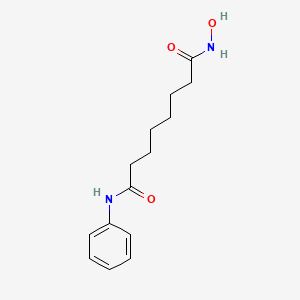
Vorinostat, also known as suberoylanilide hydroxamic acid (SAHA), is a hydroxamate-based histone deacetylase inhibitor (HDACi) used in biomedical research and therapy development as an epigenetic modulator. By inhibiting histone deacetylases, vorinostat alters chromatin structure and gene expression, which can affect cell-cycle control, apoptosis, differentiation, immune signaling, and stress-response pathways. It has been studied particularly in oncology and transplant medicine, where modulation of tumor cell survival and immune function may be therapeutically useful.
In recent research, vorinostat has been investigated not only as a direct anticancer agent but also as a component of combination strategies. These studies have explored its effects on pathways involving signal transducer and activator of transcription 3 (STAT3) signaling, immunogenic cell death, autophagy, apoptosis, and tissue remodeling, as well as its potential to influence graft-versus-host disease and post-transplant cognitive outcomes. Its pharmacologic profile is also being reconsidered in light of evidence that some anticancer effects of SAHA may persist even when canonical HDAC inhibition is altered, suggesting additional mechanisms beyond histone deacetylase blockade.
Where the papers sit
10 papers from the last 6 months study vorinostat directly · updated from PubMed 16 Nov 2026
Study type 1 clinical trial · 9 preclinical
Themes one subject · 1 new direction
Those 10 are all about one subject.
-
HDAC Inhibition Research
HDAC inhibition is being explored across cancer, transplantation, tissue injury, neurodegeneration, and drug delivery rather than one disease. Vorinostat, also called SAHA, is tested for antitumor activity, graft-versus-host disease prevention, cardioprotection, blood-brain barrier repair, and Tau pathology. Recurrent findings include cell-cycle blockade, apoptosis, altered vasculogenesis, and improved tissue integrity, with effects dependent on context. Sustained-release nanoparticles and combination therapy address delivery and efficacy, while the lack of a universal anticancer target leaves mechanism and safety important open questions.
Vorinostat’s anticancer effects can persist without histone deacetylase inhibition
The liver cancer mouse model and allograft colon cancer mouse model studied with the pan-HDAC inhibitor SAHA assumed that its anticancer activity depended on HDAC enzyme inhibition, but chemical inactivation of SAHA’s HDAC-inhibitory activity did not abolish its anticancer effects in vivo, indicating that vorinostat can act through an alternative, as-yet-unidentified mechanism and challenging the use of HDAC inhibition as its universal mechanistic explanation 42248845Jun.
Papers
The 10 papers from the last 6 months that study vorinostat directly, newest first, by theme and by study type. Study types come from PubMed publication types and MeSH headings.
By theme
HDAC Inhibition Research (10)
- Synergistic antitumor effects of 5-fluorouracil and vorinostat in preclinical models of pheochromocytomas and paragangliomas. Endocrine · 10 Oct 2026 PMID 42859296
- Evaluation of novel targeted small-molecule therapeutics in desmoplastic small round cell tumor (DSRCT) cells. Journal of cancer research and clinical oncology · 3 Oct 2026 PMID 42828699
- Vorinostat for graft-versus-host disease prevention in pediatric and young adult patients with hematologic malignancies. JCI insight · 24 Sept 2026 PMID 42784255
- HDAC inhibition via suberoylanilide hydroxamic acid ameliorates doxorubicin-induced cardiotoxicity. Nature communications · 4 Sept 2026 PMID 42697879
- SAHA-coupled biocompatible cellulose-based nanoparticles as HDAC-inhibitory drug delivery systems with slow and sustained release behavior. Carbohydrate polymers · 12 Aug 2026 PMID 42586627
- Vorinostat ameliorates cognitive impairment and Tau pathology in an AAV-P301L-Tau-induced tauopathy mouse model: insights into neuroinflammation and PI3K/AKT/GSK3β signaling. International immunopharmacology · 5 Aug 2026 PMID 42556278
- Vorinostat nanoformulation triggers cell cycle blockade and apoptosis for colorectal cancer therapy. International journal of pharmaceutics · 3 Aug 2026 PMID 42546991
- The histone deacetylase inhibitor, suberoylanilide hydroxamic acid, restores blood-brain barrier integrity in a human stem cell-based model of ischaemic stroke. British journal of pharmacology · 13 Jul 2026 PMID 42438198
- Histone deacetylase enzyme activity is not the universal anticancer target of HDAC inhibitors. Signal transduction and targeted therapy · 5 Jun 2026 PMID 42248845
- HDAC inhibition reprograms stem cell fate to suppress infantile hemangioma vasculogenesis. Angiogenesis · 4 Jun 2026 PMID 42240910
By study type
Clinical trials (1)
- Vorinostat for graft-versus-host disease prevention in pediatric and young adult patients with hematologic malignancies. JCI insight · 24 Sept 2026 PMID 42784255
Preclinical: animal, cell and lab studies (9)
- Synergistic antitumor effects of 5-fluorouracil and vorinostat in preclinical models of pheochromocytomas and paragangliomas. Endocrine · 10 Oct 2026 PMID 42859296
- Evaluation of novel targeted small-molecule therapeutics in desmoplastic small round cell tumor (DSRCT) cells. Journal of cancer research and clinical oncology · 3 Oct 2026 PMID 42828699
- HDAC inhibition via suberoylanilide hydroxamic acid ameliorates doxorubicin-induced cardiotoxicity. Nature communications · 4 Sept 2026 PMID 42697879
- SAHA-coupled biocompatible cellulose-based nanoparticles as HDAC-inhibitory drug delivery systems with slow and sustained release behavior. Carbohydrate polymers · 12 Aug 2026 PMID 42586627
- Vorinostat ameliorates cognitive impairment and Tau pathology in an AAV-P301L-Tau-induced tauopathy mouse model: insights into neuroinflammation and PI3K/AKT/GSK3β signaling. International immunopharmacology · 5 Aug 2026 PMID 42556278
- Vorinostat nanoformulation triggers cell cycle blockade and apoptosis for colorectal cancer therapy. International journal of pharmaceutics · 3 Aug 2026 PMID 42546991
- The histone deacetylase inhibitor, suberoylanilide hydroxamic acid, restores blood-brain barrier integrity in a human stem cell-based model of ischaemic stroke. British journal of pharmacology · 13 Jul 2026 PMID 42438198
- Histone deacetylase enzyme activity is not the universal anticancer target of HDAC inhibitors. Signal transduction and targeted therapy · 5 Jun 2026 PMID 42248845
- HDAC inhibition reprograms stem cell fate to suppress infantile hemangioma vasculogenesis. Angiogenesis · 4 Jun 2026 PMID 42240910
Written from 10 PubMed abstracts, each one listed by PMID above. Published: 2026-06-15. Last written: 2026-07-13 by GPT. Drafted by language models from published abstracts; not medical advice.