uric acid
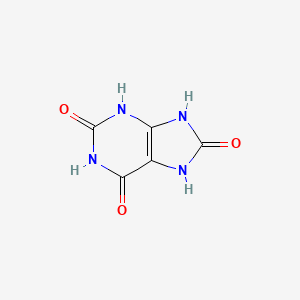
Overview
Uric acid is a nitrogen-containing end product of purine metabolism in humans and other primates. It is produced primarily in the liver and circulates in blood as urate, the ionized form that predominates at physiological pH. Because humans lack uricase, uric acid is not further degraded to allantoin, making its balance dependent on production, renal excretion, and intestinal elimination. Clinically, uric acid is best known for its role in hyperuricemia and gout, but it is also widely studied as a biomarker of renal function, metabolic status, inflammation, and cardiometabolic risk.
Biologically, uric acid is relevant to multiple organ systems because its concentration reflects both purine turnover and excretory capacity. In the kidney, altered handling of uric acid is closely linked to glomerular filtration rate and tubular transport processes, while in systemic disease it may associate with inflammatory signaling and metabolic dysregulation. Recent research has also used uric acid as an analytical target in biosensing platforms and as a clinical marker in studies of renal disease, sleep-disordered breathing, and hyperuricemia-related complications.
Recent Publications Summary
Recent studies of uric acid have focused on its role as both a disease-associated metabolite and a measurable analyte across metabolic, inflammatory, and diagnostic contexts. Multiple reports in animal and human datasets linked elevated uric acid to obesity, hyperuricemia, and related complications, with evidence that uric acid can actively reshape gut microbiota and metabolomic profiles to promote dietary lipid absorption and obesity through a liver-gut axis 42586044Aug42235504Jun. In a complementary mechanistic study, hyperuricemia was associated with worse acute pancreatitis outcomes in cohort and mouse model analyses, with uric acid implicated in CNR1-mediated inflammatory signaling and gut-pancreas axis dysregulation 42243316Jun. Uric acid was also examined as a clinical biomarker in incident hemodialysis, where higher uric acid to HDL-cholesterol ratio values were associated with lower protein-energy wasting risk in a multicenter study 42464731Jul, and as a factor associated with severe obstructive sleep apnea-hypopnea syndrome in middle-aged men 42467610Jul.
Several studies explored approaches to lower uric acid or mitigate hyperuricemia through microbiome and metabolic modulation. Paecilomyces cicadae-fermented Radix astragali was reported to normalize serum uric acid and short-chain fatty acid levels by regulating gut microbiota dysbiosis in hyperuricemic rats 42484510Jul. Similarly, biotransformation-derived metabolites from Astragalus membranaceus and Cordyceps militaris lowered serum uric acid, suppressed xanthine oxidase activity, improved liver and kidney injury markers, and altered urate transporter expression in a mouse model 41905012Mar. Another human-animal integrative study identified hepatic TIP60 as a regulator of uric acid production, and showed that TIP60 ablation reduced uric acid and restored the Lactobacillus johnsonii-phenyllactic acid axis, conferring resistance to obesity 42235504Jun.
Uric acid was also the focus of several sensing and diagnostic technologies. A graphene-functional graphene quantum dot composite enabled highly selective electrochemical uric acid detection in human sweat with a linear range of 0.1–200 µM 42579180Aug. A wireless smart contact lens measured tear uric acid in real time and supported regression-based estimation of serum uric acid, as well as device-free prediction via a digital twin framework 42341126Jun. Additional analytical platforms included a 3D-printed target plate for high-throughput DESI-MS analysis of nanoliter biofluids, which improved detection limits for uric acid in urine and serum 42128552May, a ZIF-8@AuNPs SERS substrate for multiplex urinary metabolite detection including uric acid 42120743May, and a naphthalimide-based fluorescent chemosensor with paper-strip format for selective, non-enzymatic uric acid detection in solution and solid states 42019411Apr.
What Changes, What Holds
1. Uric acid now looks like an active driver of metabolic inflammation rather than only a risk marker
NEW DIRECTION Elevated uric acid is no longer just a correlate of obesity- and pancreatitis-related disease; the new work suggests it can participate in gut microbial and metabolic remodeling that promotes lipid absorption and obesity, and can worsen acute pancreatitis through inflammatory signaling and gut-pancreas axis disruption 42586044Aug42243316Jun. That extends the baseline’s biomarker framing into mechanistic disease contribution, but does not displace its established roles in hyperuricemia, gout, or renal assessment.
2. Microbiome and hepatic pathways emerge as modifiable levers for lowering uric acid
NEW DIRECTION Hepatic TIP60 and gut microbiota-linked interventions broaden uric acid biology from passive handling to upstream regulation and therapeutic modulation 42235504Jun42484510Jul. The baseline already recognizes urate production and excretion, but not these specific control points; the new studies imply that microbial and metabolic interventions may reduce uric acid and reshape associated obesity or organ injury phenotypes. Because the evidence is preclinical and heterogeneous, it is still unsettled how far these mechanisms will translate clinically.
3. Uric acid measurement is moving into wearable, miniaturized, and multiplex diagnostic platforms
METHOD Sweat sensors, smart contact lenses, DESI-MS sample plates, SERS substrates, and paper-strip chemosensors change how uric acid is measured rather than what uric acid is known to mean 42579180Aug42341126Jun42128552May42120743May42019411Apr. These platforms sharpen the baseline’s point that uric acid is a useful analyte in biosensing and clinical monitoring, but they do not alter its biological interpretation. The main update is technical: faster, smaller, and more selective detection across biofluids.
Overview update candidates: uric acid may actively promote obesity and pancreatitis through gut-liver or gut-pancreas mechanisms; hepatic TIP60 and microbiome-linked pathways may regulate uric acid production and response to lowering interventions.
uric acid
Background Contexts
In the literature, the biological baseline, pathological conditions, or disease models commonly surrounding uric acid are described as follows:
- hyperuricemia (Clinical Metric) — 9 papers: PMIDs 42586044, 42489752, 42484510, 42341126, etc.
- gout (Disease) — 4 papers: PMIDs 42489752, 42484510, 42160899, 42044780
- obesity (Disease) — 3 papers: PMIDs 42586044, 42521234, 42235504
- metabolic disturbances (Biological Process) — 2 papers: PMIDs 42521234, 42489752
- Type 2 diabetes mellitus (Disease) — 2 papers: PMIDs 42521234, 42321010
- Active Haematological Malignancy (Disease) — 1 paper: PMIDs 42492944
- Acute Gout (Disease) — 1 paper: PMIDs 42341126
- acute pancreatitis (Disease) — 1 paper: PMIDs 42243316
- adverse effect (Clinical Metric) — 1 paper: PMIDs 42160899
- allopurinol (Therapy) — 1 paper: PMIDs 42160899
- Ambient Mass Spectrometry (Technology) — 1 paper: PMIDs 42128552
- amyotrophic lateral sclerosis (Disease) — 1 paper: PMIDs 42461445
Methodologies & Technologies Used
Researchers utilize the following experimental methods, imaging platforms, computational models, or biological reagents to study uric acid:
- Proteomics (Technology) — 4 papers: PMIDs 42572097, 42489752, 42270039, 42160899
- human (Organism) — 2 papers: PMIDs 42341126, 42235504
- human gut flora (Biological Process) — 2 papers: PMIDs 42484510, 42235504
- hyperuricemia (Clinical Metric) — 2 papers: PMIDs 42484510, 42044780
- inflammation (Biological Process) — 2 papers: PMIDs 42160899, 42044780
- mouse (Organism) — 2 papers: PMIDs 42128552, 42044780
- Network Pharmacology (Technology) — 2 papers: PMIDs 42160899, 42044780
- Plasma (Cellular Component) — 2 papers: PMIDs 42572097, 42498959
- receiver operating characteristic (Clinical Metric) — 2 papers: PMIDs 42441557, 42019745
- RNA sequencing (Technology) — 2 papers: PMIDs 42572097, 42243316
- serum uric acid (Clinical Metric) — 2 papers: PMIDs 42160899, 42044780
- α-streptozocin (Chemical) — 2 papers: PMIDs 42321010, 42216852
Molecular Interventions & Targets
The primary molecular pathways, regulatory genes, enzymes, or therapeutic agents actively targeted and manipulated in relation to uric acid include:
- serum creatinine level (Clinical Metric) — 2 papers: PMIDs 42325033, 42120743
- adenine (Chemical) — 1 paper: PMIDs 42120743
- adenosine triphosphate (Chemical) — 1 paper: PMIDs 42120743
- albuminuria (Clinical Metric) — 1 paper: PMIDs 42535419
- AMC-BFE (Chemical) — 1 paper: PMIDs 41905012
- Aqueous Extract of Clematis hexapetala (Therapy) — 1 paper: PMIDs 42044780
- Bambusa nutans Wall. ex Munro (Organism) — 1 paper: PMIDs 42216852
- blood glucose (Clinical Metric) — 1 paper: PMIDs 42325033
- blood urea nitrogen (Clinical Metric) — 1 paper: PMIDs 42128552
- calcium (Chemical) — 1 paper: PMIDs 42243316
- cannabinoid receptor 1 (Protein) — 1 paper: PMIDs 42243316
- capsaicin (Chemical) — 1 paper: PMIDs 41943335
Observed Outcomes & Phenotypes
The phenotypic changes, physiological endpoints, or clinical metrics observed and measured in connection with uric acid include:
- serum creatinine level (Clinical Metric) — 4 papers: PMIDs 42325033, 42216852, 42019745, 41905012
- Mortality risk (Clinical Metric) — 3 papers: PMIDs 42441557, 42325033, 42243316
- proinflammatory cytokine (Biological Process) — 3 papers: PMIDs 42441557, 42321010, 42243316
- serum uric acid (Clinical Metric) — 3 papers: PMIDs 42370995, 42044780, 41905012
- ABCG2 (Protein) — 2 papers: PMIDs 42160899, 41905012
- area under ROC curve (Clinical Metric) — 2 papers: PMIDs 42464731, 42019745
- blood urea nitrogen (Clinical Metric) — 2 papers: PMIDs 42216852, 41943335
- C-reactive Protein (Clinical Metric) — 2 papers: PMIDs 42521234, 42321010
- Dietary lipid absorption (Biological Process) — 2 papers: PMIDs 42586044, 42235504
- Estimated Glomerular Filtration Rate (Clinical Metric) — 2 papers: PMIDs 42535419, 42521234
- fasting blood glucose (Clinical Metric) — 2 papers: PMIDs 42321010, 41943335
- glomerular filtration rate (Clinical Metric) — 2 papers: PMIDs 42464731, 42019745
General Takeaways & Clinical Potentials
The high-level concepts, clinical translations, and overarching conclusions proposed in the research surrounding uric acid are summarized below:
- hyperuricemia (Clinical Metric) — 5 papers: PMIDs 42535419, 42484510, 42235504, 42160899, etc.
- adjunctive therapies for HUA-associated AP (Therapy) — 1 paper: PMIDs 42243316
- albuminuria (Clinical Metric) — 1 paper: PMIDs 42535419
- alpha 2-HS glycoprotein (Protein) — 1 paper: PMIDs 42572097
- B. nutans extracts (Therapy) — 1 paper: PMIDs 42216852
- body mass index (Clinical Metric) — 1 paper: PMIDs 42521234
- cardiovascular disease risk factor (Other) — 1 paper: PMIDs 42321010
- cardiovascular health (Other) — 1 paper: PMIDs 42498959
- Cardiovascular Risk Stratification (Other) — 1 paper: PMIDs 42370995
- catalysis (Biological Process) — 1 paper: PMIDs 42579180
- Circulating Biomarkers (Clinical Metric) — 1 paper: PMIDs 42572097
- Clematis hexapetala Extract (Therapy) — 1 paper: PMIDs 42044780