temozolomide
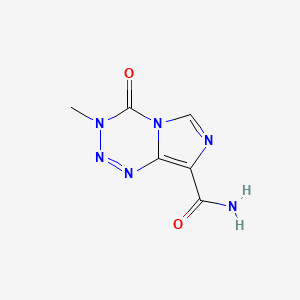
Overview
Temozolomide (TMZ) is an oral alkylating chemotherapeutic agent widely used in the treatment of malignant brain tumors, most notably glioblastoma multiforme (GBM) and other high-grade gliomas. It belongs to the imidazotetrazine class of compounds and exerts its cytotoxic effect by methylating DNA at the O6 position of guanine, leading to DNA strand breaks, replication failure, and apoptosis in rapidly dividing tumor cells. The drug's ability to cross the blood-brain barrier makes it particularly valuable in neuro-oncology, where it remains a cornerstone of the Stupp protocol — concurrent (chemo)radiotherapy followed by adjuvant TMZ cycles — established as standard of care for newly diagnosed GBM. Beyond gliomas, temozolomide is also employed in combination regimens for pediatric solid tumors, including neuroblastoma and Ewing sarcoma, reflecting its broad alkylating activity and manageable tolerability profile.
A central challenge in temozolomide-based therapy is the development of tumor resistance, which is mechanistically linked to the expression and methylation status of the MGMT promoter. MGMT (O6-methylguanine-DNA methyltransferase) directly repairs the DNA lesions induced by TMZ; tumors with an unmethylated MGMT promoter tend to express this repair enzyme at high levels, rendering TMZ less effective. Abnormal DNA damage repair pathways — including those driven by oncogenic alterations such as EGFRvIII — further complicate treatment outcomes. As a result, understanding and overcoming TMZ resistance has become one of the most active areas of contemporary neuro-oncology research.
Recent Publications Summary
Temozolomide (TMZ) remains the standard chemotherapeutic agent for glioblastoma, yet acquired and intrinsic resistance significantly limit its therapeutic efficacy 42276053Jun42374654Jun. Multiple studies investigated mechanisms underlying TMZ resistance, identifying key pathways including elevated O-6-methylguanine-DNA methyltransferase (MGMT) expression, mismatch repair deficiency, and upregulation of cell adhesion and survival pathways 42276053Jun. The nuclear receptor coactivator 3 (NCOA3), highly expressed in glioblastoma tissues and linked to poor prognosis, promotes resistance through regulation of glycolysis, cell cycle progression, and immunosuppression; inhibition of NCOA3 enhanced glioma cell sensitivity to TMZ 42587220Aug.
Multiple combination strategies were evaluated to overcome TMZ resistance. Pharmacological inhibition of UFMylation via compounds targeting DDRGK1 (including osimertinib and CP-24) suppressed tumor cell viability and sensitized glioblastoma cells to TMZ and radiotherapy while exerting immunomodulatory effects, achieving tumor-free outcomes in 65% of immunocompetent mice 42472853Jul. The natural compound trichodermin demonstrated synergistic interaction with TMZ through enhanced apoptosis, suppression of invasion, and cell cycle arrest; in vivo studies confirmed combined efficacy in prolonging survival 42474259Jul. NCOA3 inhibition with SI-2 similarly showed synergistic enhancement of TMZ sensitivity 42587220Aug. Novel targeted approaches, including the neuronal nitric oxide synthase inhibitor BA-101 as adjuvant therapy and cuproptosis agonists targeting SLC31A1, were investigated as strategies to overcome TMZ resistance 42374654Jun42203322May.
microRNA-based sensitization and nanotechnology-based drug delivery systems represented emerging approaches to enhance TMZ efficacy. Inhibition of miR-25-3p in patient-derived glioblastoma cells suppressed β-catenin and enhanced TMZ sensitivity in a subset of cell lines 42218313May. Fe³⁺-responsive gold nanoplatforms delivering MGMT-targeting siRNA combined photothermal therapy with TMZ by reversing MGMT-driven chemoresistance 42315000Jun. Patient-derived organoid-based drug sensitivity testing outperformed MGMT methylation status in predicting TMZ response and identified alternative treatments such as regorafenib and lazertinib 42276053Jun. Coaxial fiber membrane systems (NanoMesh) co-delivering TMZ with HIF inhibitors (acriflavine and PT2385) achieved median survival improvement exceeding 50 days and long-term survival rates of 40% in preliminary animal studies 42133001May. MXene-integrated microspheres combining TMZ with photothermal agents demonstrated synergistic chemo/photothermal efficacy in glioblastoma models 42251874Jun.
Beyond glioblastoma, TMZ was evaluated across diverse malignancies. In H3K27M-mutant diffuse intrinsic pontine glioma, a lethal pediatric brainstem tumor, the survival benefit of adjuvant TMZ to radiotherapy remained controversial 42218248May. In nasopharyngeal carcinoma, SLC44A4 overexpression increased sensitivity to TMZ along with other DNA-damaging agents 42361082Jun. Combination regimens incorporating TMZ were tested in other aggressive Cancers: liposomal irinotecan combined with vincristine and TMZ (NALIRI-VT) was evaluated in relapsed/refractory Ewing sarcoma 42019227Apr, while bevacizumab, irinotecan, and TMZ (BIT) became the UK recommended regimen for relapsed/refractory neuroblastoma based on the BEACON trial 41840813Mar. In neuroendocrine tumors, capecitabine and temozolomide (CAPTEM) chemotherapy was combined with peptide receptor radionuclide therapy in a randomized trial 42142431May. Notably, computational analysis (Connectivity Map) identified TMZ as a pharmacological candidate capable of reversing ATP6AP2-associated gene signatures in Duchenne muscular dystrophy, with in vivo validation demonstrating enhanced motor coordination and preserved muscle architecture in mdx mice 42594836Aug.
What Changes, What Holds
1. Inhibiting NCOA3 reverses temozolomide resistance through glycolytic and immune regulation
NEW DIRECTION NCOA3, a nuclear receptor coactivator highly expressed in glioblastoma, drives resistance through a mechanism the Overview does not name—regulating glycolysis, cell cycle progression, and immunosuppression. NCOA3 inhibition resensitizes resistant cells to TMZ 42587220Aug, identifying a metabolic-immune axis of resistance distinct from the MGMT-methylation and DNA-repair models the baseline emphasizes. Whether NCOA3 status predicts outcome or guides patient selection, and whether dual inhibition improves clinical benefit, remain to be established.
2. UFMylation inhibition and trichodermin reverse temozolomide resistance in glioblastoma
NEW DIRECTION UFMylation inhibitors targeting DDRGK1 and the natural compound trichodermin each sensitize glioblastoma cells through distinct mechanisms—suppressing DDRGK1-mediated survival and enhancing apoptosis, respectively—establishing targets the Overview does not address. In vivo models achieve durable tumor control and immunomodulatory effects, yet whether these combinations improve outcomes over the established Stupp protocol and how they integrate with concurrent radiotherapy remain untested 42472853Jul42474259Jul. Multi-target strategies for resistance echo the evolution of glioblastoma therapy itself.
3. Patient organoid assays and nanotechnology platforms advance temozolomide response prediction
METHOD Organoid-derived drug sensitivity testing outperforms MGMT methylation status in predicting individual TMZ responsiveness 42276053Jun, shifting prognostication from a single biomarker to functional assay. Nanoplatforms delivering MGMT-targeting siRNA with photothermal therapy similarly show efficacy in preclinical models 42315000Jun. These advances in measurement and delivery infrastructure represent methodological refinement; whether they improve survival over conventional dosing in patients has not been tested clinically.
4. Temozolomide reverses neurodegeneration pathways in Duchenne muscular dystrophy
NEW DIRECTION Computational screening and in vivo validation identified TMZ as reversing ATP6AP2-associated pathology and improving motor function in Duchenne muscular dystrophy mice 42594836Aug—a non-oncology application entirely absent from the Overview. If reproducible in human disease, this would establish TMZ as therapeutic for a non-proliferative neurodegenerative condition, suggesting mechanisms extending beyond tumor-cell apoptosis. Meanwhile, extension to neuroblastoma (BEACON trial establishing BIT regimen as UK standard) and neuroendocrine tumors continues reinforcing established pediatric and combination-therapy roles 41840813Mar.
Overview update candidates: none. All entries represent preclinical findings or methodological advances requiring clinical-level evidence before integration into the baseline.
temozolomide
Background Contexts
In the literature, the biological baseline, pathological conditions, or disease models commonly surrounding temozolomide are described as follows:
- glioblastoma (Disease) — 10 papers: PMIDs 42587220, 42585241, 42472853, 42411583, etc.
- drug-resistant glioblastoma (Disease) — 7 papers: PMIDs 42374654, 42339996, 42337173, 42334687, etc.
- glioma (Disease) — 5 papers: PMIDs 42542235, 42418561, 42412234, 42133001, etc.
- MGMT Promoter Methylation (Biological Process) — 2 papers: PMIDs 42489791, 41577209
- O-6-methylguanine-DNA methyltransferase (Gene) — 2 papers: PMIDs 42339996, 42189896
- Stupp protocol (Therapy) — 2 papers: PMIDs 42166475, 42103073
- WHO grade 4 astrocytoma (Disease) — 2 papers: PMIDs 42218313, 42203322
- Alzheimer's disease (Disease) — 1 paper: PMIDs 42585241
- Androgen receptor (AR) (Protein) — 1 paper: PMIDs 42203314
- BIOMEDE (Technology) — 1 paper: PMIDs 42032072
- blood plasma (Biological Process) — 1 paper: PMIDs 41577209
- blood–brain barrier (Biological Process) — 1 paper: PMIDs 42585241
Methodologies & Technologies Used
Researchers utilize the following experimental methods, imaging platforms, computational models, or biological reagents to study temozolomide:
- U-87MG ATCC (Cell Line) — 3 papers: PMIDs 42585241, 42251874, 42166475
- (chemo)radiotherapy (Biological Process) — 2 papers: PMIDs 42334687, 42218248
- biopsy (Other) — 2 papers: PMIDs 42489791, 42032072
- flow cytometry (Technology) — 2 papers: PMIDs 42474259, 42189896
- immunohistochemistry (Technology) — 2 papers: PMIDs 42154095, 42143442
- single-cell RNA-seq (Technology) — 2 papers: PMIDs 42594836, 42587220
- western blot (Technology) — 2 papers: PMIDs 42594836, 42474259
- 2D monolayer (Technology) — 1 paper: PMIDs 42218313
- 3D bioprinting platform (Technology) — 1 paper: PMIDs 42585241
- 3D spheroid cultures (Technology) — 1 paper: PMIDs 42218313
- 7S8L (Other) — 1 paper: PMIDs 42166475
- 7S8N (Other) — 1 paper: PMIDs 42166475
Molecular Interventions & Targets
The primary molecular pathways, regulatory genes, enzymes, or therapeutic agents actively targeted and manipulated in relation to temozolomide include:
- doxorubicin (Therapy) — 2 papers: PMIDs 42361082, 42251874
- glomerular filtration rate (Clinical Metric) — 2 papers: PMIDs 42418561, 42032072
- O-6-methylguanine-DNA methyltransferase (Gene) — 2 papers: PMIDs 42418561, 42315000
- vincristine (Therapy) — 2 papers: PMIDs 42159820, 42019227
- (chemo)radiotherapy (Biological Process) — 1 paper: PMIDs 42339996
- [177Lu]Lu-DOTATATE (Therapy) — 1 paper: PMIDs 42142431
- acriflavine (Therapy) — 1 paper: PMIDs 42133001
- ARRB1 (Protein) — 1 paper: PMIDs 41765310
- Atp6ap2 (Gene) — 1 paper: PMIDs 42594836
- ATP6AP2 axis (Pathway) — 1 paper: PMIDs 42594836
- ATP6AP2-associated gene signature (Gene) — 1 paper: PMIDs 42594836
- bevacizumab (Therapy) — 1 paper: PMIDs 41840813
Observed Outcomes & Phenotypes
The phenotypic changes, physiological endpoints, or clinical metrics observed and measured in connection with temozolomide include:
- median survival (Clinical Metric) — 3 papers: PMIDs 42489791, 42218248, 42133001
- Proliferation (Biological Process) — 3 papers: PMIDs 42587220, 42542235, 42361082
- cell cycle (Biological Process) — 2 papers: PMIDs 42594836, 42587220
- DNA repair (Biological Process) — 2 papers: PMIDs 42542235, 42361082
- glioma (Disease) — 2 papers: PMIDs 42587220, 42315000
- macrophage (Cellular Component) — 2 papers: PMIDs 42594836, 42472853
- O-6-methylguanine-DNA methyltransferase (Gene) — 2 papers: PMIDs 42418561, 42276053
- OLIG2 (Protein) — 2 papers: PMIDs 42542235, 42143442
- overall survival (Clinical Metric) — 2 papers: PMIDs 42489791, 42032072
- progression-free survival (Clinical Metric) — 2 papers: PMIDs 42411543, 42276053
- real-world efficacy, durability, and safety (Clinical Metric) — 2 papers: PMIDs 42339996, 42019227
- sensitivity (Clinical Metric) — 2 papers: PMIDs 42587220, 42542235
General Takeaways & Clinical Potentials
The high-level concepts, clinical translations, and overarching conclusions proposed in the research surrounding temozolomide are summarized below:
- glioblastoma (Disease) — 2 papers: PMIDs 42587220, 42315000
- precision oncology (Therapy) — 2 papers: PMIDs 42276053, 41577209
- 50 mg daily schedule (Therapy) — 1 paper: PMIDs 42189896
- adjunct to temozolomide therapy (Other) — 1 paper: PMIDs 42474259
- Aggressive gliomas (Disease) — 1 paper: PMIDs 42542235
- anti-anxiety and anti-tumor properties (Other) — 1 paper: PMIDs 42154095
- anti-glioblastoma activity (Other) — 1 paper: PMIDs 42474259
- ATP6AP2 signaling axis (Pathway) — 1 paper: PMIDs 42594836
- Bak-mitochondrion-caspase cascade (Biological Process) — 1 paper: PMIDs 42203314
- biomarker (Other) — 1 paper: PMIDs 42143442
- BRCA-mutant TME (Other) — 1 paper: PMIDs 42218313
- cell self renewal (Biological Process) — 1 paper: PMIDs 42587220