taxane
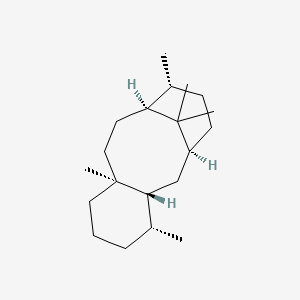
Overview
Taxanes are a class of microtubule-targeting antineoplastic agents used widely in oncology. The best-known members of this family include paclitaxel, docetaxel, and nab-paclitaxel. Their principal pharmacologic action is to promote microtubule stabilization, thereby disrupting normal microtubule dynamics required for mitosis and leading to cell-cycle arrest and apoptosis in rapidly dividing cells. Because of this mechanism, taxanes are commonly used in solid tumors, including breast cancer, pancreatic cancer, prostate cancer, lung cancer, and head and neck malignancies.
In contemporary cancer therapy, taxanes are often combined with other cytotoxic agents, targeted therapies, or immunotherapies to improve response rates and survival. They are also frequently studied in neoadjuvant and induction settings, where they are used before definitive local therapy. Recent research has continued to evaluate taxanes in combination regimens, including carboplatin, trastuzumab-pertuzumab, pembrolizumab, gemcitabine, S-1, and radiotherapy-based protocols, reflecting their central role in multimodal cancer treatment.
Recent Publications Summary
Recent publications on taxane-focused therapy have largely examined how taxanes are being optimized in combination regimens, delivery systems, and supportive care strategies. In locally advanced pancreatic cancer, nab-paclitaxel plus S-1 was evaluated in a multicenter phase 2 study, where the regimen produced a 6-month progression-free survival rate of 71.0%, a median progression-free survival of 11.1 months, and a median overall survival of 20.2 months; 18.3% of patients underwent surgical resection after induction therapy 42324245Jun. In head and neck malignancies, paclitaxel-containing neoadjuvant therapy with carboplatin and cetuximab was studied as a bridging approach before surgery in locally advanced head and neck squamous cell carcinoma 42373242Jun, and nab-paclitaxel was incorporated into a phase II strategy for unresectable locally advanced or recurrent/metastatic adenoid cystic carcinoma of the head and neck, where liposomal doxorubicin plus nab-paclitaxel followed by chemoradiotherapy or additional chemotherapy achieved a high objective response rate 42285940Jun. In very high-risk nonmuscle-invasive bladder cancer, tislelizumab plus nanoparticle albumin-bound paclitaxel was used in a biomarker-oriented study aimed at identifying MRI radiomic phenotypes associated with response 42339693Jun.
Several studies focused on improving taxane tolerability and overcoming resistance. A retrospective cohort study assessed reduced-dose dexamethasone premedication for weekly paclitaxel, asking whether lower steroid exposure could still prevent taxane-induced hypersensitivity reactions while reducing steroid-related toxicity 42371187Jun. In prostate cancer, vindoline was reported to target ATP-binding cassette sub-family B member 1 (ABCB1) and restore docetaxel sensitivity by inhibiting drug efflux, increasing intracellular drug accumulation, and enhancing docetaxel-induced apoptosis and G2/M arrest, with minimal CYP3A4 inhibition and no detectable acute toxicity in vivo 42000630Apr. In lung cancer, paclitaxel combined with sunitinib was shown to synergistically induce ferroptosis through downregulation of FTH1, GPX4, and SLC7A11 and upregulation of ACSL4, with SLC7A11 identified as a key determinant of response 41955701Apr. Another study in colorectal cancer found that paclitaxel predominantly triggered genomic damage with limited reactive oxygen species generation compared with other agents tested 41870588Mar.
Taxane delivery and formulation were also prominent themes. paclitaxel was incorporated into engineered exosomes for targeted chemotherapy and photothermal treatment of breast cancer, with the platform designed to co-deliver paclitaxel and other payloads and to enhance tumor accumulation and antitumor activity in preclinical models 42290533Jun. In triple-negative breast cancer, integrin αvβ3-targeted solid lipid nanoparticle were developed for co-delivery of paclitaxel and quercetin, aiming to improve solubility, circulation, and tumor targeting 42267862Jun. Natural extracellular nanovesicles derived from Taxus leaves were reported to enhance paclitaxel sensitivity in triple-negative breast cancer and to remodel the tumor microenvironment in combination with paclitaxel 42268988Jun. Additional formulation studies included a Soluplus-based paclitaxel-piperine solid dispersion to improve paclitaxel solubility, intestinal permeation, and anticancer efficacy 42160324May, as well as hypoxia-responsive paclitaxel prodrugs and a self-amplifying photodynamic-chemotherapy nanoplatform designed to trigger paclitaxel release under hypoxic conditions 41713049Feb.
Other recent work extended taxane use into mechanistic and translational settings. In pancreatic ductal adenocarcinoma, preclinical studies showed that tumor treating fields suppressed MYC proto-oncogene (MYC) expression and induced immunogenic cell death, with effects enhanced when combined with gemcitabine and nab-paclitaxel 41760592Feb. A population pharmacokinetic and pharmacodynamic analysis characterized intraperitoneal aerosolized nab-paclitaxel administered by pressurized intraperitoneal aerosol chemotherapy in patients with peritoneal metastasis 41841238Mar. Finally, a pilot study explored whether baseline nailfold capillaroscopy could predict taxane-induced peripheral neuropathy in breast cancer patients receiving docetaxel, paclitaxel, or carboplatin-paclitaxel, reflecting ongoing efforts to identify pre-treatment markers of taxane toxicity 42503543Jul.
What Changes, What Holds
1. Taxane combinations are being pushed into new induction and biomarker-guided settings, but the core role remains unchanged -- REINFORCES -- Nab-paclitaxel and paclitaxel continue to fit the established picture of taxanes as backbone agents in multimodal solid-tumor therapy, now extending into locally advanced pancreatic cancer, head and neck disease, and biomarker-oriented bladder cancer studies 42324245Jun42373242Jun. The work mainly sharpens how taxanes are being deployed before surgery or alongside other agents, rather than changing what taxanes are understood to do.
2. Resistance and toxicity management are becoming as important as antitumor activity -- NEW DIRECTION -- Recent work shifts attention from taxane efficacy to how treatment is tolerated and why it fails, including attempts to reduce steroid premedication burden, reverse docetaxel resistance through ABCB1 inhibition, and exploit taxane-linked ferroptosis biology 42371187Jun42000630Apr. That does not displace the established antineoplastic mechanism, but it adds a clinically important layer: taxane use is increasingly defined by supportive care optimization and resistance biology, not only by tumor response.
3. Taxane formulation is moving toward targeted and stimulus-responsive delivery -- REINFORCES -- Engineered exosomes, targeted lipid nanoparticle, extracellular vesicles, solid dispersions, and hypoxia-responsive prodrugs all extend the long-standing effort to improve paclitaxel delivery, solubility, and tumor selectivity 42290533Jun42267862Jun. These studies do not alter the baseline account of taxanes as microtubule-stabilizing drugs; they reinforce it by showing that much of the current innovation is about getting the same class of agent to the right place, in the right form, with less off-target exposure.
4. Taxanes are being integrated into mechanistic platforms and toxicity prediction rather than redefined as a different drug class -- REINFORCES -- Combining nab-paclitaxel with gemcitabine in tumor-treating-field studies, characterizing intraperitoneal aerosolized nab-paclitaxel pharmacology, and probing nailfold capillaroscopy for neuropathy risk all stay within the established therapeutic and translational framework for taxanes 41760592Feb41841238Mar. The new work broadens how these agents are studied and monitored, but it does not challenge the central account of taxanes as widely used antineoplastic microtubule stabilizers.
Overview update candidates: resistance and toxicity management as a major taxane research direction; targeted and stimulus-responsive delivery platforms; predictive markers for taxane neuropathy.
taxane
Background Contexts
In the literature, the biological baseline, pathological conditions, or disease models commonly surrounding taxane are described as follows:
- lung cancer brain metastases (Disease) — 4 papers: PMIDs 42229337, 42150483, 41955701, 41125339
- triple-negative breast cancer (TNBC) (Disease) — 4 papers: PMIDs 42329463, 42290533, 42268988, 42267862
- locally advanced or metastatic breast cancer (Disease) — 2 papers: PMIDs 42290533, 41125339
- pancreatic ductal adenocarcinoma (Disease) — 2 papers: PMIDs 42312894, 41760592
- adenoid cystic carcinoma of the head and neck (Disease) — 1 paper: PMIDs 42285940
- advanced breast cancer (Disease) — 1 paper: PMIDs 42160324
- albumins (Protein) — 1 paper: PMIDs 41997499
- breast cancer (Disease) — 1 paper: PMIDs 42503543
- Cancers (Clinical Metric) — 1 paper: PMIDs 42248283
- capecitabine (Therapy) — 1 paper: PMIDs 41968990
- cisplatin/fluorouracil (Therapy) — 1 paper: PMIDs 42363989
- cryptogenic organizing pneumonia (Disease) — 1 paper: PMIDs 41125339
Methodologies & Technologies Used
Researchers utilize the following experimental methods, imaging platforms, computational models, or biological reagents to study taxane:
- carboplatin (Therapy) — 4 papers: PMIDs 42503543, 42329463, 41998207, 41576297
- 4T1 breast cancer cells (Cell Line) — 2 papers: PMIDs 42290533, 42267862
- 4T1 breast tumor (Cell Line) — 2 papers: PMIDs 42248283, 41996854
- cyclophosphamide (Therapy) — 2 papers: PMIDs 42329463, 41125339
- trastuzumab-pertuzumab (Therapy) — 2 papers: PMIDs 42142430, 41576297
- (chemo)radiotherapy (Biological Process) — 1 paper: PMIDs 41125339
- 4T1 breast tumors (Organism) — 1 paper: PMIDs 41997499
- 6-month progression-free survival (PFS) (Clinical Metric) — 1 paper: PMIDs 42324245
- 60 patients (Organism) — 1 paper: PMIDs 42324245
- 808 nm laser (Technology) — 1 paper: PMIDs 42290533
- anti-programmed death 1 antibody (Chemical) — 1 paper: PMIDs 41997499
- athymic nude mice (Organism) — 1 paper: PMIDs 42371352
Molecular Interventions & Targets
The primary molecular pathways, regulatory genes, enzymes, or therapeutic agents actively targeted and manipulated in relation to taxane include:
- gemcitabine (Therapy) — 2 papers: PMIDs 42312894, 41760592
- KrasLSL-G12D; Tp53fl/fl mice (Organism) — 2 papers: PMIDs 42371352, 42273719
- MYC proto-oncogene (MYC) (Protein) — 2 papers: PMIDs 42371352, 41760592
- reactive oxygen species (Chemical) — 2 papers: PMIDs 42202709, 41713049
- 5-nitrofuryl alcohol (Chemical) — 1 paper: PMIDs 41713049
- A disintegrin and metalloproteinase domain-containing protein 17 (ADAM17) (Protein) — 1 paper: PMIDs 42303991
- Acyl-CoA synthetase long-chain family member 4 (ACSL4) (Protein) — 1 paper: PMIDs 41955701
- all-trans retinoic acid (Chemical) — 1 paper: PMIDs 42363989
- ATP-binding cassette sub-family B member 1 (ABCB1) (Protein) — 1 paper: PMIDs 42000630
- B-cell lymphoma 2 (Bcl-2) (Protein) — 1 paper: PMIDs 42273719
- BCL2 Associated X, Apoptosis Regulator (BAX) (Protein) — 1 paper: PMIDs 42273719
- BPQD (Chemical) — 1 paper: PMIDs 42290533
Observed Outcomes & Phenotypes
The phenotypic changes, physiological endpoints, or clinical metrics observed and measured in connection with taxane include:
- Cellular Apoptosis (Biological Process) — 4 papers: PMIDs 42268988, 42267862, 42202709, 42000630
- Cancers (Clinical Metric) — 3 papers: PMIDs 42290533, 42267862, 42202709
- dendritic cell (Cellular Component) — 3 papers: PMIDs 42268988, 41997499, 41760592
- reactive oxygen species (Chemical) — 3 papers: PMIDs 42273719, 42268988, 42267862
- chronic stress-related biomarkers (Other) — 2 papers: PMIDs 42371352, 42339693
- Grade ≥3 treatment-related adverse events (Clinical Metric) — 2 papers: PMIDs 42324245, 42285940
- human cytotoxic t cell (Cellular Component) — 2 papers: PMIDs 42268988, 41997499
- oxidative stress (Biological Process) — 2 papers: PMIDs 42312894, 41968990
- tumor cell proliferation (Clinical Metric) — 2 papers: PMIDs 42268988, 42267862
- tumor metastasis (Clinical Metric) — 2 papers: PMIDs 42290533, 41997499
- 11.1 months (Clinical Metric) — 1 paper: PMIDs 42324245
- 2-phenylchromane flavonoid (Chemical) — 1 paper: PMIDs 42268988
General Takeaways & Clinical Potentials
The high-level concepts, clinical translations, and overarching conclusions proposed in the research surrounding taxane are summarized below:
- therapeutic potential (Other) — 2 papers: PMIDs 42267862, 41996854
- advanced prostate cancer (Disease) — 1 paper: PMIDs 42303991
- antitumor activity (Clinical Metric) — 1 paper: PMIDs 42273719
- capillary density (Clinical Metric) — 1 paper: PMIDs 42503543
- Capillary length (Clinical Metric) — 1 paper: PMIDs 42503543
- Capillary loop diameter (Clinical Metric) — 1 paper: PMIDs 42503543
- carcinogenesis (Biological Process) — 1 paper: PMIDs 42371352
- checkpoint inhibitor (Therapy) — 1 paper: PMIDs 42290533
- chemotherapeutic nanomedicines (Therapy) — 1 paper: PMIDs 42285940
- ClinicalTrials.gov (NCT03885219) (Other) — 1 paper: PMIDs 42324245
- combination drug (Therapy) — 1 paper: PMIDs 42268988
- controlled drug release (Clinical Metric) — 1 paper: PMIDs 42202709