taurine
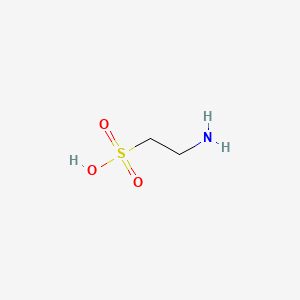
Overview
Taurine is a sulfur-containing organic compound, chemically known as 2-aminoethanesulfonic acid. In biomedical research, it is commonly discussed as a conditionally essential amino acid-like molecule with roles in osmoregulation, membrane stabilization, antioxidant defense, and modulation of inflammatory and metabolic pathways. Although it is not incorporated into proteins, taurine is widely studied for its physiological importance in tissues with high metabolic demand and in conditions involving oxidative stress, inflammation, and impaired cellular homeostasis.
As a therapeutic research entity, taurine has attracted attention in metabolic disease, tissue repair, and aging-related biology. Recent studies have examined its use as a supplement, a bioactive component in drug-delivery systems, and a mechanistic probe of signaling pathways such as high mobility group box 1 (HMGB1)/toll like receptor 4 (TLR4)/MyD88/NF-κB and p38 MAPK. These investigations place taurine at the intersection of inflammation control, metabolic regulation, and regenerative medicine, including diabetic wound healing, diabetic nephropathy, oral ulcer therapy, and cellular senescence research.
Recent Publications Summary
Recent research has examined taurine's role in metabolic regulation and lipid homeostasis. In a cross-sectional metabolomic study of Japanese adults, urinary taurine levels were significantly correlated with fish intake 42530704Jul. In animal models, taurine supplementation ameliorated hypercholesterolemia induced by hypothyroidism, reducing serum total cholesterol and LDL levels through enhanced hepatic AMPK and ACC phosphorylation 42485573Jul. A planned phase II randomized controlled trial is investigating whether taurine supplementation improves metabolic health and biological aging markers in healthcare workers, based on evidence that taurine deficiency may contribute to metabolic-related diseases 42201902May.
Taurine has demonstrated protective effects in diabetic complications. In a mouse model of streptozotocin-induced diabetes, taurine supplementation attenuated diabetic nephropathy by suppressing the HMGB1/TLR4/MyD88/NF-κB inflammatory signaling cascade, reducing inflammatory cell infiltration in renal tissue and preserving glomerular podocyte integrity markers 41864015Mar. For diabetic wound repair, taurine was incorporated into a self-healing, dual-responsive hydrogel composed of carboxymethyl chitosan and oxidized bacterial nanocellulose for sustained co-delivery with insulin; the system reversed insulin resistance, reduced Intracellular ROS, increased collagen synthesis by 30%, and promoted fibroblast and keratinocyte proliferation in vitro 41943357Apr.
Taurine supplementation has shown promise in age-related degenerative conditions. Combined metformin and taurine treatment attenuated age-related bone loss while preserving bone marrow mesenchymal stem cell function 42364025Jun. At the cellular level, peroxisomal PEX5-mediated taurine biosynthesis was identified as a regulator of replicative and oxidative stress-induced senescence in lung fibroblasts, with PEX5 expression enhancing taurine synthesis and suppressing p38 MAPK-driven pro-senescent signaling while maintaining autophagic flux 41794210Mar.
Emerging therapeutic platforms have incorporated taurine into nanoparticles and biomaterials for targeted tissue repair. polyphenol-taurine nanoparticles with pH/ROS dual-responsiveness were developed for oral ulcer therapy, demonstrating efficient free radical scavenging, suppression of pro-inflammatory M1 macrophage polarization, promotion of M2 polarization and angiogenesis, and accelerated ulcer healing in animal models 41989033Apr. In cancer immunology studies, mass spectrometry imaging of patient-derived colorectal cancer organoids identified taurine among metabolites differentially present in immune-resistant versus immune-sensitive tumor subtypes 41920069Apr.
What Changes, What Holds
1. Taurine now looks like a marker and possible mediator of metabolic state rather than only a generic metabolic adjunct
NEW DIRECTION Urinary taurine tracking with fish intake and the hypothyroidism model both extend the baseline’s metabolic-regulation theme, but they do not overturn it. The more consequential change is that taurine is being positioned as a measurable exposure-linked biomarker and as a candidate for broader metabolic-aging intervention, with the planned trial 42530704Jul42485573Jul42201902May still leaving causality and clinical benefit unsettled.
2. Taurine’s anti-inflammatory and tissue-repair roles now extend into diabetic kidney and wound pathology with mechanistic and delivery-system support
REINFORCES Suppression of HMGB1/TLR4/MyD88/NF-κB in diabetic nephropathy fits the baseline’s established inflammatory signaling focus, and the hydrogel work strengthens the regenerative-medicine use case already described for diabetic wound healing. The new studies sharpen mechanism and formulation rather than changing taurine’s place in the account 41864015Mar41943357Apr.
3. Taurine is emerging as a modulator of aging biology, but the direction is still preclinical and mechanistically split
NEW DIRECTION Combined metformin-taurine effects on bone loss and PEX5-linked taurine biosynthesis in senescence broaden the baseline’s aging-related biology into bone and fibroblast aging, areas it did not explicitly cover. The findings are complementary rather than contradictory: one suggests therapeutic benefit, the other identifies an endogenous control point for taurine production and p38 MAPK-linked senescence. Both remain early-stage and need validation in vivo and in human systems 42364025Jun41794210Mar.
4. Taurine is being repurposed as a design element in biomaterials and may also mark immune-resistant tumor states
NEW DIRECTION The nanoparticle and oral-ulcer work extends the baseline’s regenerative and anti-inflammatory uses into targeted delivery platforms, which the Overview did not yet name. The colorectal organoid metabolomics finding is different in kind: it does not establish a therapeutic role, but suggests taurine may help distinguish immune-resistant from immune-sensitive tumor biology. That is hypothesis-generating and does not yet settle whether taurine is causal, compensatory, or merely associated 41989033Apr41920069Apr.
Overview update candidates: taurine as a biomarker of dietary intake/metabolic state; taurine as a candidate intervention for metabolic health and biological aging; taurine involvement in bone loss/mesenchymal stem cell preservation; PEX5-mediated taurine biosynthesis as a regulator of cellular senescence; taurine-enabled biomaterial delivery for oral ulcer therapy; taurine as a potential metabolic marker of tumor immune state.
taurine
Background Contexts
In the literature, the biological baseline, pathological conditions, or disease models commonly surrounding taurine are described as follows:
- Cognitive decline (Disease) — 4 papers: PMIDs 42377618, 42373580, 42363714, 42360686
- cellular senescence (Biological Process) — 3 papers: PMIDs 42201902, 41938013, 41794210
- (E)-chlorogenic acid (Chemical) — 1 paper: PMIDs 41938013
- Age-related osteogenic failure (Disease) — 1 paper: PMIDs 42364025
- Alzheimer's disease (Disease) — 1 paper: PMIDs 41997281
- Chronic diabetic wounds (Disease) — 1 paper: PMIDs 41943357
- Chronic lung diseases (Disease) — 1 paper: PMIDs 41794210
- colorectal cancer (Disease) — 1 paper: PMIDs 41920069
- diabetic nephropathy (Disease) — 1 paper: PMIDs 41864015
- Diabetic Peripheral Neuropathy (Disease) — 1 paper: PMIDs 41857368
- Fish (Technology) — 1 paper: PMIDs 42530704
- Gas explosion-induced traumatic brain injury (Disease) — 1 paper: PMIDs 42216670
Methodologies & Technologies Used
Researchers utilize the following experimental methods, imaging platforms, computational models, or biological reagents to study taurine:
- polyethylene terephthalate (Chemical) — 2 papers: PMIDs 42373580, 42216670
- Wistar Rat (Organism) — 2 papers: PMIDs 42485573, 42377618
- 18F-FDG PET imaging (Technology) — 1 paper: PMIDs 42307791
- 3D human neural stem cell model (Technology) — 1 paper: PMIDs 41997281
- Adeno-associated viral (AAV) vectors (Organism) — 1 paper: PMIDs 41857368
- Adeno-associated virus (Technology) — 1 paper: PMIDs 42307791
- Alzheimer's Disease Assessment Scale-Cognitive Subscale (Clinical Metric) — 1 paper: PMIDs 42216670
- Apolipoprotein E ε4 Is a Determinant for Alzheimer-Type Pathologic Features in Tauopathies, Synucleinopathies, and Frontotemporal Degeneration (Gene) — 1 paper: PMIDs 42360686
- blood plasma (Biological Process) — 1 paper: PMIDs 42360686
- C57BL/6J mice (Organism) — 1 paper: PMIDs 42307791
- Carboxymethyl chitosan (Chemical) — 1 paper: PMIDs 41943357
- CCK-8 assays (Technology) — 1 paper: PMIDs 42307791
Molecular Interventions & Targets
The primary molecular pathways, regulatory genes, enzymes, or therapeutic agents actively targeted and manipulated in relation to taurine include:
- ACI-16664 (Chemical) — 1 paper: PMIDs 42363714
- Adiponectin (APN) (Protein) — 1 paper: PMIDs 42360686
- Amyloid beta (Aβ) (Protein) — 1 paper: PMIDs 41997281
- angiogenesis (Biological Process) — 1 paper: PMIDs 41989033
- B7 homolog 3 (B7-H3) (Protein) — 1 paper: PMIDs 41920069
- cell migration (Biological Process) — 1 paper: PMIDs 41989033
- cGAS-STING/NF-κB signaling pathway (Pathway) — 1 paper: PMIDs 41997281
- CPOPI+T (Other) — 1 paper: PMIDs 41943357
- creatine (Chemical) — 1 paper: PMIDs 42530704
- CSF amyloid (Protein) — 1 paper: PMIDs 42360686
- fatty acid (Chemical) — 1 paper: PMIDs 41920069
- Fish Intake (Other) — 1 paper: PMIDs 42530704
Observed Outcomes & Phenotypes
The phenotypic changes, physiological endpoints, or clinical metrics observed and measured in connection with taurine include:
- proinflammatory cytokine (Biological Process) — 3 papers: PMIDs 42377618, 41997281, 41864015
- plasma levels of amyloid beta (Aβ) (Clinical Metric) — 2 papers: PMIDs 42377618, 41857368
- 24-h urinary erythritol (Chemical) — 1 paper: PMIDs 42204982
- acetyl-CoA carboxylase (Protein) — 1 paper: PMIDs 42485573
- Adiponectin (APN) (Protein) — 1 paper: PMIDs 42377618
- AMP-activated protein kinases (Protein) — 1 paper: PMIDs 42485573
- AMPKα (Pathway) — 1 paper: PMIDs 42377618
- Amyloid beta (Aβ) (Protein) — 1 paper: PMIDs 42307791
- bile acid biosynthetic process (Pathway) — 1 paper: PMIDs 42204982
- biomarker-confirmed AD (Disease) — 1 paper: PMIDs 42360686
- blood glucose levels (Clinical Metric) — 1 paper: PMIDs 41864015
- Blood Pressure (Clinical Metric) — 1 paper: PMIDs 42530704
General Takeaways & Clinical Potentials
The high-level concepts, clinical translations, and overarching conclusions proposed in the research surrounding taurine are summarized below:
- clinical translation potential (Other) — 2 papers: PMIDs 42204982, 41857368
- acetyl-CoA carboxylase (Protein) — 1 paper: PMIDs 42485573
- AD pathologies (Other) — 1 paper: PMIDs 42216670
- AMPKα (Pathway) — 1 paper: PMIDs 42485573
- blood-based biomarker panels (Other) — 1 paper: PMIDs 42204982
- cancer immunity (Biological Process) — 1 paper: PMIDs 41920069
- cognitive aging (Clinical Metric) — 1 paper: PMIDs 42216670
- DN pathogenesis (Biological Process) — 1 paper: PMIDs 41864015
- elevated adiponectin levels (Other) — 1 paper: PMIDs 42360686
- energy metabolism (Biological Process) — 1 paper: PMIDs 42204982
- fluid biomarkers (Other) — 1 paper: PMIDs 42373580
- full-thickness rotator cuff tears (Disease) — 1 paper: PMIDs 42204982