ruxolitinib
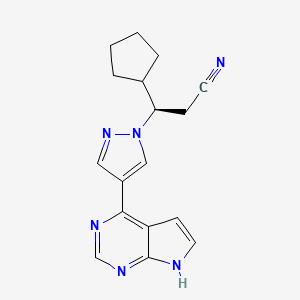
Overview
Ruxolitinib is a selective, orally administered small-molecule inhibitor of Janus kinase 1 (JAK1) and Janus kinase 2 (JAK2), two tyrosine kinases that play central roles in cytokine signaling through the JAK/STAT pathway. By blocking JAK1 and JAK2 activity, ruxolitinib suppresses downstream signaling through transcription factors such as STAT1 and STAT5A, thereby attenuating the aberrant cytokine-driven inflammation and cell proliferation that underlies several hematologic malignancies and immune-mediated disorders. It was among the first JAK inhibitors to receive regulatory approval and belongs to the broader class of Janus kinase inhibitors that has transformed the management of myeloproliferative neoplasms and inflammatory conditions.
Ruxolitinib is approved for the treatment of intermediate- or high-risk myelofibrosis (MF), polycythemia vera (PV) in patients who are resistant to or intolerant of hydroxyurea, and steroid-refractory acute and chronic graft-versus-host disease (GVHD). Its mechanism centers on the inhibition of constitutively active or mutant JAK2 (including JAK2 V617F), as well as JAK2 gain-of-function mutations, which drive pathological activation of the JAK2/STAT3 signaling pathway and CD44/JAK2/STAT3 signaling pathway in malignant hematopoietic cells. By dampening these cascades, ruxolitinib reduces splenomegaly, alleviates disease-related symptoms, and modulates immune responses relevant to both cancer and autoimmune disease contexts.
Recent Publications Summary
Recent clinical research has demonstrated ruxolitinib's efficacy across multiple hematologic malignancies and immune-mediated conditions. In steroid-refractory acute and chronic graft-versus-host disease (GVHD), long-term outcomes from 118 patients treated with ruxolitinib in a pre-approval named-patient program showed an overall response rate of 68.9% in acute GVHD 42560429Aug. Ruxolitinib has also been investigated for GVHD prevention in haploidentical hematopoietic stem-cell transplantation as part of a combinatorial regimen with anti-thymocyte globulin, calcineurin inhibitor, and short-course methotrexate, replacing mycophenolate mofetil with low-dose ruxolitinib 42532067Jul.
The JAK1/2 inhibitor has become standard first-line therapy for symptomatic myelofibrosis, with combination approaches showing enhanced efficacy. The phase 3 SENTRY trial demonstrated that selinexor, an exportin 1 inhibitor, combined with ruxolitinib achieved significantly higher spleen volume reduction (49.8% versus 28.0% at week 24) compared to placebo plus ruxolitinib in JAK inhibitor-naïve patients 42227656Jun. A phase 1 portion identified selinexor 60 mg as the recommended clinical dose with a manageable safety profile 41785311Mar. In a separate phase 2 study, the BCL-XL/BCL-2 inhibitor navitoclax was combined with ruxolitinib in JAK inhibitor-naïve myelofibrosis patients 41846295Mar. Real-world data have corroborated efficacy in related myeloproliferative conditions: a prospective German cohort of 433 patients with polycythemia vera demonstrated pronounced hematocrit reductions and leukocyte count improvements, particularly in JAK inhibitor-naïve patients 42118306May. High-dose ruxolitinib (25 mg twice daily) demonstrated feasibility and acceptable safety in a real-world myelofibrosis cohort 42081119May, and a longitudinal Japanese cohort study of 836 myelofibrosis patients characterized treatment patterns and outcomes in 281 patients receiving Janus kinase inhibitors 42102170May.
Beyond classic myeloproliferative neoplasms, ruxolitinib has shown therapeutic promise in diverse acute conditions. For intractable diarrhea following ciltacabtagene autoleucel CAR-T cell therapy in multiple myeloma, ruxolitinib led to rapid clinical improvement in three of five patients, with histopathologic evidence of response in matched biopsies 41592291Jan. Emapalumab, a monoclonal antibody targeting interferon-γ, was evaluated in combination with conventional therapy with or without ruxolitinib for pediatric hemophagocytic lymphohistiocytosis 42397658Jul. A case report documented successful combination treatment of TAFRO-like syndrome with ruxolitinib and ropeginterferon alfa-2b, highlighting the JAK/STAT pathway's role in inflammatory disease 41161803Oct. Topical ruxolitinib (15 mg/g) in 100 patients with facial vitiligo showed significant improvements across clinical indices and quality-of-life measures when combined with noninvasive imaging evaluation 42473916Jul.
Mechanistic investigations have supported ruxolitinib's efficacy in disease-specific contexts. In B-cell precursor acute lymphoblastic leukemia with JAK2 gain-of-function mutations, ruxolitinib selectively reduced STAT5 phosphorylation, with distinct Raman spectral changes detectable in JAK2-mutant cells 41762803Feb. Immunologic profiling of steroid-refractory acute GVHD revealed expansion of CD28+ CD8+ effector-memory T cells associated with a STAT1-dependent glucocorticoid receptor deficit, providing mechanistic insights into resistance mechanisms 41980031Apr. Sequential therapy experience has also emerged: momelotinib, a JAK1/JAK2/ACVR1 inhibitor, demonstrated clinical benefit in patients with myelofibrosis after ruxolitinib failure in a real-world cooperative study 42118670May.
What Changes, What Holds
1. Ruxolitinib prevents GVHD in haploidentical transplantation
NEW DIRECTION Prevention of GVHD through incorporation into myeloablative conditioning 42532067Jul represents a clinical role not covered by the approved indication, which limits ruxolitinib to steroid-refractory disease treatment. While efficacy in the established treatment setting is reconfirmed, 42560429Aug extending into prophylaxis before GVHD develops opens a distinct therapeutic strategy with potentially different timing and patient selection implications.
2. Selinexor combined with ruxolitinib doubles spleen volume reduction in JAK inhibitor-naïve myelofibrosis
NEW DIRECTION Combination approaches integrating ruxolitinib with exportin-1 inhibitors 42227656Jun and BCL-2 family inhibitors extend therapeutic strategy beyond the monotherapy model described in the Overview. Enhanced responses in newly diagnosed patients suggest clinical practice may evolve toward multi-agent frontline regimens rather than ruxolitinib monotherapy as the standard approach.
3. Ruxolitinib succeeds topically for vitiligo and systemically for inflammatory syndromes beyond approved hematologic indications
NEW DIRECTION Topical ruxolitinib for vitiligo 42473916Jul and systemic uses including rapid improvement in CAR-T-associated diarrhea 41592291Jan establish therapeutic roles the Overview does not address. These applications recast ruxolitinib as a broadly applicable anti-inflammatory agent rather than a therapy confined to myeloproliferative neoplasms and steroid-refractory GVHD.
4. Immunologic resistance in steroid-refractory GVHD involves STAT1-dependent glucocorticoid receptor deficiency
NEW DIRECTION Profiling of treatment-resistant patients 41980031Apr reveals STAT1-linked glucocorticoid dysfunction not addressed by the Overview's description of JAK pathway suppression, explaining partial responses within an approved indication. Sequential therapy with alternative JAK inhibitors after ruxolitinib failure 42118670May indicates defined resistance patterns rather than universal efficacy in steroid-refractory GVHD.
Overview update candidates: combination selinexor-ruxolitinib in myelofibrosis with demonstrated superior efficacy to monotherapy may warrant updating first-line guidance.
ruxolitinib
Background Contexts
In the literature, the biological baseline, pathological conditions, or disease models commonly surrounding ruxolitinib are described as follows:
- myelofibrosis (Disease) — 5 papers: PMIDs 42227656, 42102170, 42081119, 41846295, etc.
- acute graft versus host disease (Disease) — 4 papers: PMIDs 42560429, 42532067, 41980031, 41592291
- polycythemia vera (Disease) — 3 papers: PMIDs 42547260, 42118306, 41161803
- Allogeneic hematopoietic stem cell transplantation (Therapy) — 2 papers: PMIDs 42560429, 42531434
- JAK2 V617F (Gene) — 2 papers: PMIDs 42547260, 41161803
- liver transplantation (Therapy) — 2 papers: PMIDs 42555758, 42531434
- splenomegaly (Clinical Metric) — 2 papers: PMIDs 42227656, 42118670
- 1,2,3-Triazole (Chemical) — 1 paper: PMIDs 42360175
- Acute Erythroid Leukaemia (Disease) — 1 paper: PMIDs 42547260
- acute lymphocytic leukemia (Disease) — 1 paper: PMIDs 41762803
- Aicardi-Goutières syndrome (Cell Line) — 1 paper: PMIDs 41871482
- allogeneic bone marrow transplant (Therapy) — 1 paper: PMIDs 41592291
Methodologies & Technologies Used
Researchers utilize the following experimental methods, imaging platforms, computational models, or biological reagents to study ruxolitinib:
- immune profiling (Biological Process) — 2 papers: PMIDs 42555758, 42309064
- 25 mg twice daily (Clinical Metric) — 1 paper: PMIDs 42081119
- Adult living-donor recipients (Organism) — 1 paper: PMIDs 42555758
- allogeneic haematopoietic stem cell transplantation (Therapy) — 1 paper: PMIDs 42532067
- allograft (Technology) — 1 paper: PMIDs 42555758
- Alloreactive CD8-positive T cell (Cellular Component) — 1 paper: PMIDs 42555758
- anti-thymocyte globulin (Therapy) — 1 paper: PMIDs 42532067
- azacitidine (Therapy) — 1 paper: PMIDs 42547260
- baricitinib (Therapy) — 1 paper: PMIDs 41871482
- biochemical markers (Clinical Metric) — 1 paper: PMIDs 42401089
- biopsy (Other) — 1 paper: PMIDs 42555758
- calcineurin inhibitor (Therapy) — 1 paper: PMIDs 42532067
Molecular Interventions & Targets
The primary molecular pathways, regulatory genes, enzymes, or therapeutic agents actively targeted and manipulated in relation to ruxolitinib include:
- Hopscotch Dmel_CG1594 (Protein) — 2 papers: PMIDs 42555758, 41980031
- interferon (Protein) — 2 papers: PMIDs 42555758, 42397658
- JAK2/STAT3 signaling pathway (Pathway) — 2 papers: PMIDs 42118670, 41871482
- selinexor (Therapy) — 2 papers: PMIDs 42227656, 41785311
- TYK2-JAK1 (Protein) — 2 papers: PMIDs 42309064, 42118670
- Activin receptor-like kinase 2 (ALK2) (Protein) — 1 paper: PMIDs 42118670
- B-cell lymphoma (BCL)-XL (Protein) — 1 paper: PMIDs 41846295
- BCL2 apoptosis regulator (Protein) — 1 paper: PMIDs 41846295
- CD28+ CD8+ effector-memory T (Tem) cells (Cellular Component) — 1 paper: PMIDs 41980031
- CD44/JAK2/STAT3 signaling pathway (Pathway) — 1 paper: PMIDs 41762803
- Chronic Hepatic Graft-versus-Host Disease (Disease) — 1 paper: PMIDs 42531434
- emapalumab (Therapy) — 1 paper: PMIDs 42397658
Observed Outcomes & Phenotypes
The phenotypic changes, physiological endpoints, or clinical metrics observed and measured in connection with ruxolitinib include:
- thrombocytopenia (Clinical Metric) — 4 papers: PMIDs 42532067, 42227656, 42102170, 41785311
- anemia (Clinical Metric) — 3 papers: PMIDs 42532067, 42227656, 42102170
- nausea (Other) — 2 papers: PMIDs 42227656, 41785311
- neutropenia (Clinical Metric) — 2 papers: PMIDs 42532067, 42227656
- Absolute mean change in total symptom score (Clinical Metric) — 1 paper: PMIDs 42227656
- Aggregatibacter (Organism) — 1 paper: PMIDs 42401089
- Allograft Rejection (Disease) — 1 paper: PMIDs 42555758
- Amine oxidase copper containing 1 (Protein) — 1 paper: PMIDs 42401089
- ascites (Other) — 1 paper: PMIDs 42547260
- ascitic fluid (Other) — 1 paper: PMIDs 42547260
- ASXL1 (Gene) — 1 paper: PMIDs 42547260
- bacteremia (Disease) — 1 paper: PMIDs 42532067
General Takeaways & Clinical Potentials
The high-level concepts, clinical translations, and overarching conclusions proposed in the research surrounding ruxolitinib are summarized below:
- Acute Erythroid Leukaemia Transformation (Biological Process) — 1 paper: PMIDs 42547260
- bone marrow fibrosis (BMF) (Disease) — 1 paper: PMIDs 41846295
- Breakthrough Invasive Fungal Diseases (Disease) — 1 paper: PMIDs 42360175
- cancer precision medicine (Other) — 1 paper: PMIDs 41762803
- cardiac function (Clinical Metric) — 1 paper: PMIDs 42336033
- CD8+ Tem cell counts (Clinical Metric) — 1 paper: PMIDs 41980031
- combination drug (Therapy) — 1 paper: PMIDs 41161803
- diabetic cardiomyopathy (Disease) — 1 paper: PMIDs 42336033
- dietary interventions (Therapy) — 1 paper: PMIDs 42336033
- Drug exposure (Other) — 1 paper: PMIDs 42360175
- ex vivo JAK inhibition (Therapy) — 1 paper: PMIDs 42309064
- graft-directed intervention (Other) — 1 paper: PMIDs 42309064