rivaroxaban
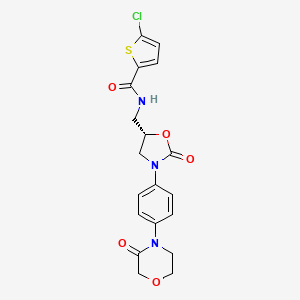
Overview
Rivaroxaban is an oral anticoagulant used in the prevention and treatment of thromboembolic disease. It belongs to the class of direct oral anticoagulants (DOACs) and acts by selectively inhibiting factor Xa, a key enzyme in the coagulation cascade that promotes thrombin generation and fibrin clot formation. By reducing factor Xa activity, rivaroxaban lowers the blood’s ability to clot and is used in a range of cardiovascular and thrombosis-related settings.
Clinically, rivaroxaban is relevant in conditions such as non-valvular atrial fibrillation, venous thromboembolism, and selected high-risk cardiovascular populations where anticoagulation is indicated. Its use is also closely tied to bleeding management and reversal strategies, including the use of andexanet alfa in severe hemorrhage. In recent research, rivaroxaban has also been studied alongside apixaban and aspirin in comparative effectiveness, dual-pathway inhibition, and pharmacokinetic interaction contexts.
Recent Publications Summary
Recent evidence demonstrates the clinical utility of rivaroxaban across diverse patient populations and therapeutic contexts. In real-world pediatric settings, rivaroxaban showed favorable outcomes in venous thromboembolism management, with thrombus resolution or improvement occurring in 68% of treated patients and clinically relevant bleeding remaining rare at 7% 42526884Jul. Among adults with non-valvular atrial fibrillation, rivaroxaban exhibited superior efficacy compared to warfarin in patients with difficult-to-control international normalized ratio values, with stroke or systemic embolism occurring in 4.44% of rivaroxaban-treated patients versus 7.16% in the warfarin group over a 12-month follow-up 42499238Jul. In patients with chronic coronary syndrome, extended dual pathway inhibition combining aspirin and rivaroxaban demonstrated net clinical benefit in high-risk populations according to revised 2024 European Society of Cardiology criteria 41614385Jan, while factor XI inhibition is being evaluated as a potentially safer anticoagulant alternative in older individuals with atrial fibrillation 41637102Feb.
Beyond stroke prevention, rivaroxaban has been investigated in peripheral artery disease management. Low-dose rivaroxaban therapy following peripheral arterial endovascular revascularization showed effectiveness in reducing major adverse limb events in real-world practice 41786009Mar. Pharmacokinetic investigations have characterized rivaroxaban's absorption profile, establishing that orally disintegrating tablets exhibit delayed absorption when administered under fed conditions without water 42082063May. Notably, no clinically relevant pharmacokinetic interaction occurs between rivaroxaban and the KRAS G12C inhibitor sotorasib, supporting the safety of concurrent anticoagulation in cancer patients requiring targeted therapy 41552958Jan.
The reversal of rivaroxaban anticoagulation has assumed clinical importance with andexanet alfa availability. Emergency reversal with andexanet alfa has been successfully employed in pediatric cases requiring urgent hemorrhage management 42069956May, and increasing adoption of andexanet alfa across National Health Service trusts in England reflects its evolving role in managing life-threatening bleeding complications from rivaroxaban anticoagulation 41406988Dec.
What Changes, What Holds
1. Rivaroxaban now appears useful beyond adult indications, but the new data are still context-specific
NEW DIRECTION Pediatric venous thromboembolism management and difficult-to-control atrial fibrillation both extend the drug’s practical reach beyond the core adult prevention/treatment framing in the Overview, while the chronic coronary syndrome findings strengthen the case for extended dual-pathway inhibition in selected high-risk patients. The factor XI inhibitor comparison also signals an emerging alternative strategy, but it does not displace rivaroxaban’s established role. 42526884Jul42499238Jul
2. Rivaroxaban’s role is expanding into peripheral vascular care and cancer-drug coadministration without changing its core anticoagulant profile
NEW DIRECTION Evidence for benefit after peripheral arterial endovascular revascularization adds a clinically relevant use not spelled out in the baseline, and the pharmacokinetic work suggests formulation and feeding conditions can matter for absorption. The lack of a meaningful interaction with sotorasib is especially useful for oncology practice, because it supports concurrent use rather than implying any new mechanism. 41786009Mar41552958Jan
3. Reversal practice is becoming more concrete, including in children, but the baseline already anticipated this direction
REINFORCES Emergency and system-level experience with andexanet alfa strengthens the existing account that severe rivaroxaban-associated bleeding may require reversal strategies, and it extends that practical framework into pediatrics and routine health-system adoption. Nothing here contradicts the Overview; instead, it sharpens how established reversal management is being implemented in real-world settings. 42069956May41406988Dec
Overview update candidates: pediatric VTE outcomes; benefit in difficult INR control; refined high-risk chronic coronary syndrome use; peripheral artery disease after revascularization; fed-state absorption behavior of orally disintegrating tablets; no relevant interaction with sotorasib; pediatric emergency reversal experience; broader adoption of andexanet alfa in practice.
rivaroxaban
Background Contexts
In the literature, the biological baseline, pathological conditions, or disease models commonly surrounding rivaroxaban are described as follows:
- apixaban (Therapy) — 2 papers: PMIDs 42397147, 42332398
- direct oral anticoagulants (Therapy) — 2 papers: PMIDs 42526884, 42499238
- Non-valvular atrial fibrillation (Disease) — 2 papers: PMIDs 42499238, 42223336
- rac-warfarin (Therapy) — 2 papers: PMIDs 42499238, 42397147
- venous thromboembolism (Disease) — 2 papers: PMIDs 42526884, 42397147
- 2024 ESC criteria (Other) — 1 paper: PMIDs 41614385
- Adrenocorticotropic hormone (ACTH) (Protein) — 1 paper: PMIDs 41540719
- anticoagulant (Chemical) — 1 paper: PMIDs 41637102
- Bioequivalence (BE) assessment (Other) — 1 paper: PMIDs 42082063
- Cancers (Clinical Metric) — 1 paper: PMIDs 41552958
- Central nervous system (CNS) metastases (Disease) — 1 paper: PMIDs 42069956
- Chronic Coronary Syndrome (Disease) — 1 paper: PMIDs 41614385
Methodologies & Technologies Used
Researchers utilize the following experimental methods, imaging platforms, computational models, or biological reagents to study rivaroxaban:
- 14 Days (Clinical Metric) — 1 paper: PMIDs 41552958
- 20 healthy subjects (Organism) — 1 paper: PMIDs 41552958
- andexanet alfa (Therapy) — 1 paper: PMIDs 42069956
- Children (Organism) — 1 paper: PMIDs 42526884
- COMPASS cohort (Other) — 1 paper: PMIDs 41614385
- Cox proportional-hazards regression (Other) — 1 paper: PMIDs 42499238
- Gaussian process-based generative model (Technology) — 1 paper: PMIDs 42082063
- individual plasma concentration-time profiles (Other) — 1 paper: PMIDs 42082063
- lower extremity revascularization (Other) — 1 paper: PMIDs 41786009
- multivariable adjustment (Other) — 1 paper: PMIDs 42499238
- OpenPrescribing Hospitals platform (Technology) — 1 paper: PMIDs 41406988
- peripheral vascular intervention (Other) — 1 paper: PMIDs 41786009
Molecular Interventions & Targets
The primary molecular pathways, regulatory genes, enzymes, or therapeutic agents actively targeted and manipulated in relation to rivaroxaban include:
- andexanet alfa (Therapy) — 2 papers: PMIDs 42332398, 41406988
- apixaban (Therapy) — 2 papers: PMIDs 42223336, 41406988
- abelacimab (Therapy) — 1 paper: PMIDs 41637102
- aspirin (Therapy) — 1 paper: PMIDs 41614385
- dabigatran (Therapy) — 1 paper: PMIDs 42223336
- edoxaban (Therapy) — 1 paper: PMIDs 42223336
- intracranial hemorrhage (Other) — 1 paper: PMIDs 41406988
- rac-warfarin (Therapy) — 1 paper: PMIDs 42223336
- sildenafil (Therapy) — 1 paper: PMIDs 42082063
- sotorasib (Therapy) — 1 paper: PMIDs 41552958
- tolvaptan (Therapy) — 1 paper: PMIDs 42082063
Observed Outcomes & Phenotypes
The phenotypic changes, physiological endpoints, or clinical metrics observed and measured in connection with rivaroxaban include:
- maximum concentrations (Clinical Metric) — 2 papers: PMIDs 42082063, 41552958
- All-cause mortality (Clinical Metric) — 1 paper: PMIDs 42499238
- AUC0-∞ (Clinical Metric) — 1 paper: PMIDs 41552958
- Bleeding Complications (Clinical Metric) — 1 paper: PMIDs 42499238
- bleeding rates (Clinical Metric) — 1 paper: PMIDs 41786009
- Bleeding risk factors (Clinical Metric) — 1 paper: PMIDs 42526884
- cerebral hemorrhage (Disease) — 1 paper: PMIDs 42069956
- Children (Organism) — 1 paper: PMIDs 42526884
- Clinically relevant bleeding (Clinical Metric) — 1 paper: PMIDs 42526884
- confidence interval (Other) — 1 paper: PMIDs 42499238
- deep vein thrombosis (Disease) — 1 paper: PMIDs 42332398
- feasibility, coverage, safety, and delivery cost (Clinical Metric) — 1 paper: PMIDs 41786009
General Takeaways & Clinical Potentials
The high-level concepts, clinical translations, and overarching conclusions proposed in the research surrounding rivaroxaban are summarized below:
- anticoagulation (Therapy) — 1 paper: PMIDs 42526884
- Bleeding Risk (Clinical Metric) — 1 paper: PMIDs 42526884
- delayed absorption (Other) — 1 paper: PMIDs 42082063
- effectiveness (Clinical Metric) — 1 paper: PMIDs 42526884
- International Normalized Ratio Monitoring (Clinical Metric) — 1 paper: PMIDs 42499238
- no clinically relevant pharmacokinetic interaction (Other) — 1 paper: PMIDs 41552958
- Non-valvular atrial fibrillation (Disease) — 1 paper: PMIDs 42499238
- outcomes (Clinical Metric) — 1 paper: PMIDs 42526884
- patient characteristics (Other) — 1 paper: PMIDs 42526884
- rac-warfarin (Therapy) — 1 paper: PMIDs 42499238
- safety profile (Clinical Metric) — 1 paper: PMIDs 42526884
- sampling schedules (Other) — 1 paper: PMIDs 42082063