prostaglandin E2
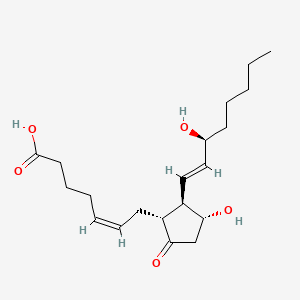
Overview
Prostaglandin E2 (PGE2) is a bioactive lipid mediator belonging to the prostaglandin family of eicosanoids, biosynthesized from arachidonic acid through the sequential actions of phospholipase A2 and Cyclooxygenase 2 (COX-2) (COX-2). It is one of the most widely studied and pleiotropic of all prostanoid signaling molecules, playing central roles in the regulation of inflammation, pain sensitization, fever, immune modulation, and vascular tone. PGE2 exerts its effects by binding to four G-protein-coupled receptor subtypes (EP1–EP4), enabling context-dependent downstream signaling that can either promote or resolve inflammatory responses depending on tissue and cellular environment. Elevated PGE2 production is a hallmark of acute and chronic inflammatory states, and its measurement in biological fluids and tissues serves as a widely accepted biomarker of inflammatory activity.
Beyond classical inflammation, PGE2 occupies a critical role at the interface of immunity and oncology. Within the tumor microenvironment, PGE2 functions as a potent immunosuppressive mediator, dampening antitumor immune responses alongside factors such as vascular endothelial growth factor A (VEGFA) and interleukin-6. Its involvement in oxidative stress signaling, including cross-talk with nuclear factor erythroid 2-related factor 2 (NRF2) and nuclear factor kappa B (NF-κB) pathways, further positions it as a convergence point for inflammatory and redox regulation across multiple disease contexts. Therapeutic strategies targeting PGE2 biosynthesis — most prominently through COX-2 inhibition — remain among the most clinically deployed anti-inflammatory interventions in medicine.
Recent Publications Summary
Recent studies have positioned prostaglandin E2 (PGE2) as a key mediator of immune regulation, treatment resistance, and tissue remodeling across several disease models. In lung adenocarcinoma, tumor-intrinsic PGE2 signaling was interrogated using Ptgs2 knockdown/deletion, 16,16-dimethyl PGE2, EP2/EP4 antagonists, and celecoxib in an anti-PD-1 mouse model to define mechanisms of acquired immunotherapy resistance; the work focused on how PGE2 reprograms natural killer (NK) cells and remodels antitumor immunity 42586608Aug. In bladder cancer, tumor-derived PGE2 was identified as a microenvironmental factor that suppressed differentiation of CCR6hiCD4+ T cells into immunostimulatory CCL5hiCD4+ T cells, thereby contributing to immune evasion and resistance to immune checkpoint inhibitor therapy 41706539Feb. In fibrotic liver, aHSC-derived PGE2 was shown to disrupt NK-cell immune surveillance and promote liver metastasis, while cyclooxygenase-2 inhibition with celecoxib restored NK-cell function and synergized with anti-NKG2A immunotherapy 41933572Apr.
Beyond cancer immunology, PGE2 was also studied in inflammatory and degenerative settings. In paclitaxel-induced peripheral neuropathy, celecoxib reduced thermal and mechanical hypersensitivity and ameliorated neuronal damage in rats, accompanied by downregulation of COX-2 and PGE2 in dorsal root ganglia, sciatic nerve, and plantar skin, supporting the COX-2/PGE2 axis as a therapeutic target 42048120Apr. In renal aging, microsomal prostaglandin E synthase-2 (mPGES-2) was identified as a driver of podocyte senescence through a PGE2/EP1 signaling axis; genetic deletion of Ptges2 and pharmacological inhibition with SZ0232 both attenuated renal aging, improved glomerulosclerosis and podocyte injury, and also mitigated age-related osteoporosis in aged mice 42347750Jun.
Other publications linked PGE2 to cell signaling and biomarker studies. In mesenchymal stem cell research for acute graft-versus-host disease, both trophoblast-derived MSCs and bone marrow MSCs inhibited CD4+ and CD8+ T-cell proliferation and cytokine release, with their effects possibly involving PGE2 rather than indoleamine 2,3-dioxygenase 1, transforming growth factor-β, or programmed death-ligand 1/Fas signaling 42260632Jun. In tobacco heating product exposure, HTPE triggered PGE2-dependent calcium influx that was essential for eryptosis in human erythrocytes 41796629Mar. PGE2 was also evaluated as part of a plasma biomarker panel in autism spectrum disorder alongside glutaminase and 8-isoprostane, where combined ROC modeling was used to assess diagnostic performance in children with ASD versus controls 42343199Jun. In skin photoaging, avenanthramide C from oat sprout extract protected UVB-exposed human keratinocytes and reconstructed skin by suppressing inflammatory mediators and reducing PGE2 production 42102478May. Finally, cetirizine transferosomal delivery was explored for alopecia management on the basis that cetirizine may promote hair growth by increasing PGE2 expression 42030261Apr.
What Changes, What Holds
1. tumor PGE2 now appears to drive immune evasion and immunotherapy resistance in multiple Cancers
NEW DIRECTION tumor-derived PGE2 is being extended beyond its established immunosuppressive role in the tumor microenvironment to a more specific mechanism: shaping NK-cell function and CD4+ T-cell differentiation in ways that promote resistance to checkpoint blockade and anti-PD-1 therapy 42586608Aug41706539Feb. That leaves the baseline intact but strengthens the case that PGE2 is not just a general inflammatory mediator in cancer; it is a mechanistic resistance factor and a potential combinatorial target.
2. COX-2/PGE2 inhibition remains a plausible way to blunt neuropathic, fibrotic, and age-related tissue injury
REINFORCES celecoxib-responsive pain hypersensitivity and PGE2-linked renal aging fit the established view that PGE2 is a context-dependent mediator of inflammation and tissue dysfunction, while extending that logic into peripheral neuropathy, podocyte senescence, glomerulosclerosis, and osteoporosis 42048120Apr42347750Jun. Nothing here displaces the baseline; instead, these studies sharpen its translational relevance by showing that blocking the COX-2/PGE2 axis can improve diverse nonmalignant phenotypes.
3. PGE2 is being used as a signaling readout and mechanistic probe in several noncanonical contexts
NEW DIRECTION PGE2 is now appearing in roles the Overview does not cover: as a candidate mediator of mesenchymal stem cell immunomodulation in graft-versus-host disease, as a trigger of calcium-dependent eryptosis after tobacco heating product exposure, and as a component of biomarker and topical-protection studies 42260632Jun41796629Mar42343199Jun42102478May42030261Apr. These are not contradictions, but they broaden PGE2 from a canonical inflammatory prostanoid to a practical signal in cell-therapy, toxicology, diagnostics, and dermatology.
Overview update candidates: tumor PGE2 as a mechanism of immune checkpoint resistance; PGE2-linked NK-cell and T-cell reprogramming; PGE2-dependent calcium influx/eryptosis; PGE2 as a biomarker component in ASD panels; PGE2 reduction as a readout of skin-protective interventions.
prostaglandin e2
Background Contexts
In the literature, the biological baseline, pathological conditions, or disease models commonly surrounding prostaglandin e2 are described as follows:
- acquired resistance (Biological Process) — 1 paper: PMIDs 42586608
- acute cerebral infarction (Disease) — 1 paper: PMIDs 41932059
- adenocarcinoma of the lung (Disease) — 1 paper: PMIDs 42586608
- Aminopyrazine (Chemical) — 1 paper: PMIDs 41747509
- androgenic alopecia (Disease) — 1 paper: PMIDs 42030261
- antigen-presenting cell (Cellular Component) — 1 paper: PMIDs 41758201
- autism spectrum disorder (Disease) — 1 paper: PMIDs 42343199
- bladder cancer (Disease) — 1 paper: PMIDs 41706539
- Cancer-related mortality (Clinical Metric) — 1 paper: PMIDs 41933572
- CD8+ cytotoxic T lymphocytes (Cellular Component) — 1 paper: PMIDs 41758201
- checkpoint inhibitor (Therapy) — 1 paper: PMIDs 41706539
- Chokyungjongok-tang (Therapy) — 1 paper: PMIDs 41707810
Methodologies & Technologies Used
Researchers utilize the following experimental methods, imaging platforms, computational models, or biological reagents to study prostaglandin e2:
- lipopolysaccharide (LPS) (Chemical) — 2 papers: PMIDs 42189047, 41932059
- Wistar Rat (Organism) — 2 papers: PMIDs 42159308, 42048120
- 16,16-Dimethyl Prostaglandin E2 (Chemical) — 1 paper: PMIDs 42586608
- activated hepatic stellate cells (Cellular Component) — 1 paper: PMIDs 41933572
- Adults (Other) — 1 paper: PMIDs 42552011
- affinity ultrafiltration (Technology) — 1 paper: PMIDs 41924844
- AlCl3 method (Technology) — 1 paper: PMIDs 41921765
- anti-osteoporosis drug treatment (Technology) — 1 paper: PMIDs 42347750
- Anti-programmed cell death 1 (Protein) — 1 paper: PMIDs 42398505
- Avena sativa (Organism) — 1 paper: PMIDs 42102478
- behavioral assay (Technology) — 1 paper: PMIDs 42048120
- biphasic release profile (Clinical Metric) — 1 paper: PMIDs 42159308
Molecular Interventions & Targets
The primary molecular pathways, regulatory genes, enzymes, or therapeutic agents actively targeted and manipulated in relation to prostaglandin e2 include:
- Cyclooxygenase 2 (COX-2) (Protein) — 5 papers: PMIDs 42586608, 42102478, 42048120, 41933572, etc.
- celecoxib (Therapy) — 3 papers: PMIDs 42236688, 42048120, 41933572
- PTGER2 (Protein) — 2 papers: PMIDs 42586608, 41932059
- 8-epi-prostaglandin F2alpha (Chemical) — 1 paper: PMIDs 42343199
- Anti-NKG2A-Based Immunotherapy (Therapy) — 1 paper: PMIDs 41933572
- avenanthramide c (Chemical) — 1 paper: PMIDs 42102478
- Band 3 (Protein) — 1 paper: PMIDs 41796629
- Biochemical outcomes (Clinical Metric) — 1 paper: PMIDs 42552011
- calpain (Protein) — 1 paper: PMIDs 41796629
- Caspase-3 (CASP3) (Protein) — 1 paper: PMIDs 41796629
- CCL5hiCD4+ T cells (Cellular Component) — 1 paper: PMIDs 41706539
- CCR6hiCD4+ T cells (Cellular Component) — 1 paper: PMIDs 41706539
Observed Outcomes & Phenotypes
The phenotypic changes, physiological endpoints, or clinical metrics observed and measured in connection with prostaglandin e2 include:
- Cyclooxygenase 2 (COX-2) (Protein) — 2 papers: PMIDs 42159308, 41924844
- -6.47 mV (Clinical Metric) — 1 paper: PMIDs 42133922
- Adverse Events (Other) — 1 paper: PMIDs 42552011
- arachidonic acid (Chemical) — 1 paper: PMIDs 42166445
- Area Under the Receiver Operating Characteristic Curve (Clinical Metric) — 1 paper: PMIDs 42343199
- bioadhesion (Clinical Metric) — 1 paper: PMIDs 42133922
- blood-aqueous humor barrier (Biological Process) — 1 paper: PMIDs 42189047
- calcium (Chemical) — 1 paper: PMIDs 41796629
- CAMP (Biological Process) — 1 paper: PMIDs 42586608
- CD3-positive CD25-high Foxp3-positive T cell (Cellular Component) — 1 paper: PMIDs 42260632
- CD4-positive T cell (Cellular Component) — 1 paper: PMIDs 42260632
- CD8-positive T-cell (Cellular Component) — 1 paper: PMIDs 42260632
General Takeaways & Clinical Potentials
The high-level concepts, clinical translations, and overarching conclusions proposed in the research surrounding prostaglandin e2 are summarized below:
- (chemo)radiotherapy (Biological Process) — 1 paper: PMIDs 42236688
- 15-PGDH/PGE2 pathway (Pathway) — 1 paper: PMIDs 42000627
- Acquired Resistance to PD-1 Blockade (Biological Process) — 1 paper: PMIDs 42586608
- aging-associated osteoporosis (Disease) — 1 paper: PMIDs 42347750
- aHSC-PGE2-NK Cell Axis (Pathway) — 1 paper: PMIDs 41933572
- aldesleukin (Therapy) — 1 paper: PMIDs 41747509
- Anesthesia-related postoperative neuropathic pain (Disease) — 1 paper: PMIDs 42159308
- anti-inflammatory neuroprotectants (Therapy) — 1 paper: PMIDs 41932059
- anti-photoaging treatment (Therapy) — 1 paper: PMIDs 42102478
- assay validation (Other) — 1 paper: PMIDs 42343199
- calibration (Clinical Metric) — 1 paper: PMIDs 42343199
- causal relationship (Other) — 1 paper: PMIDs 42166445