luteolin
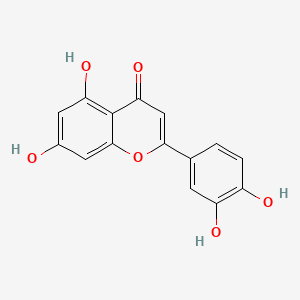
Overview
Luteolin is a naturally occurring flavone widely distributed in edible plants and medicinal herbs. It is a dietary polyphenol of interest in biomedical research because of its reported antioxidant and anti-inflammatory properties, as well as broader pharmacological potential. In the recent literature provided, luteolin is also described as a biopharmaceutical classification system (BCS) Class II compound, indicating low aqueous solubility but relatively favorable permeability, a profile that has motivated formulation research to improve its delivery.
Biologically, luteolin has been investigated in relation to oxidative stress, apoptosis, inflammatory signaling, and disease-modifying effects in several experimental settings. Recent studies have explored its activity in cancer, neuroprotection, hearing loss, sepsis-associated encephalopathy, and myocardial infarction repair, often in combination with advanced delivery systems such as nanosuspensions, PEGylated nano-vesicular platforms, nanocomposites, and hydrogels. It has also been quantified as a phytochemical marker in plant materials and herbal preparations, reflecting its importance in natural product analysis and quality control.
Recent Publications Summary
Recent studies have continued to examine luteolin as a bioactive flavonoid with anticancer, metabolic, anti-inflammatory, and neuroprotective potential. In gastric cancer, luteolin was reported to inhibit hyperglycemia-induced epithelial-mesenchymal transition and malignant progression by targeting AKR1B1-mediated glucose metabolism, with in vitro work in high-glucose conditions and in vivo validation in a nude mouse model 42446820Jul. In hepatocellular carcinoma arising in a MASH context, luteolin reduced tumor burden, serum alpha-fetoprotein levels, hepatic lipid accumulation, and fibrosis in mice, while mechanistic experiments supported involvement of the AMPK/ACC pathway and suppression of de novo lipogenesis 42097399May. A separate translational study described luteolin as a bioactive compound from Celastrus orbiculatus stem with inhibitory activity against cervical cancer via CA2 suppression, although the abstract provided limited mechanistic detail 41651043Feb.
Several publications focused on improving luteolin delivery and bioavailability. A nanosuspension approach was developed to enhance luteolin’s aqueous solubility and oral bioavailability, addressing its poor water solubility and low intestinal permeability 42050999Apr. PEGylated luteolin-loaded aspasomes were designed as a brain-targeted nano-vesicular platform for stress-induced cognitive dysfunction, with the optimized formulation showing high entrapment efficiency and nanoscale size 42091762May. Luteolin-loaded lactoferrin-chondroitin sulfate nanoparticles were also prepared for intranasal delivery in sepsis-associated encephalopathy; these nanocomposites improved cellular uptake in microglia, enhanced antioxidant and anti-inflammatory activity, and promoted microglial polarization toward the M2 phenotype 41570413Jan. In myocardial infarction repair, an injectable conductive hydrogel incorporating luteolin provided sustained release and was reported to reduce inflammatory cytokines, alleviate oxidative stress, preserve connexin 43 expression, lower ventricular arrhythmias, and mitigate adverse cardiac remodeling in rats 42008242Apr.
Other studies examined luteolin in metabolic and inflammatory contexts. A luteolin-loaded WPI/Pueraria lobata amylopectin composite gel improved luteolin stability and intestinal release, and the encapsulated compound promoted thermogenic gene expression in brown-differentiated cells, inhibited inflammatory cytokines in RAW264.7 macrophages, and improved insulin sensitivity-related outcomes in differentiated white adipocytes 42283235Jun. In noise-induced hearing loss, luteolin was investigated as a protective antioxidant against oxidative stress and apoptosis, with potential regulation of the EGR1/SPRY4 axis 42067975May. Luteolin was also identified among key flavonoids in Dolichos lablab flower extract linked to anti-inflammatory activity through multi-target modulation, and it appeared as one of the major flavonoids in Fagonia cretica and pitaya peel flour, where these matrices showed antioxidant and, in some cases, modest antidiabetic or functional food-related properties 42383440Jul42168772May42128980May.
Additional publications addressed luteolin extraction, profiling, and analytical quantification. A green extraction strategy using deep eutectic solvents optimized luteolin recovery from Chrysanthemi Indici Flos, with choline chloride/1,4-butanediol identified as the best solvent system and the resulting extract showing antioxidant activity and mixed-type α-glucosidase inhibition with synergistic potentiation of acarbose 42406988Jul. Luteolin was also quantified as a marker compound in Taraxaci Herba by HPLC and near-infrared spectroscopy-based chemometric models 41740399Feb, and it was among the bitter constituents of Platycodonic Radix predicted by TAS2R docking 42155616May. In chrysanthemum tea metabolomics, luteolin was part of the flavonoid profile associated with variable-temperature drying and functional quality changes 41895980Mar.
What Changes, What Holds
1. Luteolin’s anticancer profile now extends to glucose-linked and metabolic mechanisms, but remains preclinical
NEW DIRECTION These studies broaden the baseline’s cancer discussion by tying luteolin to hyperglycemia-driven malignant progression and MASH-associated hepatocarcinogenesis, suggesting its effects may depend on metabolic context rather than only generic anti-inflammatory or antioxidant actions 42446820Jul42097399May. The cervical cancer report adds another tumor setting, but the evidence is still early and mechanistically uneven, so the main update is a wider disease map, not a settled therapeutic role 41651043Feb.
2. Formulation work is moving luteolin from a poorly soluble flavone toward delivery-specific applications
REINFORCES The new studies strengthen the baseline’s point that luteolin’s low aqueous solubility is a practical barrier and that nanotechnology-based formulations are being used to overcome it 42050999Apr42091762May. What changes is not luteolin’s known pharmacology but the confidence that its delivery can be tailored for oral, brain-targeted, intranasal, and cardiac use. The remaining uncertainty is whether these platforms will translate beyond proof-of-concept models.
3. Luteolin is being positioned as a multi-system modulator in metabolic, inflammatory, and neuroprotective settings
REINFORCES These reports fit the established picture of luteolin as an antioxidant and anti-inflammatory flavone with broader experimental activity, while adding specific support for metabolic regulation, hearing protection, and immune-cell polarization 42283235Jun42067975May. The work does not overturn the baseline; it sharpens the range of contexts in which those properties are being tested. The main limitation is that the benefits remain model-dependent and not yet clinically established.
4. Analytical and extraction methods are expanding luteolin’s use as a quality marker and recoverable phytochemical
METHOD The new extraction, profiling, and quantification studies change how luteolin is obtained and measured rather than what it does biologically 42406988Jul41740399Feb. They support its continued role as a marker compound in herbal materials and show that greener solvents, chemometric models, and metabolomic workflows can improve recovery and detection. This is methodological progress, with practical value for standardization and functional-food analysis, not a new biological claim.
Overview update candidates: luteolin’s metabolic-context anticancer activity; improved delivery platforms for oral; brain; intranasal; and cardiac use; expanded analytical/green extraction methods for quality control.
luteolin
Background Contexts
In the literature, the biological baseline, pathological conditions, or disease models commonly surrounding luteolin are described as follows:
- adipose tissue (Clinical Metric) — 1 paper: PMIDs 42283235
- anti-tumor activity (Clinical Metric) — 1 paper: PMIDs 41651043
- biopharmaceutical classification system (BCS) Class II (Other) — 1 paper: PMIDs 42050999
- Celastrus orbiculatus (Organism) — 1 paper: PMIDs 41651043
- cognitively impaired patients (Disease) — 1 paper: PMIDs 42091762
- Dandelion (Taraxacum mongolicum Hand.-Mazz.) (Organism) — 1 paper: PMIDs 42068787
- Fagonia cretica L. (Organism) — 1 paper: PMIDs 42168772
- Hair Cell Death (Biological Process) — 1 paper: PMIDs 42067975
- Jinsihuangju (Other) — 1 paper: PMIDs 41895980
- myocardial infarction (Disease) — 1 paper: PMIDs 42008242
- noise-induced hearing loss (Disease) — 1 paper: PMIDs 42067975
- ocular alkali burns (Disease) — 1 paper: PMIDs 42301120
Methodologies & Technologies Used
Researchers utilize the following experimental methods, imaging platforms, computational models, or biological reagents to study luteolin:
- 2,2-diphenyl-1-picrylhydrazyl (Technology) — 2 papers: PMIDs 42168772, 42068787
- preparative HPLC (Technology) — 2 papers: PMIDs 42068787, 41740399
- ε-poly-L-lysine (Chemical) — 1 paper: PMIDs 42301120
- 2,2'-azino-bis(3-ethylbenzothiazoline-6-sulfonic acid) (Other) — 1 paper: PMIDs 42168772
- 3T3-L1 (Cell Line) — 1 paper: PMIDs 42283235
- 5-O-xylosyltransferase (Protein) — 1 paper: PMIDs 42041236
- absorption, distribution, metabolism, excretion, and toxicity (ADMET) (Other) — 1 paper: PMIDs 42168772
- anti-solvent precipitation (Technology) — 1 paper: PMIDs 42050999
- ascorbyl palmitate (Chemical) — 1 paper: PMIDs 42091762
- BitterX (Technology) — 1 paper: PMIDs 42155616
- Box-Behnken design (BBD) (Technology) — 1 paper: PMIDs 42068787
- Brij 52 (Chemical) — 1 paper: PMIDs 42091762
Molecular Interventions & Targets
The primary molecular pathways, regulatory genes, enzymes, or therapeutic agents actively targeted and manipulated in relation to luteolin include:
- quercetin (Chemical) — 3 papers: PMIDs 42168772, 42128980, 42068787
- 2-phenylchromane flavonoid (Chemical) — 2 papers: PMIDs 42128980, 41895980
- chicoric acid (Chemical) — 2 papers: PMIDs 42068787, 41740399
- ferulic acid (Chemical) — 2 papers: PMIDs 42168772, 42068787
- trans-caffeic acid (Chemical) — 2 papers: PMIDs 42068787, 41740399
- (+)-catechin (Chemical) — 1 paper: PMIDs 42168772
- (2-hydroxypropyl)-β-cyclodextrin (Chemical) — 1 paper: PMIDs 42155616
- (E)-chlorogenic acid (Chemical) — 1 paper: PMIDs 42068787
- (E)-sinapic acid (Chemical) — 1 paper: PMIDs 42168772
- (E,E)-α-farnesene (Chemical) — 1 paper: PMIDs 41895980
- acarbose (Therapy) — 1 paper: PMIDs 42168772
- active ingredients (Other) — 1 paper: PMIDs 42068787
Observed Outcomes & Phenotypes
The phenotypic changes, physiological endpoints, or clinical metrics observed and measured in connection with luteolin include:
- antioxidant capacity (Clinical Metric) — 2 papers: PMIDs 42168772, 41895980
- neuroprotective effects (Clinical Metric) — 2 papers: PMIDs 42091762, 41570413
- oxidative stress (Biological Process) — 2 papers: PMIDs 42067975, 42008242
- 100% accuracy (Clinical Metric) — 1 paper: PMIDs 41740399
- 2,2'-azino-bis(3-ethylbenzothiazoline-6-sulfonic acid) (Other) — 1 paper: PMIDs 42068787
- 4451 mg/L (Clinical Metric) — 1 paper: PMIDs 42041236
- 6.5% HP-β-CD plus 10% xylitol (Chemical) — 1 paper: PMIDs 42155616
- 87% conversion rate (Clinical Metric) — 1 paper: PMIDs 42041236
- acetylcholinesterase (Protein) — 1 paper: PMIDs 42091762
- antibacterial and bactericidal activity (Biological Process) — 1 paper: PMIDs 42168772
- binding affinities (Clinical Metric) — 1 paper: PMIDs 42168772
- bioaccessibility (Clinical Metric) — 1 paper: PMIDs 42128980
General Takeaways & Clinical Potentials
The high-level concepts, clinical translations, and overarching conclusions proposed in the research surrounding luteolin are summarized below:
- comprehensive cardiac repair and functional recovery (Other) — 1 paper: PMIDs 42008242
- food and pharmaceutical industry (Other) — 1 paper: PMIDs 42068787
- formation mechanism of JSHJ tea quality (Other) — 1 paper: PMIDs 41895980
- Future directions (Other) — 1 paper: PMIDs 42168772
- nanotherapeutic strategy (Other) — 1 paper: PMIDs 42301120
- ocular chemical injuries (Disease) — 1 paper: PMIDs 42301120
- optimized ultrasound-assisted extraction method (Other) — 1 paper: PMIDs 42068787
- pediatric medication adherence (Clinical Metric) — 1 paper: PMIDs 42155616
- pitaya peel flour (Other) — 1 paper: PMIDs 42128980
- quality assessment and control of TH samples (Other) — 1 paper: PMIDs 41740399
- stress-related neurobehavioral disorders (Disease) — 1 paper: PMIDs 42091762
- therapeutic strategy for SAE (Other) — 1 paper: PMIDs 41570413