indocyanine green
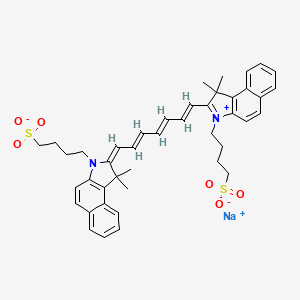
Overview
Indocyanine green (ICG) is a water-soluble tricarbocyanine dye, a synthetic small molecule whose extended conjugated cyanine backbone gives it strong absorption and emission in the near-infrared (NIR) window of roughly 700–900 nm. Because biological tissue is relatively transparent and weakly autofluorescent at these wavelengths, ICG functions as an optical contrast agent that permits deep-tissue imaging with high signal-to-background. Following intravenous administration it binds rapidly to plasma proteins, particularly serum albumin, and is cleared almost exclusively by hepatic uptake and biliary excretion without enterohepatic recirculation — a pharmacokinetic profile that has long underpinned its use in assessing hepatic function and hepatobiliary flow.
Clinically, ICG is used chiefly as a diagnostic and intraoperative fluorescence tracer: mapping sentinel lymph nodes in breast, endometrial, and other Cancers, angiographically assessing tissue perfusion at surgical anastomoses, and gauging graft function during liver transplantation and machine perfusion. Beyond this diagnostic role, the same photophysical properties make ICG an active photomedicine agent — under NIR irradiation it converts absorbed light into heat for photothermal therapy and generates reactive oxygen species for photodynamic effects. These capabilities, together with its established biocompatibility, have driven its incorporation into nanocarriers and composite biomaterials (for example liposomal, gas-vesicle, hyaluronan-, and chitosan-based constructs) intended to improve its stability, prolong circulation, and target it to tumors or infected tissue, where it is often paired with mechanisms such as cuproptosis or combined photothermal–photodynamic antibacterial action.
Recent Publications Summary
Recent studies have continued to use indocyanine green (ICG) as a versatile fluorescent and photothermal agent in both clinical imaging and therapeutic platforms. In liver transplantation, ICG fluorescence kinetics during hypothermic oxygenated machine perfusion were explored as a potential predictor of early allograft dysfunction, with perfusate fluorescence at 40–45 minutes and post-reperfusion tissue fluorescence showing discrimination between dysfunctional and non-dysfunctional grafts, while bile fluorescence and donor variables were not predictive 42484715Jul. In hepatobiliary surgery, a separate study examined the structure-activity relationship of cyanine dyes with respect to hepatic uptake and excretion, noting that ICG is clinically used for lesion identification but may have a suboptimal chemical structure for excretion-based diagnostic readouts 41996556Apr.
ICG was also widely investigated for fluorescence-guided surgical mapping and imaging. A protocol for the INFINITE trial described ICG fluorescence imaging as a non-radioactive alternative to technetium-labelled tracers for sentinel lymph node biopsy in breast cancer, aiming to assess real-world effectiveness and implementation of ICG-guided axillary staging 42342397Jun. In endometrial cancer, ICG sentinel lymph node mapping was compared between conventional laparoscopy and robot-assisted surgery 42157366May. A correspondence on axillary staging emphasized that ICG lymphography drainage time may have promising discrimination but requires validation and assessment of clinical utility beyond a single reported threshold 42360511Jun. In colorectal cancer surgery, quantitative ICG perfusion assessment combined with interpretable machine learning was proposed to improve objective evaluation of bowel perfusion and anastomotic leak risk 42202707May.
Multiple publications used ICG as a photothermal or photodynamic component in cancer and antimicrobial nanoplatforms. ICG-conjugated gas vesicles enabled acoustically triggered delivery for bladder cancer photothermal therapy, prolonging circulation, improving tumor accumulation, and producing complete tumor regression without detectable toxicity in a mouse model 42127030May. tumor cell membrane-coated ICG nanoprobes were developed for targeted near-infrared fluorescence imaging of triple-negative breast cancer, with strong tumor accumulation and retention of ICG optical and photothermal properties 42049061Apr. ICG-loaded hollow Mn/Fe bimetallic nanoboxes were used to amplify reactive oxygen species generation and endoplasmic reticulum stress for photo/chemodynamic therapy in lung cancer 42044265Apr. In another platform, ICG-loaded gold nanorods embedded in a thermoresponsive chitosan-based hydrogel supported sustained release and combined photothermal and ROS-mediated antitumor effects with immune activation 41842712Mar. ICG was also incorporated into hyaluronic acid-engineered liposomes for infection-responsive biofilm penetration and synergistic photothermal-photodynamic antibacterial therapy, where near-infrared irradiation induced bacterial membrane disruption and biofilm disintegration 42067348May.
Additional studies highlighted ICG’s role in combination nanomedicine and immunotherapy. copper peroxide nanoparticles co-assembled with ICG were designed to overcome antioxidant defenses and enhance photodynamic and chemodynamic immunotherapy in triple-negative breast cancer, with glutathione consumption promoting singlet oxygen generation and immunogenic cell death that synergized with immune checkpoint blockade and IDO1-related immunosuppression relief 41525757Jan. Cu@MSNs@ICG nanomachines were reported to generate photothermal pulse output under NIR-II irradiation, enabling self-thermophoretic motion and combined photothermal therapy with cuproptosis 42378513Jun. A peptide hydrogel-liposome composite also showed prolonged in vivo release of ICG, illustrating its use as a payload in controlled-release biomaterial systems 41702512Feb.
What Changes, What Holds
1. ICG’s hepatic readout may be more useful for perfusion-based graft assessment than for excretion-based diagnostics
NEW DIRECTION Recent work keeps ICG within its established hepatobiliary role, but it weakens the idea that its chemical structure is equally well suited to all excretion-readout applications. The machine-perfusion study suggests fluorescence kinetics can add prognostic value for early allograft dysfunction, while the structure-activity analysis implies that excretion-based diagnostic performance may be limited by the dye’s chemistry rather than by simple uptake alone 42484715Jul41996556Apr. That makes perfusion monitoring look more promising than excretion as the main frontier.
2. ICG-guided sentinel mapping is moving toward broader implementation, but its clinical thresholds remain unsettled
REINFORCES These studies strengthen the established use of ICG for fluorescence-guided lymphatic mapping and surgical staging, especially as a non-radioactive alternative to conventional tracers. What changes is not the role itself but the maturity of the evidence: the protocol and comparative work suggest real-world adoption is being actively tested, while the correspondence underscores that drainage-time cutoffs still need validation before they can be treated as clinically settled 42342397Jun42157366May. The quantitative perfusion paper also extends its intraoperative imaging utility without displacing the baseline 42202707May.
3. ICG is increasingly being engineered as a multifunctional therapeutic payload rather than a simple photosensitizer
REINFORCES The nanoplatform studies do not overturn ICG’s known photothermal and photodynamic behavior; they show how far that behavior can be amplified, localized, and combined with other mechanisms. Across tumor, antibacterial, and immune-active systems, ICG remains the optical core, but the new work mainly sharpens the baseline by demonstrating improved delivery, retention, and multimodal action in more elaborate carriers 42127030May42067348May. These are extensions of the same photomedicine logic, not a new biological role.
4. ICG-based nanomedicine is expanding into immune modulation and cuproptosis without replacing its established optical functions
REINFORCES The copper peroxide and Cu@MSNs systems add mechanistic depth by linking ICG to glutathione depletion, immunogenic cell death, and cuproptosis, but they still depend on the dye’s familiar NIR-triggered photothermal or photodynamic activity. That means the new work broadens the therapeutic combinations around ICG rather than contradicting the Overview’s account of it as a photomedicine agent and delivery payload 41525757Jan42378513Jun. The peptide hydrogel result mainly reinforces controlled-release use 41702512Feb.
Overview update candidates: the machine-perfusion fluorescence kinetics for graft dysfunction prediction; the caution that ICG’s structure may be suboptimal for excretion-based diagnostic readouts; and the growing use of ICG in controlled-release; immune-modulating; and cuproptosis-linked nanomedicine.
indocyanine green
Background Contexts
In the literature, the biological baseline, pathological conditions, or disease models commonly surrounding indocyanine green are described as follows:
- immunosuppressive microenvironment (Other) — 2 papers: PMIDs 42044265, 41842712
- reactive oxygen species (Chemical) — 2 papers: PMIDs 42044265, 41525757
- Asymptomatic carotid stenosis (Disease) — 1 paper: PMIDs 42144356
- Axillary dissection (Therapy) — 1 paper: PMIDs 42295461
- cancer cell (Cellular Component) — 1 paper: PMIDs 42378513
- chemodynamic therapy (Therapy) — 1 paper: PMIDs 41525757
- Ciucci pathway (Pathway) — 1 paper: PMIDs 42295461
- Colon Tumor (Disease) — 1 paper: PMIDs 42202707
- Early-Stage Endometrial Cancer (Disease) — 1 paper: PMIDs 42157366
- endometrial cancer (Disease) — 1 paper: PMIDs 42157366
- endoplasmic reticulum stress (Biological Process) — 1 paper: PMIDs 42044265
- fluorescent dye (Chemical) — 1 paper: PMIDs 41996556
Methodologies & Technologies Used
Researchers utilize the following experimental methods, imaging platforms, computational models, or biological reagents to study indocyanine green:
- (E)-chlorogenic acid (Chemical) — 1 paper: PMIDs 41638952
- 4T1 cells (Cell Line) — 1 paper: PMIDs 42295973
- 4T1 tumor mice model (Organism) — 1 paper: PMIDs 41638952
- 808 nm LED (Technology) — 1 paper: PMIDs 42067348
- AI/machine learning (Technology) — 1 paper: PMIDs 42202707
- Aibi (Chemical) — 1 paper: PMIDs 42295973
- Axillary dissection (Therapy) — 1 paper: PMIDs 42360511
- BC mouse models (Organism) — 1 paper: PMIDs 42127904
- Bile (Biological Process) — 1 paper: PMIDs 42484715
- biosynthetic gas vesicles (Technology) — 1 paper: PMIDs 42127030
- blue dye (Chemical) — 1 paper: PMIDs 42342397
- cell membrane-encapsulation methods (Other) — 1 paper: PMIDs 42049061
Molecular Interventions & Targets
The primary molecular pathways, regulatory genes, enzymes, or therapeutic agents actively targeted and manipulated in relation to indocyanine green include:
- glutathione (Chemical) — 2 papers: PMIDs 41734864, 41525757
- BMN@ICG (Chemical) — 1 paper: PMIDs 42044265
- Boronic Acid-Modified Mesoporous Silica (Chemical) — 1 paper: PMIDs 41842712
- bowel perfusion (Clinical Metric) — 1 paper: PMIDs 42202707
- Carboxymethyl chitosan (Chemical) — 1 paper: PMIDs 41842712
- carotid endarterectomy (Therapy) — 1 paper: PMIDs 42144356
- cGAS-STING signaling pathway (Pathway) — 1 paper: PMIDs 41734864
- chitosan (Chemical) — 1 paper: PMIDs 41842712
- copper (Chemical) — 1 paper: PMIDs 42378513
- copper peroxide (Chemical) — 1 paper: PMIDs 41525757
- cuproptosis (Biological Process) — 1 paper: PMIDs 42378513
- cyclic dinucleotides (Chemical) — 1 paper: PMIDs 41702512
Observed Outcomes & Phenotypes
The phenotypic changes, physiological endpoints, or clinical metrics observed and measured in connection with indocyanine green include:
- Area Under the Receiver Operating Characteristic Curve (Clinical Metric) — 2 papers: PMIDs 42360511, 42127030
- immunogenic cell death (Biological Process) — 2 papers: PMIDs 41734864, 41638952
- tumor cell apoptosis (Biological Process) — 2 papers: PMIDs 42044265, 41842712
- tumor inhibition rate (Clinical Metric) — 2 papers: PMIDs 41734864, 41638952
- 87.7% tumor regression (Clinical Metric) — 1 paper: PMIDs 41990934
- alkyl radical (Other) — 1 paper: PMIDs 42295973
- Area Under the Curve (Clinical Metric) — 1 paper: PMIDs 42484715
- Bile Fluorescence (Clinical Metric) — 1 paper: PMIDs 42484715
- biofilm (Biological Process) — 1 paper: PMIDs 42067348
- carcinoma in situ detection (Clinical Metric) — 1 paper: PMIDs 42127904
- CDK4/6 inhibitor-resistant tumors (Disease) — 1 paper: PMIDs 41825845
- CDK4/6 inhibitor-sensitive tumors (Disease) — 1 paper: PMIDs 41825845
General Takeaways & Clinical Potentials
The high-level concepts, clinical translations, and overarching conclusions proposed in the research surrounding indocyanine green are summarized below:
- Chemoimmunotherapy (Therapy) — 1 paper: PMIDs 41638952
- ChiCTR2200067094 (Other) — 1 paper: PMIDs 42127904
- ChiCTR2400092677 (Other) — 1 paper: PMIDs 42127904
- clinical utility (Other) — 1 paper: PMIDs 42360511
- clinically translatable strategy (Other) — 1 paper: PMIDs 42127030
- discrimination (Other) — 1 paper: PMIDs 42360511
- dual-modal image-guided surgery (Other) — 1 paper: PMIDs 42187067
- Early Allograft Dysfunction (Disease) — 1 paper: PMIDs 42484715
- early assessment of therapeutic efficacy (Other) — 1 paper: PMIDs 41825845
- excellent biocompatibility (Other) — 1 paper: PMIDs 42049061
- Graft Quality (Clinical Metric) — 1 paper: PMIDs 42484715
- ICG-based PTT (Therapy) — 1 paper: PMIDs 42127030