hydrogen peroxide
Overview
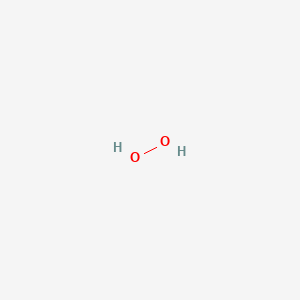
Hydrogen peroxide (H2O2) is a small, reactive oxygen species that is widely studied in chemistry, biology, and medicine. In living systems, it functions as both a signaling molecule and a mediator of oxidative stress. At low to moderate levels, H2O2 participates in redox signaling; at higher levels, it can damage lipids, proteins, and nucleic acids and contribute to inflammation, tissue injury, and cell death. Because of this dual role, hydrogen peroxide is frequently used experimentally to model oxidative stress in cells and tissues, including neuronal, osteoblastic, and cardiomyocyte systems.
In biomedical research, hydrogen peroxide is also a central substrate and trigger in many catalytic and responsive platforms. Enzyme systems such as Glucose oxidase (GOD) generate H2O2, while nanozymes, peroxidase-like materials, and Fenton-active metals use it to produce more reactive species such as hydroxyl radicals. This makes H2O2 important in cancer therapy, antibacterial treatment, wound healing, biosensing, and oxidative-stress biology. It is also a key biomarker in pathological states such as cancer, inflammation, diabetic wounds, and other redox-imbalanced conditions.
Recent Publications Summary
Recent publications demonstrate hydrogen peroxide as a central trigger and mediator in advanced therapeutic platforms targeting cancer, neurodegenerative diseases, and wound healing. Multiple studies developed H2O2-responsive nanocatalysts and nanocomposites that leverage endogenous or exogenous hydrogen peroxide to generate reactive oxygen species and hydroxyl radicals for enhanced tumor efficacy 42587445Aug42439123Jul42358224Jun. These systems exploit the characteristic elevation of H2O2 in diseased tissues as a stimulus for controlled drug release and therapeutic activation. Notable examples include H2O2-triggered chlorine and hydroxyl radical nanogenerators achieving up to ~80% cancer cell death in vitro through synergistic radical-mediated oxidative stress 42587445Aug, and lipid-based carriers engineered for ROS-triggered cargo release 42359958Jun. Chemodynamic therapy platforms based on Fenton-type reactions convert hydrogen peroxide into hydroxyl radicals to induce ferroptosis and immunogenic cell death, often coupled with DNA logic circuits or metal-organic frameworks to enable precise mitochondrial disruption and redox imbalance amplification 41952381Apr42300038Jun.
Hydrogen peroxide has emerged as a key component in hypoxia-ameliorating therapeutic strategies, where catalase-engineered or calcium peroxide-based nanomaterials catalytically convert endogenous H2O2 into oxygen to relieve intratumoral hypoxia and sensitize tumors to radiotherapy and phototherapy 42306934Jun41819039Mar. Multifunctional nanoplatforms integrate H2O2-catalytic activity with immune modulation—such as macrophage membrane-camouflaged catalase-functionalized black phosphorus nanosheets in hepatocellular carcinoma and bioengineered microbial nanohybrids that leverage ferroptosis for enhanced immunotherapy 42306934Jun42246518Jun. copper-based platforms catalyzed H2O2 production of reactive oxygen species for synergized radiotherapy approaches with polyamine depletion 42332425Jun. In Alzheimer's disease research, H2O2-responsive nanocomposites activated by elevated hydrogen peroxide levels in the diseased brain released therapeutic payloads including donepezil and antioxidant components, triggering mitophagy activation and microglial polarization toward anti-inflammatory phenotypes 42441421Jul. Additionally, glutathione-responsive systems and GSH-cleavable linkers enabled dual-stimulus activation (glutathione plus H2O2) for enhanced photodynamic therapy efficacy 42358224Jun.
Beyond cancer therapy, hydrogen peroxide was investigated for diabetic wound healing, where iron-doped carbon dots and copper-based nanozymes catalyzed H2O2 conversion to bactericidal hydroxyl radicals to combat multidrug-resistant bacteria including MRSA 42099268May42054707Apr. In dental applications, 6% hydrogen peroxide combined with violet or blue light activation achieved notable color change and bleaching efficacy in tooth whitening, though light activation reduced hydrogen peroxide penetration into the pulp chamber compared to non-activated treatment 42521933Jul. Phenoselenazine derivatives designed as Aβ42 aggregation inhibitors demonstrated strong antioxidant activity by conferring protection against hydrogen peroxide-induced cytotoxicity in neuronal cells 42504619Jul, while geopropolis extracts also showed protective effects against hydrogen peroxide-induced oxidative stress 41901279Mar.
Hydrogen peroxide served as a critical biomarker and analytical target in diagnostic and sensing platforms. A hydrogel-integrated electrochemical sensor enabled 24-day in situ monitoring of hydrogen peroxide as a stress-responsive signaling molecule in plant stems, providing ultraearly pollution stress warning within 1–2 days of environmental pollutant exposure 42476588Jul. Nanozyme-based colorimetric and electrochemical immunoassays leveraged hydrogen peroxide as a substrate for signal amplification: copper-based nanoparticles with peroxidase-like activity catalyzed H2O2 to generate hydroxyl radicals for sensitive point-of-care detection of glucose and cholesterol in human serum 42384177Jul, while hydrogel-confined Au@Pt nanozymes achieved sensitive detection of hydrogen peroxide itself as an oxidative stress biomarker in complex biological matrices 42263297Jun. Trimetallic surface-engineered nanozymes demonstrated enhanced H2O2 catalytic activity for ultrasensitive immunoassay applications 42246701Jun. Soft contact lens care solutions containing 3.42% hydrogen peroxide were evaluated for disinfection efficacy and neutralization kinetics against standard microbial strains 42374155Jun, and iron-doped carbon dots with Fenton activity enabled smartphone-based and spectrofluorometric urinary uric acid monitoring for point-of-care renal diagnostics 41812496Mar.
What Changes, What Holds
1. ferroptosis emerges as a hydrogen peroxide-catalyzed endpoint in chemodynamic cancer therapy
NEW DIRECTION Fenton-type platforms convert hydrogen peroxide into hydroxyl radicals to induce ferroptosis and immunogenic cell death 41952381Apr42587445Aug, cell fate mechanisms absent from the Overview's account of H2O2-driven cancer efficacy. While the baseline establishes nanozyme-based ROS generation for oncology, ferroptosis represents a mechanistically distinct endpoint—a form of iron-dependent death not previously characterized for H2O2 in this context—substantially broadening the therapeutic pathways available to exploit H2O2 elevation in tumors.
2. Catalytic oxygen generation from hydrogen peroxide relieves intratumoral hypoxia and extends H2O2-driven therapy into neurodegenerative disease
NEW DIRECTION Catalase-engineered and calcium peroxide nanomaterials convert endogenous hydrogen peroxide into oxygen to sensitize radiotherapy and phototherapy 42306934Jun, a bioconversion mechanism entirely absent from the Overview. Additionally, H2O2-responsive nanocomposites targeting Alzheimer's disease release neuroprotective payloads including donepezil and trigger mitophagy activation 42441421Jul, establishing a novel role for hydrogen peroxide in neuroinflammatory disease unaddressed in the baseline.
3. Iron-doped nanozymes catalyze hydrogen peroxide into bactericidal hydroxyl radicals for multidrug-resistant wound infection control
NEW DIRECTION Iron-doped carbon dots and copper-based nanozymes generate bactericidal hydroxyl radicals from hydrogen peroxide in diabetic wounds, controlling multidrug-resistant bacteria including MRSA 42099268May. While the Overview identifies wound healing as an H2O2-important application, it specifies neither the antimicrobial mechanism nor subsequent dental applications, where 6% hydrogen peroxide with light activation achieved bleaching efficacy 42521933Jul, extending H2O2's role into cosmetic and oral health domains previously uncharacterized.
4. Nanozyme and electrochemical platforms achieve point-of-care hydrogen peroxide detection for pathological biomarking
REINFORCES Point-of-care platforms exploit peroxidase-like nanozymes to translate endogenous hydrogen peroxide levels into quantifiable diagnostic signals 42384177Jul42263297Jun, operationalizing the Overview's designation of H2O2 as a key pathological biomarker. The advancement represents a functional bridge from conceptual biomarker status toward deployable clinical infrastructure that leverages hydrogen peroxide's redox-signaling role for early disease detection and monitoring.
Overview update candidates: ferroptosis induction; H2O2-to-oxygen conversion for hypoxia relief; Alzheimer's disease neuroprotection; antimicrobial mechanisms in diabetic wounds.
hydrogen peroxide
Background Contexts
In the literature, the biological baseline, pathological conditions, or disease models commonly surrounding hydrogen peroxide are described as follows:
- reactive oxygen species (Chemical) — 11 papers: PMIDs 42587445, 42383369, 42359958, 42322008, etc.
- Alzheimer's disease (Disease) — 6 papers: PMIDs 42474786, 42441421, 42335451, 42107267, etc.
- photochemotherapy (Biological Process) — 6 papers: PMIDs 42518188, 42470667, 42439123, 42358224, etc.
- chemodynamic therapy (Therapy) — 5 papers: PMIDs 42383369, 42170851, 41990532, 41871782, etc.
- hypoxia (Biological Process) — 5 papers: PMIDs 42587445, 42518188, 42470667, 42332425, etc.
- oxidative stress (Biological Process) — 5 papers: PMIDs 42581011, 42412905, 42033875, 41922124, etc.
- tumor microenvironment (Biological Process) — 4 papers: PMIDs 42470667, 42383369, 42148957, 41952381
- Chronic diabetic wounds (Disease) — 3 papers: PMIDs 42584271, 42332920, 42099268
- Intracellular ROS (Chemical) — 3 papers: PMIDs 42126988, 42097419, 42043281
- Synthetic nanozymes (Other) — 3 papers: PMIDs 42246701, 42170851, 42148957
- triple-negative breast cancer (Disease) — 3 papers: PMIDs 42474418, 42470668, 41780685
- Age-related osteogenic failure (Disease) — 2 papers: PMIDs 42138188, 42023609
Methodologies & Technologies Used
Researchers utilize the following experimental methods, imaging platforms, computational models, or biological reagents to study hydrogen peroxide:
- Glucose oxidase (GOD) (Protein) — 13 papers: PMIDs 42584271, 42579023, 42518188, 42384177, etc.
- 3,3',5,5'-tetramethylbenzidine (Chemical) — 7 papers: PMIDs 42579023, 42384177, 42325203, 42300353, etc.
- human serum (Organism) — 6 papers: PMIDs 42455351, 42384177, 42204080, 42108061, etc.
- ELISA (Technology) — 4 papers: PMIDs 42579023, 42319751, 42246701, 41797024
- gold nanoparticles (Technology) — 4 papers: PMIDs 42579023, 42455351, 42093395, 41490353
- dynamic light scattering (Technology) — 3 papers: PMIDs 42359958, 42227580, 42093395
- Fenton-like reaction (Biological Process) — 3 papers: PMIDs 42097419, 41819039, 41740575
- glutathione (Chemical) — 3 papers: PMIDs 42474786, 42474418, 41921766
- high-performance liquid chromatography (Technology) — 3 papers: PMIDs 42359676, 42325203, 42108061
- manganese dioxide (Chemical) — 3 papers: PMIDs 42518188, 42470667, 42349733
- nanozyme (Protein) — 3 papers: PMIDs 42579023, 42349733, 42325203
- reactive oxygen species (Chemical) — 3 papers: PMIDs 42474786, 42307438, 42300579
Molecular Interventions & Targets
The primary molecular pathways, regulatory genes, enzymes, or therapeutic agents actively targeted and manipulated in relation to hydrogen peroxide include:
- Cardiac troponin I (TNNI3) (Protein) — 5 papers: PMIDs 42455351, 42118913, 42093395, 42083727, etc.
- copper(2+) (Chemical) — 5 papers: PMIDs 42455351, 42126988, 42054707, 42003377, etc.
- glutathione (Chemical) — 4 papers: PMIDs 42358224, 41952381, 41839262, 41525757
- calcium peroxide (Chemical) — 3 papers: PMIDs 42328680, 42126988, 41819039
- copper peroxide (Chemical) — 3 papers: PMIDs 42097419, 41780685, 41525757
- doxorubicin (Therapy) — 3 papers: PMIDs 42300004, 42134406, 42043281
- mitochondrion (Cellular Component) — 3 papers: PMIDs 42441421, 42003377, 41952381
- reactive oxygen species (Chemical) — 3 papers: PMIDs 42412905, 42003377, 41952381
- 3,3',5,5'-tetramethylbenzidine (Chemical) — 2 papers: PMIDs 42300732, 42263297
- Acetylcholinesterase (AChE) (Protein) — 2 papers: PMIDs 42107267, 42013744
- calcium (Chemical) — 2 papers: PMIDs 42126988, 41819039
- Carcinoembryonic antigen (CEA) (Protein) — 2 papers: PMIDs 42579023, 42300353
Observed Outcomes & Phenotypes
The phenotypic changes, physiological endpoints, or clinical metrics observed and measured in connection with hydrogen peroxide include:
- reactive oxygen species (Chemical) — 22 papers: PMIDs 42581011, 42518188, 42470668, 42470667, etc.
- •OH radicals (Chemical) — 12 papers: PMIDs 42455178, 42384177, 42332920, 42246518, etc.
- dioxygen (Chemical) — 9 papers: PMIDs 42518188, 42470667, 42455178, 42332425, etc.
- immunogenic cell death (Biological Process) — 8 papers: PMIDs 42470667, 42455178, 42439123, 42332425, etc.
- cytotoxicity (Clinical Metric) — 7 papers: PMIDs 42581011, 42574446, 42474418, 42470667, etc.
- oxidative stress (Biological Process) — 7 papers: PMIDs 42579659, 42474786, 42455178, 42446804, etc.
- detection limit (Clinical Metric) — 6 papers: PMIDs 42579023, 42359676, 42325203, 42204080, etc.
- glutathione (Chemical) — 6 papers: PMIDs 42470668, 42446782, 42383859, 42217346, etc.
- lipid peroxidation (Biological Process) — 6 papers: PMIDs 42528415, 42446804, 42446782, 42438928, etc.
- dendritic cell maturation (Biological Process) — 5 papers: PMIDs 42455178, 42332425, 42044076, 41871782, etc.
- hydroxyl radicals (Chemical) — 5 papers: PMIDs 42584271, 42358224, 42349733, 42204080, etc.
- malondialdehyde (Biological Process) — 5 papers: PMIDs 42581011, 42217346, 42135688, 41922124, etc.
General Takeaways & Clinical Potentials
The high-level concepts, clinical translations, and overarching conclusions proposed in the research surrounding hydrogen peroxide are summarized below:
- oxidative stress (Biological Process) — 6 papers: PMIDs 42574446, 42531223, 42446782, 41961470, etc.
- cancer immunotherapy (Biological Process) — 5 papers: PMIDs 42328680, 42266067, 42170851, 41952381, etc.
- chemodynamic therapy (Therapy) — 4 papers: PMIDs 42358224, 42126988, 42108064, 41780685
- Clinical diagnostics (Other) — 3 papers: PMIDs 42204080, 42118913, 41475227
- Alzheimer's disease (Disease) — 2 papers: PMIDs 42504619, 42441421
- biomarker detection (Clinical Metric) — 2 papers: PMIDs 42065546, 41691890
- diabetic wound management (Other) — 2 papers: PMIDs 42584271, 42233718
- photochemotherapy (Biological Process) — 2 papers: PMIDs 42358224, 42269008
- Redox Balance (Biological Process) — 2 papers: PMIDs 41961470, 41922124
- 96 clinical samples (Other) — 1 paper: PMIDs 42093395
- abemaciclib (Therapy) — 1 paper: PMIDs 42490602
- Activated immune responses (Biological Process) — 1 paper: PMIDs 42439123