hyaluronic acid
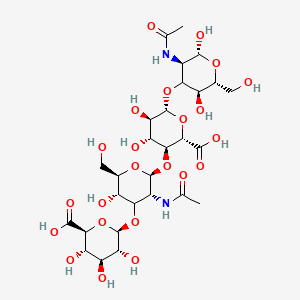
Overview
Hyaluronic acid (HA) is a naturally occurring, high-molecular-weight polysaccharide and major component of the extracellular matrix (ECM) found throughout mammalian tissues. It is a linear glycosaminoglycan composed of repeating disaccharide units of glucuronic acid and N-acetylglucosamine. HA plays critical roles in tissue hydration, lubrication, and structural integrity, and serves as a ligand for cell surface receptors such as CD44, which mediate cellular interactions and inflammatory responses. Beyond its endogenous structural role, hyaluronic acid has emerged as a versatile bioactive scaffold in regenerative medicine, therapeutic delivery, and clinical treatment of degenerative diseases. Its biocompatibility, viscoelastic properties, and capacity to be chemically modified make it an attractive platform for injectable hydrogels, nanocomposites, and targeted pharmaceutical formulations.
Recent Publications Summary
Recent research has demonstrated hyaluronic acid's versatility in targeted drug delivery systems. A prodrug delivery platform incorporating hyaluronic acid conjugated with a doxorubicin prodrug achieved CD44-mediated cellular targeting and glutathione-responsive intracellular activation in breast cancer cells 42401301Jul. HA-coated liposomal formulations have also been optimized for systemic delivery, with AI-guided optimization producing sustained-release formulations of linagliptin that improved insulin sensitivity in a polycystic ovary syndrome model 41928011Apr. Injectable hydrogel formulations combining hyaluronic acid with polymeric or protein components have emerged as promising biomaterial platforms; a polyethylene glycol hydrogel incorporating high-molecular-weight HA demonstrated controlled in situ gelation and viscoelastic properties suitable for use as a vitreous substitute 42446486Jul, while a composite system combining nanofibrillated silks with tyramine-modified HA achieved favorable injectability and enhanced mechanical properties for tissue regeneration applications 42320704Jun.
Hyaluronic acid has been increasingly applied to organ transplantation and cardiovascular materials. During normothermic machine perfusion of liver grafts, hyaluronic acid clearance by liver sinusoidal endothelial cells served as a functional marker of graft quality, with impaired HA clearance correlating with elevated inflammatory cytokine expression 42538579Jul. For bioprosthetic heart valves, surface engineering with hyaluronic acid hydrogel coatings reduced thrombosis and calcification risk while promoting endothelial regeneration by mimicking the vascular endothelial glycocalyx structure 42386110Jul. At the molecular level, nanoparticle diffusion studies in HA-containing extracellular matrix mimetics revealed that transport is governed by particle-to-network size ratios and local effective viscosity, establishing a predictive framework for optimizing nanotherapeutic biodistribution 42371946Jun.
Clinical and preclinical investigations have confirmed hyaluronic acid's efficacy in joint health. A randomized controlled trial is evaluating high-dose cross-linked intra-articular HA for pain, physical function, and muscle strength in patients with knee osteoarthritis 42424346Jul. In a minimally invasive animal model, intra-articular HA injection improved gait, preserved cartilage glycosaminoglycan content, and reduced subchondral bone changes, with additional benefits when combined with purified exosome product therapy 42051070Apr.
Emerging evidence has identified novel antimicrobial and systemic metabolic roles for hyaluronic acid. Electrostatic grafting of quaternary ammonium salts onto HA generated materials with potent activity against Escherichia coli, Staphylococcus aureus, and Propionibacterium acnes, suggesting therapeutic potential for antibiotic-free wound dressings 42573344Aug. Oral dietary supplementation with HA produced profound shifts in small-intestinal microbiota composition, increased microbial diversity, and enhanced systemic redox status and lipolysis markers compared to pectin controls 42314883Jun. When combined with complementary supplements in aging studies, low-dose HA contributed to preservation of lean mass, grip strength, and bone mineral density 41914716Mar.
What Changes, What Holds
1. Multiple HA platforms achieve targeted delivery in cancer and metabolic disease
REINFORCES HA-conjugated prodrugs, liposomal coatings, and composite hydrogels applied to doxorubicin targeting and linagliptin-enhanced insulin sensitivity confirm the baseline's platform potential. Vitreous substitutes and tissue regeneration matrices exemplify the established injectable hydrogel architecture, relying on CD44-mediated uptake and viscoelasticity rather than discovering novel HA properties 42401301Jul42446486Jul.
2. Organ graft quality and bioprosthetic function depend on hyaluronic acid interactions
NEW DIRECTION HA clearance by liver sinusoidal endothelial cells serves as a functional marker during transplant perfusion, establishing HA's diagnostic role in graft viability assessment—entirely absent from the Overview's established scope. Surface hydrogel coatings on bioprosthetic heart valves reduce thrombosis and promote endothelial regeneration by mimicking the native glycocalyx, introducing HA's application to cardiovascular device engineering 42538579Jul42386110Jul.
3. Intra-articular hyaluronic acid preserves cartilage structure in osteoarthritis
NEW DIRECTION Controlled trials and animal models demonstrate HA's efficacy in preserving cartilage glycosaminoglycan content, maintaining joint function, and preventing subchondral bone changes—a specific application to degenerative joint disease that the Overview does not address. Combined therapy with exosomal products suggests potential synergies in osteoarthritis management 42424346Jul42051070Apr.
4. Antimicrobial and microbiota-modulatory functions emerge for hyaluronic acid
NEW DIRECTION Electrostatic grafting of quaternary ammonium salts generates potent activity against skin pathogens including Staphylococcus aureus and Escherichia coli, opening therapeutic applications for antibiotic-free wound dressings. Oral supplementation shifts small-intestinal microbiota composition, increases microbial diversity, and enhances systemic redox and lipolysis markers—revealing antimicrobial and microbiota-modulatory roles entirely outside the Overview's focus on structural and drug-delivery functions 42573344Aug42314883Jun.
Overview update candidates: Paragraphs 2 and 3 (transplantation markers; cardiovascular engineering; osteoarthritis efficacy) have sufficient evidence for inclusion; paragraph 4's antimicrobial and metabolic roles are emergent and need confirmation.
hyaluronic acid
Background Contexts
In the literature, the biological baseline, pathological conditions, or disease models commonly surrounding hyaluronic acid are described as follows:
- reactive oxygen species (Chemical) — 5 papers: PMIDs 42452855, 42447220, 42047963, 41949057, etc.
- chemotherapy (Therapy) — 3 papers: PMIDs 42573487, 42530708, 42259411
- knee osteoarthritis (Disease) — 3 papers: PMIDs 42424346, 42418481, 42051070
- antibiotic (Therapy) — 2 papers: PMIDs 42541438, 42173463
- antibiotic resistance (Biological Process) — 2 papers: PMIDs 42573344, 42336007
- biofilm (Biological Process) — 2 papers: PMIDs 42526507, 42173463
- biofilm formation (Biological Process) — 2 papers: PMIDs 42541438, 42336007
- Diabetic wounds (Disease) — 2 papers: PMIDs 41966380, 41864449
- ferroptosis (Biological Process) — 2 papers: PMIDs 42573487, 42435348
- macrophage (Cellular Component) — 2 papers: PMIDs 42475218, 42447220
- osteoarthritis (Disease) — 2 papers: PMIDs 42447220, 42173463
- oxidative stress (Biological Process) — 2 papers: PMIDs 42469965, 42435348
Methodologies & Technologies Used
Researchers utilize the following experimental methods, imaging platforms, computational models, or biological reagents to study hyaluronic acid:
- hydrogel (Other) — 5 papers: PMIDs 42472801, 42470325, 42452855, 42336007, etc.
- CD44 (Protein) — 4 papers: PMIDs 42493250, 42475218, 42435348, 42259411
- dopamine (Chemical) — 4 papers: PMIDs 42447220, 42173463, 42097778, 42030679
- dynamic light scattering (Technology) — 4 papers: PMIDs 42530708, 42425241, 42371946, 42047963
- injectable hydrogel (Technology) — 4 papers: PMIDs 42469965, 42447220, 42446486, 42320704
- reactive oxygen species (Chemical) — 4 papers: PMIDs 42518690, 42475218, 42173463, 42097778
- alginate (Chemical) — 3 papers: PMIDs 42276469, 42097778, 42030679
- gelatin (Other) — 3 papers: PMIDs 42425137, 42336007, 42097778
- L-arginine (Chemical) — 3 papers: PMIDs 42470325, 42411126, 42393458
- liposome (Other) — 3 papers: PMIDs 42573487, 42485205, 42425241
- mouse (Organism) — 3 papers: PMIDs 42518690, 42452855, 42425137
- Phenylboronic acid (Chemical) — 3 papers: PMIDs 42452855, 42394477, 42097778
Molecular Interventions & Targets
The primary molecular pathways, regulatory genes, enzymes, or therapeutic agents actively targeted and manipulated in relation to hyaluronic acid include:
- CD44 (Protein) — 3 papers: PMIDs 42493250, 42401301, 42312473
- doxorubicin (Therapy) — 2 papers: PMIDs 42401301, 41855820
- Glutathione peroxidase 4 (Protein) — 2 papers: PMIDs 42435348, 41855820
- polyethylene glycol (Chemical) — 2 papers: PMIDs 42485205, 42446486
- reactive oxygen species (Chemical) — 2 papers: PMIDs 42263142, 41966380
- 2-Nitrobenzenesulfonyl (Chemical) — 1 paper: PMIDs 42401301
- Acyl-CoA synthetase long-chain family member 4 (ACSL4) (Protein) — 1 paper: PMIDs 42435348
- Adenosine A2B receptor (Protein) — 1 paper: PMIDs 42518690
- adenosine deaminase (Protein) — 1 paper: PMIDs 42518690
- amifostine (Therapy) — 1 paper: PMIDs 42530708
- Anti-inflammatory metabolism (Biological Process) — 1 paper: PMIDs 42485205
- antibody-drug conjugate (Therapy) — 1 paper: PMIDs 42002047
Observed Outcomes & Phenotypes
The phenotypic changes, physiological endpoints, or clinical metrics observed and measured in connection with hyaluronic acid include:
- angiogenesis (Biological Process) — 5 papers: PMIDs 42469965, 42394477, 42283951, 42275203, etc.
- cytocompatibility (Biological Process) — 5 papers: PMIDs 42526507, 42472801, 42425241, 42336007, etc.
- reactive oxygen species (Chemical) — 4 papers: PMIDs 42469965, 42435348, 42275203, 42173463
- Staphylococcus aureus (Organism) — 4 papers: PMIDs 42573344, 42541438, 42425137, 42336007
- apoptotic process (Biological Process) — 3 papers: PMIDs 42469965, 42435348, 42411126
- biocompatibility (Other) — 3 papers: PMIDs 42573344, 42470325, 42320704
- cytotoxicity (Clinical Metric) — 3 papers: PMIDs 42493250, 42425241, 42401301
- Escherichia coli (Organism) — 3 papers: PMIDs 42573344, 42541438, 42425137
- inflammation (Biological Process) — 3 papers: PMIDs 42470325, 42469965, 42435348
- inflammatory response (Biological Process) — 3 papers: PMIDs 42336007, 42300853, 42097778
- wound closure (Clinical Metric) — 3 papers: PMIDs 42470325, 42452855, 42425137
- Aggrecan (ACAN) (Protein) — 2 papers: PMIDs 42425241, 42418481
General Takeaways & Clinical Potentials
The high-level concepts, clinical translations, and overarching conclusions proposed in the research surrounding hyaluronic acid are summarized below:
- oxidative stress (Biological Process) — 3 papers: PMIDs 42469965, 42452855, 42435348
- inflammation (Biological Process) — 2 papers: PMIDs 42530708, 42435348
- Actuation (Biological Process) — 1 paper: PMIDs 42300963
- Adenosine Deaminase-Adenosine-Adenosine A2B Receptor Axis (Pathway) — 1 paper: PMIDs 42518690
- advanced and metastatic solid tumors (Disease) — 1 paper: PMIDs 41949057
- age-related muscle and bone loss (Disease) — 1 paper: PMIDs 41914716
- antitumor efficacy (Clinical Metric) — 1 paper: PMIDs 42283951
- atherosclerosis (Disease) — 1 paper: PMIDs 42475218
- biofilm formation (Biological Process) — 1 paper: PMIDs 42541438
- Biologics (Therapy) — 1 paper: PMIDs 42425501
- biomarkers of endothelial injury (Clinical Metric) — 1 paper: PMIDs 42198847
- Cancer Cell Selectivity (Biological Process) — 1 paper: PMIDs 42401301