honokiol
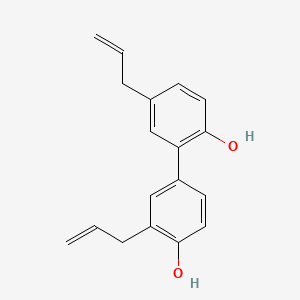
Overview
Honokiol is a naturally occurring biphenolic phenolic compound originally isolated from Magnolia species. It has attracted biomedical interest because of its broad pharmacological activity profile, including reported anti-inflammatory, antioxidant, antimicrobial, and anticancer effects. In recent literature, honokiol has also been discussed as a small-molecule modulator of mitochondrial and cellular stress pathways, including the NAD+-SIRT3 axis, which is relevant to metabolic dysfunction and tissue injury.
From a pharmaceutical perspective, honokiol is notable both as a bioactive scaffold and as a lead compound for derivative design. Its relatively modest antibacterial potency and limited tissue selectivity have motivated chemical optimization, while its ability to influence tumor cell survival, mitochondrial function, and oxidative stress has supported investigation in cancer and kidney disease models. Related compounds and combination strategies in the same research space include metformin, temozolomide, enzalutamide, vancomycin, and Androgen receptor (AR)-directed approaches.
Recent Publications Summary
Recent studies have examined honokiol as an antibacterial scaffold and as a modulator of stress-response pathways in cancer, diabetes, and kidney disease. In methicillin-resistant Staphylococcus aureus (MRSA), honokiol showed moderate in vitro activity and was reported to bind the hexose phosphate transport regulatory protein A (HptA), locking it into a nonfunctional conformation and blocking glucose-6-phosphate uptake under nutrient-limited wound conditions; this was linked to carbon starvation, redox imbalance, reactive oxygen species (ROS) burst, membrane damage, DNA fragmentation, and biofilm eradication in a mouse wound infection model 42486039Jul. A separate medicinal chemistry study used honokiol as a scaffold to generate piperazine derivatives for MRSA pneumonia, identifying compound 13f as a lung-enriched agent with substantially improved potency versus honokiol, rapid bactericidal activity, reduced biofilm biomass, attenuated staphyloxanthin production, and limited resistance emergence over serial passages 41763021Feb.
Several publications focused on honokiol-based formulations to improve delivery and therapeutic performance. Liposomal honokiol nanoparticles were tested in dimethylhydrazine-induced colon carcinogenesis in rats, where they were reported to attenuate tumor development and modulate oxidative stress, inflammation, apoptosis, autophagy, and lipid metabolism pathways 42418059Jul. Oral honokiol-loaded solid lipid nanoparticle were evaluated in streptozotocin-induced type 1 diabetes in mice and were associated with lower blood glucose, improved insulin levels, reduced food and water intake, and protection of pancreatic beta-cells through antioxidant and anti-apoptotic effects, including reduced cleaved Caspase-3 (CASP3) expression and increased Nuclear factor erythroid 2-related factor 2 (NRF2) signaling 41856197Mar. In glioblastoma, honokiol was incorporated into a protein-free nanodisc platform that enabled deep tumor infiltration across the blood-brain barrier; delivered honokiol disassembled 3D tumor spheroids, suppressed orthotopic tumor growth, and extended median survival by nearly 2.5-fold without systemic toxicity 41965058Apr.
Other studies highlighted honokiol in combination strategies and mechanistic reviews. In drug-resistant glioblastoma cells, enzalutamide enhanced honokiol-induced apoptotic killing through an intrinsic Bak-mitochondrion-caspase cascade mechanism, linking androgen receptor inhibition with increased honokiol sensitivity 42203314May. A review of diabetic kidney disease metabolic memory identified honokiol among interventions that may restore the NAD+-SIRT3 axis, with preclinical evidence suggesting benefits on mitochondrial dysfunction, oxidative stress, fibrosis, and albuminuria 41991506Apr. Honokiol was also detected as a major component in Weichang'an pill pharmacokinetic analyses, where it was among the relatively abundant prototype compounds identified in rat plasma and tissues after administration 41880912Mar.
What Changes, What Holds
1. Honokiol now looks like a scaffold for anti-MRSA agents that can drive carbon starvation and biofilm collapse, not just a modest antibacterial compound
NEW DIRECTION The MRSA work extends the baseline’s antibacterial theme by giving honokiol a specific bacterial target and a plausible failure mode for the pathogen, while the derivative study shows that medicinal chemistry can markedly improve potency and lung exposure. That does not overturn the overview’s caution about modest native activity, but it does sharpen the case for honokiol-derived anti-staphylococcal leads 42486039Jul41763021Feb.
2. Formulation advances make honokiol look more therapeutically usable across cancer, diabetes, and brain tumors
REINFORCES These studies do not change what honokiol is understood to do so much as show that delivery engineering can convert its known stress-pathway activity into stronger in vivo effects. The liposomal, solid-lipid, and nanodisc platforms all support the baseline view of honokiol as a bioactive scaffold limited by delivery and selectivity, while suggesting that formulation may be as important as new chemistry for realizing its effects 42418059Jul41856197Mar.
3. Combination and review data keep honokiol centered on mitochondrial stress biology, but they also show its effects may depend on partner drugs and disease context
REINFORCES enzalutamide’s ability to amplify honokiol-induced apoptosis fits the overview’s emphasis on tumor-cell survival and mitochondrial pathways, rather than replacing it with a new mechanism. The diabetic kidney disease review likewise strengthens the existing NAD+-SIRT3 framing and links it to fibrosis and albuminuria, but remains preclinical and inferential. The pharmacokinetic finding mainly adds exposure context, not a new biological role 42203314May41991506Apr41880912Mar.
Overview update candidates: honokiol as a scaffold for improved anti-MRSA agents; formulation-enabled delivery as a major determinant of efficacy; combination sensitivity in drug-resistant glioblastoma; continued support for NAD+-SIRT3-centered kidney disease mechanisms.
honokiol
Background Contexts
In the literature, the biological baseline, pathological conditions, or disease models commonly surrounding honokiol are described as follows:
- methicillin-resistant Staphylococcus aureus (Organism) — 2 papers: PMIDs 42486039, 41763021
- Androgen receptor (AR) (Protein) — 1 paper: PMIDs 42203314
- antibiotic resistance (Biological Process) — 1 paper: PMIDs 42486039
- chronic wound (Disease) — 1 paper: PMIDs 42486039
- diabetic nephropathy (Disease) — 1 paper: PMIDs 41991506
- drug-resistant glioblastoma (Disease) — 1 paper: PMIDs 41965058
- glioblastoma (Disease) — 1 paper: PMIDs 42203314
- NAD+ (Other) — 1 paper: PMIDs 41991506
- NOD-like receptor pyrin domain-containing 3 (NLRP3) (Protein) — 1 paper: PMIDs 41991506
- nuclear factor-kappa B (NF-κB) (Pathway) — 1 paper: PMIDs 41991506
- overt diabetes (Disease) — 1 paper: PMIDs 41856197
- reactive oxygen species (Chemical) — 1 paper: PMIDs 41991506
Methodologies & Technologies Used
Researchers utilize the following experimental methods, imaging platforms, computational models, or biological reagents to study honokiol:
- amphiphilic zwitterionic copolymer (Chemical) — 1 paper: PMIDs 41965058
- Bio-Layer Interferometry (Technology) — 1 paper: PMIDs 42486039
- clathrin-dependent endocytosis (Biological Process) — 1 paper: PMIDs 41965058
- dimethylhydrazine (Chemical) — 1 paper: PMIDs 42418059
- drug-resistant glioblastoma cells (Cellular Component) — 1 paper: PMIDs 42203314
- endo-lysosomal compartments (Cellular Component) — 1 paper: PMIDs 41965058
- Förster resonance energy transfer (FRET) (Technology) — 1 paper: PMIDs 41965058
- Hexose phosphate transport regulatory protein A (Protein) — 1 paper: PMIDs 42486039
- histopathological analyses (Technology) — 1 paper: PMIDs 42418059
- HNK-piperazine derivatives (Chemical) — 1 paper: PMIDs 41763021
- In Vitro (Other) — 1 paper: PMIDs 42486039
- liposomal honokiol nanoparticles (Therapy) — 1 paper: PMIDs 42418059
Molecular Interventions & Targets
The primary molecular pathways, regulatory genes, enzymes, or therapeutic agents actively targeted and manipulated in relation to honokiol include:
- (-)-dehydrocostus lactone (Chemical) — 1 paper: PMIDs 41880912
- 13F (Chemical) — 1 paper: PMIDs 41763021
- Agarotetrol (Chemical) — 1 paper: PMIDs 41880912
- Alternative carbon source uptake (Biological Process) — 1 paper: PMIDs 42486039
- butylphthalide (Chemical) — 1 paper: PMIDs 41880912
- enzalutamide (Therapy) — 1 paper: PMIDs 42203314
- gliflozins (Chemical) — 1 paper: PMIDs 41991506
- Hexose phosphate transport regulatory protein A (Protein) — 1 paper: PMIDs 42486039
- magnolol (Chemical) — 1 paper: PMIDs 41880912
- metformin (Therapy) — 1 paper: PMIDs 41991506
- nanodiscs (zNDs) (Other) — 1 paper: PMIDs 41965058
- naringin (Chemical) — 1 paper: PMIDs 41880912
Observed Outcomes & Phenotypes
The phenotypic changes, physiological endpoints, or clinical metrics observed and measured in connection with honokiol include:
- Caspase-3 (CASP3) (Protein) — 2 papers: PMIDs 42418059, 41856197
- proinflammatory cytokine (Biological Process) — 2 papers: PMIDs 42418059, 41856197
- 3D tumor spheroids (Other) — 1 paper: PMIDs 41965058
- ACACA (Protein) — 1 paper: PMIDs 42418059
- Alpha-fetoprotein (AFP) (Protein) — 1 paper: PMIDs 42418059
- antioxidant capacity (Clinical Metric) — 1 paper: PMIDs 41856197
- antioxidant defenses (Biological Process) — 1 paper: PMIDs 42418059
- apoptotic insults (Biological Process) — 1 paper: PMIDs 42203314
- apoptotic process (Biological Process) — 1 paper: PMIDs 42418059
- apoptotic signaling (Biological Process) — 1 paper: PMIDs 41856197
- autophagy (Biological Process) — 1 paper: PMIDs 42418059
- B-cell lymphoma 2 (Bcl-2) (Protein) — 1 paper: PMIDs 42418059
General Takeaways & Clinical Potentials
The high-level concepts, clinical translations, and overarching conclusions proposed in the research surrounding honokiol are summarized below:
- Alternative carbon uptake (Biological Process) — 1 paper: PMIDs 42486039
- bacterial burden (Clinical Metric) — 1 paper: PMIDs 42486039
- Bak-mitochondrion-caspase cascade (Biological Process) — 1 paper: PMIDs 42203314
- BBB-penetrant nanocarriers (Other) — 1 paper: PMIDs 41965058
- Carbon starvation-driven lethal stress (Biological Process) — 1 paper: PMIDs 42486039
- central nervous system malignancies (Disease) — 1 paper: PMIDs 41965058
- chemoprotective efficacy (Other) — 1 paper: PMIDs 42418059
- Hexose phosphate transport regulatory protein A (Protein) — 1 paper: PMIDs 42486039
- methicillin-resistant Staphylococcus aureus (Organism) — 1 paper: PMIDs 42486039
- Nuclear factor kappa-light-chain-enhancer of activated B cells pathway (Pathway) — 1 paper: PMIDs 42486039
- pharmacokinetics of WCAP (Other) — 1 paper: PMIDs 41880912
- preclinical evaluation of 13f (Other) — 1 paper: PMIDs 41763021