gemcitabine
Overview
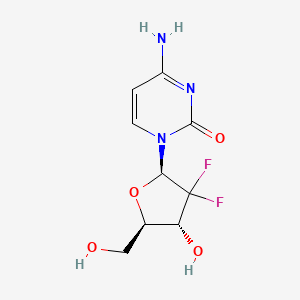
Gemcitabine (Gemzar, 2',2'-difluorodeoxycytidine) is a cytotoxic antimetabolite, a pyrimidine nucleoside analog of deoxycytidine given intravenously as a component of standard regimens for pancreatic ductal adenocarcinoma, biliary tract cancer and cholangiocarcinoma, urothelial carcinoma, non-small cell lung cancer and breast cancer. It is a prodrug in effect: nucleoside transporters, principally hENT1, carry it into the cell, deoxycytidine kinase performs the rate-limiting first phosphorylation, and the resulting di- and triphosphates act through two complementary routes. The triphosphate competes with deoxycytidine triphosphate for incorporation into replicating DNA, where one further nucleotide is added before synthesis halts — a masked chain termination that repair exonucleases cannot easily excise — while the diphosphate inhibits ribonucleotide reductase and depletes deoxynucleotide pools. The second action reinforces the first, since falling dCTP both removes gemcitabine's competitor at the polymerase and relieves feedback inhibition on the kinase that activates it. Cytidine deaminase inactivates the drug, so the balance between activating kinase and deaminating enzyme, along with hENT1 abundance, largely sets how much active metabolite a tumor accumulates.
Its principal dose-limiting toxicity is myelosuppression; gastrointestinal effects are common but not generally dose-limiting, and because regimens such as gemcitabine plus cisplatin carry substantial emetic risk, antiemetic prophylaxis is routine. In practice gemcitabine is used more often as a backbone partner than alone — with cisplatin in biliary tract and urothelial cancer, with nab-paclitaxel in pancreatic cancer, and with checkpoint inhibitors such as durvalumab and pembrolizumab, reflecting the capacity of gemcitabine-induced immunogenic cell death to release damage-associated molecular patterns including HMGB1 and prime antitumor immunity within the tumor microenvironment.
It also serves as the comparator against which newer regimens are measured — enfortumab vedotin plus pembrolizumab in metastatic urothelial carcinoma, for instance — and as the reference cytotoxic in studies of alternatives such as FOLFIRINOX, which combines fluorouracil, oxaliplatin and irinotecan. Benefit is limited by intrinsic and acquired resistance, and current work addresses this through predictive biomarkers of response, dissection of resistance-associated signaling such as PI3K/Akt and CD44/JAK2/STAT3 and DNA damage repair capacity, and nanomedicine delivery intended to concentrate drug at the tumor — a particular concern in pancreatic cancer, where dense stroma limits how much reaches the cells at all.
New Publications Today (1)
- PMID 42601691 — Postoperative cutaneous metastasis of breast cancer with phenotypic conversion to triple-negative subtype: A case report.
Recent Publications Summary (latest 30 papers)
Gemcitabine continues to serve as a cornerstone chemotherapeutic agent across multiple cancer types, with recent research emphasizing combination regimens to overcome inherent limitations of monotherapy. In pancreatic ductal adenocarcinoma, the combination of gemcitabine with nab-paclitaxel remains a reference standard, with studies exploring additional partners such as disulfiram (a repurposed anti-alcoholism drug) and investigational agents to enhance efficacy and reduce resistance 42312894Jun. For biliary tract Cancers and cholangiocarcinoma, gemcitabine-based combinations including cisplatin, oxaliplatin, and lenvatinib paired with immunotherapy have demonstrated promising outcomes in both advanced and resectable disease settings 41780001Mar42373229Jun. In hematologic malignancies, the phase 3 STARGLO trial established that glofitamab combined with gemcitabine-oxaliplatin (Glofit-GemOx) significantly improved overall survival (25.5 vs 12.5 months) compared with rituximab-based regimens in relapsed/refractory DLBCL, with particularly robust efficacy in the second-line setting 42269085Jun. For urothelial carcinoma, recent data support gemcitabine-cisplatin as first-line therapy, with the FDA-approved NIAGARA trial demonstrating that neoadjuvant durvalumab added to gemcitabine-cisplatin, followed by adjuvant durvalumab after radical cystectomy, improved event-free survival and pathologic complete response in muscle-invasive bladder cancer 41678313Feb.
Nanomedicine innovations represent a major thrust in optimizing gemcitabine delivery and efficacy. A cathepsin B-activated small molecule-drug conjugate targeting AKR1C3 (SM-27) efficiently released gemcitabine payloads in tumor cells with superior antitumor activity and markedly reduced off-target toxicity compared to free gemcitabine 42470376Jul. Spatiotemporally programmed nanovesicles (R-Gem@Cel-PV) combining gemcitabine with celecoxib were designed to suppress tumor-promoting prostaglandin E2 signaling while enhancing gemcitabine-induced immunogenic cell death in triple-negative breast cancer 42236688Jun. CD44-targeted delivery platforms using hyaluronic acid functionalization have shown promise for co-delivering gemcitabine with paclitaxel or other agents to pancreatic cancer, achieving high drug loading efficiencies and sustained release profiles 41966415Apr. Redox-responsive nanoassemblies coupling gemcitabine with the P-glycoprotein inhibitor quinine demonstrated enhanced drug release and efficacy in glioblastoma models 42060886Apr. Advanced formulations including ROS-responsive polymersomes encapsulating gemcitabine and copper peroxide nanoparticles, combined with hyaluronic acid targeting, simultaneously enhanced gemcitabine activation and promoted immunogenic cell death, converting immunologically cold tumors toward immunogenic phenotypes in triple-negative breast cancer 41780685Mar.
Response heterogeneity to gemcitabine has prompted investigation into predictive biomarkers and sensitizing strategies. Transcriptomic profiling identified higher DOT1L expression as a candidate biomarker for positive gemcitabine response in cholangiocarcinoma 42373229Jun, while SYCP1 aberrant reexpression in tumors was linked to resistance through promotion of DNA repair and cell cycle progression—SYCP1 loss impaired DNA repair kinetics and increased gemcitabine sensitivity 42418586Jul. Deep learning models leveraging transcriptomic data were developed to predict gemcitabine-cisplatin chemotherapy response in urothelial carcinoma, aiming to optimize patient selection and reduce unnecessary toxicity 42055629Apr. In cholangiocarcinoma, H3K4 methylation-driven CALB2 upregulation promoted gemcitabine and chemoradiotherapy resistance through a CALB2/KRT7/PD-L1 immune suppression axis; CALB2 knockdown sensitized tumors to gemcitabine plus radiotherapy 41936307Apr. Geriatric nutritional risk indices were evaluated as predictors of gemcitabine-nab-paclitaxel continuation in elderly pancreatic cancer patients 42373239Jun. Dose-dependent bidirectional effects were observed in breast tumor models, where low-dose gemcitabine paradoxically promoted progression through increased angiogenesis and immunosuppressive myeloid-derived suppressor cell expansion, whereas higher doses suppressed growth and shifted immune profiles toward anti-tumor activation 41967213Apr.
Mechanistic studies have elucidated how gemcitabine efficacy can be enhanced through immune modulation and stromal remodeling. Andrographolide sensitized gemcitabine-resistant intrahepatic cholangiocarcinoma cells through RRM2 inhibition and JAK/STAT3 pathway suppression 42113266May, while saikosaponin D synergized with gemcitabine in bladder cancer via targeting of ferroptosis-related PI3K/AKT signaling 41935433Apr. In pancreatic cancer, losartan preconditioning transiently normalized the fibrotic tumor microenvironment, enabling enhanced delivery of exosome-liposome hybrid nanoparticles co-encapsulating gemcitabine and IL-12 circular RNA, resulting in extended survival and reduced systemic toxicity 41763269Feb. tumor Treating Fields (TTFields) applied concurrently with gemcitabine-nab-paclitaxel suppressed c-Myc expression and induced immunogenic cell death characterized by calreticulin exposure and HMGB1 release in pancreatic models 41760592Feb. A phase I/II study of pembrolizumab combined with gemcitabine in previously-treated NSCLC demonstrated safety, with elevated regulatory T cell frequencies near baseline CD3 T cells and an integrated tumor inflammation score correlating with improved clinical response 42126144May. Supporting evidence for gemcitabine-based regimens extends to novel indications: a phase II trial tested ixazomib combined with gemcitabine and doxorubicin in SMARCB1-deficient renal medullary carcinoma 42007903Apr, and a forthcoming trial will investigate gemcitabine combined with pembrolizumab in older adults with classic Hodgkin lymphoma 41708412Feb.
What Changes, What Holds
1. Glofitamab-gemcitabine-oxaliplatin establishes efficacy in relapsed/refractory DLBCL
NEW DIRECTION Glofitamab combined with gemcitabine-oxaliplatin introduces gemcitabine to a hematologic malignancy, extending beyond the solid tumor indications enumerated in the Overview. The mechanistic basis for efficacy in lymphoid malignancies remains unexplored, but the survival improvement over rituximab-based regimens suggests gemcitabine's role may broaden within lymphomas 42269085Jun.
2. Nanoparticle and conjugate platforms enhance gemcitabine delivery with reduced systemic toxicity
REINFORCES Cathepsin B-activated conjugates, prostaglandin-suppressing nanovesicles, CD44-targeted carriers, and redox-responsive nanoassemblies each advance the nanomedicine optimization the Overview identifies as ongoing. None have reached clinical trial yet, but the convergence of technical strategies toward stroma-barrier penetration demonstrates steady mechanistic progress on the problem the baseline emphasizes for pancreatic cancer 42470376Jul42236688Jun.
3. Sub-therapeutic gemcitabine doses paradoxically promote tumor progression through myeloid immunosuppression
NEW DIRECTION Sub-therapeutic gemcitabine accelerated breast cancer growth via myeloid-derived suppressor cell expansion in preclinical models—a bidirectional dose-response phenomenon not addressed in the Overview's account of therapeutic regimens. Concurrent identification of biomarkers including DOT1L, SYCP1, and CALB2 advances the baseline's established framework for predicting responders, though dosing implications require clinical validation 41967213Apr.
4. Gemcitabine combinations extend to additional hematologic and rare urologic malignancies
NEW DIRECTION SMARCB1-deficient renal medullary carcinoma and classic Hodgkin lymphoma now join diffuse large B-cell lymphoma as hematologic and urologic indications for gemcitabine-based combinations, expanding beyond the solid tumors the Overview covers. Concurrent mechanistic studies identify JAK/STAT3 suppression, ferroptosis sensitization, and stromal normalization as synergy partners, elaborating rather than displacing the immunogenic cell death mechanism already established 42007903Apr42113266May.
Overview update candidates: Glofitamab-gemcitabine-oxaliplatin in relapsed/refractory DLBCL.
gemcitabine
Background Contexts
In the literature, the biological baseline, pathological conditions, or disease models commonly surrounding gemcitabine are described as follows:
- pancreatic ductal adenocarcinoma (Disease) — 12 papers: PMIDs 42457018, 42440056, 42312894, 42224741, etc.
- Biliary Tract Cancer (Disease) — 5 papers: PMIDs 42524843, 42407195, 42190397, 42026958, etc.
- intrahepatic cholangiocarcinoma (Disease) — 4 papers: PMIDs 42113266, 41842958, 41839437, 41780001
- triple-negative breast cancer (Disease) — 4 papers: PMIDs 42601691, 42535874, 42236688, 41780685
- bladder cancer (Disease) — 3 papers: PMIDs 42599325, 42504569, 42055629
- cholangiocarcinoma (Other) — 3 papers: PMIDs 42373229, 41936307, 41020779
- muscle-invasive bladder cancer (Disease) — 3 papers: PMIDs 42485627, 42212670, 41678313
- H3K4 methylation (Other) — 2 papers: PMIDs 42202065, 41936307
- KRAS (Gene) — 2 papers: PMIDs 41760592, 41581643
- Malignancies (Disease) — 2 papers: PMIDs 42373229, 42202065
- metastatic pancreatic cancer (Disease) — 2 papers: PMIDs 42216989, 41786277
- Metastatic urothelial carcinoma (Disease) — 2 papers: PMIDs 42384383, 42001507
Methodologies & Technologies Used
Researchers utilize the following experimental methods, imaging platforms, computational models, or biological reagents to study gemcitabine:
- cisplatin (Therapy) — 4 papers: PMIDs 42524843, 42407195, 42212670, 42026958
- carboplatin (Therapy) — 2 papers: PMIDs 42142352, 42001507
- checkpoint inhibitor (Therapy) — 2 papers: PMIDs 42440056, 42190397
- ClinicalTrials.gov (Other) — 2 papers: PMIDs 42535874, 42298056
- durvalumab (Therapy) — 2 papers: PMIDs 42524843, 42407195
- Hyaluronan sodium (Chemical) — 2 papers: PMIDs 42055152, 41966415
- progression-free survival (Clinical Metric) — 2 papers: PMIDs 42298056, 42001507
- 3,3'-dithiodipropionic acid (Chemical) — 1 paper: PMIDs 42060886
- 4T1 Breast Cancer Model (Organism) — 1 paper: PMIDs 41967213
- adipic acid (Chemical) — 1 paper: PMIDs 42060886
- amphiphilic ABC-type glycopolymer nanoparticles (Technology) — 1 paper: PMIDs 42138136
- Angiogenesis Inhibition (Clinical Metric) — 1 paper: PMIDs 42283951
Molecular Interventions & Targets
The primary molecular pathways, regulatory genes, enzymes, or therapeutic agents actively targeted and manipulated in relation to gemcitabine include:
- cisplatin (Therapy) — 6 papers: PMIDs 42601691, 42418586, 42384383, 42055629, etc.
- pembrolizumab (Therapy) — 6 papers: PMIDs 42535874, 42485627, 42384383, 42142352, etc.
- oxaliplatin (Therapy) — 3 papers: PMIDs 42269085, 41989931, 41780001
- Caelyx (Therapy) — 2 papers: PMIDs 42007903, 41989931
- cancer-associated fibroblast (Cellular Component) — 2 papers: PMIDs 42202065, 42144098
- CD44/JAK2/STAT3 signaling pathway (Pathway) — 2 papers: PMIDs 42055152, 41966415
- disulfiram (Therapy) — 2 papers: PMIDs 42312894, 42055152
- doxorubicin (Therapy) — 2 papers: PMIDs 41832022, 41708412
- enfortumab vedotin (Therapy) — 2 papers: PMIDs 42485627, 42384383
- fluorouracil (Therapy) — 2 papers: PMIDs 41860175, 41622055
- isocitrate dehydrogenase 1 (Gene) — 2 papers: PMIDs 42026958, 41842958
- nanoparticle albumin-bound paclitaxel (Therapy) — 2 papers: PMIDs 42373239, 42224741
Observed Outcomes & Phenotypes
The phenotypic changes, physiological endpoints, or clinical metrics observed and measured in connection with gemcitabine include:
- overall survival (Clinical Metric) — 5 papers: PMIDs 42535874, 42524843, 42485627, 42269085, etc.
- oxidative stress (Biological Process) — 5 papers: PMIDs 42407195, 42312894, 42190397, 41968990, etc.
- tumor cell proliferation (Clinical Metric) — 5 papers: PMIDs 42418586, 42142743, 42138136, 41936307, etc.
- hazard ratio (Clinical Metric) — 4 papers: PMIDs 42407195, 42298056, 42269085, 42001507
- progression-free survival (Clinical Metric) — 4 papers: PMIDs 42535874, 42524843, 42407195, 42269085
- transforming growth factor (Clinical Metric) — 4 papers: PMIDs 42421302, 42283951, 42202065, 41020779
- apoptotic process (Biological Process) — 3 papers: PMIDs 42060886, 41966415, 41936307
- objective response rate (Clinical Metric) — 3 papers: PMIDs 42535874, 42524843, 42001507
- dendritic cell (Cellular Component) — 2 papers: PMIDs 42236688, 41760592
- glycolytic process (Biological Process) — 2 papers: PMIDs 42440056, 42411952
- immunogenic cell death (Biological Process) — 2 papers: PMIDs 41780685, 41760592
- MKI67 (Protein) — 2 papers: PMIDs 41967213, 41936307
General Takeaways & Clinical Potentials
The high-level concepts, clinical translations, and overarching conclusions proposed in the research surrounding gemcitabine are summarized below:
- chemotherapy (Therapy) — 3 papers: PMIDs 42470376, 42411952, 42283951
- therapeutic target (Other) — 3 papers: PMIDs 42144098, 41786277, 41108144
- checkpoint inhibitor (Therapy) — 2 papers: PMIDs 42440056, 42053989
- gemcitabine resistance (Other) — 2 papers: PMIDs 41786277, 41108144
- (chemo)radiotherapy (Biological Process) — 1 paper: PMIDs 42236688
- actionable targets (Other) — 1 paper: PMIDs 42202065
- advanced pancreatic cancer (Disease) — 1 paper: PMIDs 41581643
- antitumor efficacy (Clinical Metric) — 1 paper: PMIDs 42283951
- APC activation markers (Clinical Metric) — 1 paper: PMIDs 41989931
- APC and T-cell activation markers (Clinical Metric) — 1 paper: PMIDs 41989931
- Astragalus membranaceus (Fisch.) Bge (Other) — 1 paper: PMIDs 41832022
- Biomarker Development (Other) — 1 paper: PMIDs 42418586