Fenofibrate
Fenofibrate is a synthetic lipid-modifying agent in the fibrate class, used clinically to lower elevated triglycerides and, in some settings, to improve mixed dyslipidemia.
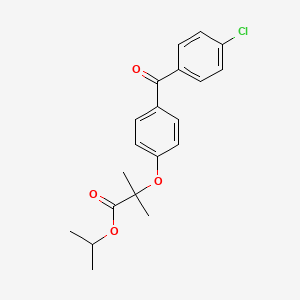
Fenofibrate is a synthetic lipid-modifying agent in the fibrate class, used clinically to lower elevated triglycerides and, in some settings, to improve mixed dyslipidemia. It is a prodrug that is converted in vivo to fenofibric acid, the active metabolite. Its principal pharmacologic action is activation of peroxisome proliferator-activated receptor alpha (PPAR-α), which regulates genes involved in fatty acid oxidation, lipoprotein metabolism, and triglyceride clearance.
Beyond its established therapeutic role, fenofibrate continues to be studied in broader biomedical contexts because of its effects on lipid handling, inflammation, and cellular stress pathways. In recent research, it has also appeared in computational drug-repurposing workflows and environmental monitoring studies, reflecting both its clinical relevance and its persistence as a pharmaceutically active compound in the environment.
Rebuilt from PubMed 18 Sept 2026 · no new papers today
Where the papers sit
9 papers study fenofibrate directly. Those 9 are one subject: Fenofibrate Pharmacology and Clinical Use. Work spans fenofibrate formulation, assay development, safety surveillance, and clinical use in dyslipidemia, pancreatitis, retinopathy, and primary biliary cholangitis, without a shared mechanistic or therapeutic direction. No way of splitting those 9 scores better than chance. 1 new direction follows.
Fenofibrate is repositioned as a candidate therapy for sepsis-associated cellular senescence
The sepsis study using bioinformatics, machine learning, and in vivo and in vitro models treats fenofibrate not as a lipid-lowering intervention or formulation target, but as a potential drug directed at senescence-related molecular abnormalities in sepsis. The study instead identifies fenofibrate through interactions with sepsis-associated hub proteins, including CDKN1C, BCL2, and SMAD3, giving it a proposed role in cellular-senescence-driven organ dysfunction rather than the lipid disorders and drug-delivery problems addressed elsewhere in the set. This expands fenofibrate into a senescence-targeted sepsis research direction, although the abstract does not establish clinical efficacy 42219284May.
Recent Findings on fenofibrate
Drug Assessment and Applications: Fenofibrate development spans dissolution enhancement, lipid-based delivery, assay validation, and clinical use in metabolic, hepatic, retinal, and pregnancy-related disease. Polymeric binders increased fenofibrate dissolution after wet granulation, although buffer solubility poorly predicted tablet dissolution 42717179Sep. Quantitative solution-state ^1H NMR showed that fenofibrate redistributed into large oil droplets during nanoemulsion destabilization, supporting molecular-level formulation design 42260710Jun. Validated RP-UHPLC and RP-HPLC methods provided rapid, precise quality control for tablet and sustained-release formulations [PMIDs 42517867, 42093465]. Clinical evidence associated fenofibrate with lower sight-threatening diabetic retinopathy risk, improved transplant-free survival in primary biliary cholangitis, and sustained triglyceride control after plasmapheresis in pregnancy, while a sepsis study linked it to anti-inflammatory and anti-senescence effects in acute kidney injury [PMIDs 42702803, 42214018, 42204798, 42219284].
Written from 9 PubMed abstracts, each one cited by PMID above. Published: 2026-07-02. Last written: 2026-09-12 by GPT. Drafted by language models from published abstracts; not medical advice.