everolimus
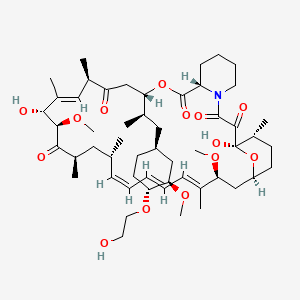
Overview
Everolimus is a clinically used inhibitor of the Mechanistic target of rapamycin (mTOR) (mTOR), a central regulator of cell growth, proliferation, metabolism, and survival. As an mTOR-targeted therapy, it is used in a range of diseases in which dysregulated PI3K/AKT/mTOR signaling contributes to pathological cell growth or treatment resistance. In biomedical research, everolimus is frequently discussed alongside sirolimus as a representative mTOR inhibitor, with particular relevance to oncology, transplant-related pharmacology, and pediatric vascular abnormalities.
Pharmacologically, everolimus modulates downstream signaling from the PI3K/AKT/mTOR pathway and is often studied in combination with other therapies to enhance antitumor activity or overcome resistance. Recent publications also continue to examine its safety profile, including potential hepatotoxicity and renal effects, reflecting the need to balance therapeutic benefit with organ-specific toxicity.
Recent Publications Summary
Recent publications have continued to evaluate everolimus as a targeted therapy across several disease settings, most prominently in advanced breast cancer and neuroendocrine tumors. In the EVERGREEN retrospective multicentre study of women with ER-positive/HER2-negative advanced breast cancer who had progressed on CDK4/6 inhibitor-based therapy, everolimus plus endocrine therapy was compared with endocrine therapy alone in real-world practice; the study assessed real-world progression-free survival, time to everolimus failure, time to chemotherapy, and overall survival, with 207 patients included and baseline characteristics largely balanced between groups 42429895Jul. In the phase 3 COMPETE trial in advanced progressive somatostatin receptor-positive gastroenteropancreatic neuroendocrine tumors, oral everolimus (10 mg/day) was directly compared with [177Lu]Lu-edotreotide in a randomized, open-label, multicentre design to evaluate progression-free survival and harms 42392118Jul. Everolimus also appeared in mechanistic work in pancreatic neuroendocrine neoplasms, where combination with the EZH2 inhibitor GSK126 was reported to more effectively inhibit the PI3K/AKT/mTOR pathway and enhance ferroptosis-related antitumor effects 42013002Apr.
Other recent studies examined everolimus in central nervous system tumors and transplant-related complications. In the randomized phase 2 BIOMEDE trial in biopsy-proven diffuse intrinsic pontine glioma, everolimus was one of three targeted agents tested alongside radiotherapy; 95 children received everolimus, and the trial was stopped for futility because overall survival from biopsy was not different from the control cohort 42032072Apr. In liver transplant recipients, a clinical and economic analysis evaluated the impact and cost-effectiveness of adding everolimus to calcineurin inhibitor-based regimens, focusing on the co-occurrence of cancer, infection, and renal dysfunction 42024308Apr. A separate preclinical study in subtotal nephrectomized rats found that everolimus partially attenuated tacrolimus-associated renal dysfunction and interstitial fibrosis, suggesting a modulatory effect on tacrolimus-accelerated renal injury in a reduced renal reserve model 42061595Apr.
Mechanistic and safety-focused publications further broadened the recent literature on everolimus. A zebrafish-based metabolomics and transcriptomics study reported hepatotoxicity with sirolimus and everolimus, including delayed yolk sac absorption and, at higher concentrations, reduced liver size, elevated ALT, widened hepatocyte gaps, and vacuolization 41320894Dec. A review of next-generation meningioma therapies also highlighted everolimus among PI3K/AKT/mTOR-pathway-directed options under investigation for precision medicine approaches in this tumor type 42017452Apr.
What Changes, What Holds
1. Everolimus is still being used as a comparator and combination partner, but the newer data mainly refine where it may help rather than redefine its role
REINFORCES These studies keep everolimus within the established oncology frame: as an mTOR-targeted option in advanced breast cancer and neuroendocrine tumors, and as a pathway-directed agent in mechanistic combination work. The real-world and randomized comparisons may help position it after CDK4/6 inhibitor failure or against radioligand therapy, but they do not displace the baseline account of everolimus as a clinically used mTOR inhibitor 42429895Jul42392118Jul.
2. Everolimus is being tested in settings where benefit is uncertain, and one pediatric brain-tumor trial argues against assuming class-wide efficacy
NEW DIRECTION The BIOMEDE result does not contradict the Overview’s mechanism, but it does show that mTOR targeting with everolimus is not broadly effective across central nervous system tumors, despite its established use in other diseases. The transplant analyses and rat study extend the safety/renal discussion already present in the baseline, suggesting possible mitigation of tacrolimus-related injury, but that remains separate from the negative glioma finding 42032072Apr42024308Apr42061595Apr.
3. Hepatotoxicity is now supported by direct experimental evidence, strengthening the safety concerns already noted
REINFORCES The zebrafish work sharpens the baseline’s caution about potential hepatotoxicity by showing liver-specific injury signals with both sirolimus and everolimus, including structural and biochemical abnormalities. That does not overturn the established therapeutic role of everolimus, but it does make organ toxicity a more concrete part of its profile and supports closer attention to hepatic monitoring in preclinical and translational settings 41320894Dec. The meningioma review mainly extends the list of tumors in which pathway-directed use is being explored 42017452Apr.
Overview update candidates: the negative signal in diffuse intrinsic pontine glioma; the experimental hepatotoxicity findings; the transplant/renal modulation data remain suggestive but not yet definitive enough for the Overview.
everolimus
Background Contexts
In the literature, the biological baseline, pathological conditions, or disease models commonly surrounding everolimus are described as follows:
- mechanistic target of rapamycin kinase (Protein) — 2 papers: PMIDs 41819443, 41320894
- BIOMEDE (Technology) — 1 paper: PMIDs 42032072
- breast cancer (Disease) — 1 paper: PMIDs 41748011
- Cancers (Clinical Metric) — 1 paper: PMIDs 42024308
- common infections (Disease) — 1 paper: PMIDs 42024308
- Cyclin-dependent kinase 4/6 inhibitors (Therapy) — 1 paper: PMIDs 42429895
- diffuse midline glioma (Disease) — 1 paper: PMIDs 42032072
- ER-positive/HER2-negative advanced breast cancer (Disease) — 1 paper: PMIDs 42429895
- high-grade tumors (Disease) — 1 paper: PMIDs 42017452
- kidney failure (Disease) — 1 paper: PMIDs 42024308
- meningioma (Disease) — 1 paper: PMIDs 42017452
- mTORC1/2 (Pathway) — 1 paper: PMIDs 42310739
Methodologies & Technologies Used
Researchers utilize the following experimental methods, imaging platforms, computational models, or biological reagents to study everolimus:
- adjuvant radiotherapy (Therapy) — 1 paper: PMIDs 42017452
- adult female zebrafish (Organism) — 1 paper: PMIDs 41320894
- advanced radiation techniques (Technology) — 1 paper: PMIDs 42017452
- auranofin (Therapy) — 1 paper: PMIDs 41748011
- biopsy (Other) — 1 paper: PMIDs 42032072
- chronic restraint stress mouse model (Organism) — 1 paper: PMIDs 42310739
- galunisertib (Therapy) — 1 paper: PMIDs 41819443
- hormone therapy (Technology) — 1 paper: PMIDs 42429895
- MDA-MB-231/DREVE (Cell Line) — 1 paper: PMIDs 41819443
- MDA-MB-231/DRRIDA (Cell Line) — 1 paper: PMIDs 41819443
- molecular profiling (Technology) — 1 paper: PMIDs 42017452
- NMRI mice (Organism) — 1 paper: PMIDs 42013002
Molecular Interventions & Targets
The primary molecular pathways, regulatory genes, enzymes, or therapeutic agents actively targeted and manipulated in relation to everolimus include:
- CDK4/6 inhibitors (Therapy) — 2 papers: PMIDs 42017452, 41748011
- PCK1 (Gene) — 2 papers: PMIDs 41748011, 41320894
- PI3K/AKT/mTOR pathway (Pathway) — 2 papers: PMIDs 42017452, 42013002
- abemaciclib (Therapy) — 1 paper: PMIDs 42017452
- adenosine signaling (Biological Process) — 1 paper: PMIDs 42310739
- angiogenesis inhibitor (Therapy) — 1 paper: PMIDs 42017452
- calcineurin inhibitor (Therapy) — 1 paper: PMIDs 42024308
- Calcineurin Inhibitors (Therapy) — 1 paper: PMIDs 42061595
- CCND3 (Protein) — 1 paper: PMIDs 41748011
- Cdk4 (Protein) — 1 paper: PMIDs 41748011
- dasatinib (Therapy) — 1 paper: PMIDs 42032072
- ENT1 inhibitor J4 (Chemical) — 1 paper: PMIDs 42310739
Observed Outcomes & Phenotypes
The phenotypic changes, physiological endpoints, or clinical metrics observed and measured in connection with everolimus include:
- hazard ratio (Clinical Metric) — 2 papers: PMIDs 42429895, 42032072
- 6 Years (Other) — 1 paper: PMIDs 42032072
- breast cancer (Disease) — 1 paper: PMIDs 41748011
- cellular proliferation (Biological Process) — 1 paper: PMIDs 41819443
- clinical impacts (Other) — 1 paper: PMIDs 42024308
- cognitive aging (Clinical Metric) — 1 paper: PMIDs 42310739
- cost effectiveness (Other) — 1 paper: PMIDs 42024308
- ferroptosis (Biological Process) — 1 paper: PMIDs 42013002
- hepatotoxicity (Disease) — 1 paper: PMIDs 41320894
- human interleukin 2 (Protein) — 1 paper: PMIDs 41819443
- inter-patient variability (Other) — 1 paper: PMIDs 42017452
- KRAS (Gene) — 1 paper: PMIDs 41819443
General Takeaways & Clinical Potentials
The high-level concepts, clinical translations, and overarching conclusions proposed in the research surrounding everolimus are summarized below:
- biomarker-driven, personalized treatment strategies (Therapy) — 1 paper: PMIDs 42017452
- clinical outcomes for meningioma patients (Clinical Metric) — 1 paper: PMIDs 42017452
- ClinicalTrials.gov: NCT02233049 (Clinical Metric) — 1 paper: PMIDs 42032072
- dose optimization (Other) — 1 paper: PMIDs 41320894
- ER-positive/HER2-negative advanced breast cancer (Disease) — 1 paper: PMIDs 42429895
- independent data monitoring committee (Other) — 1 paper: PMIDs 42032072
- mTORi-refractory triple-negative breast cancer (Disease) — 1 paper: PMIDs 41819443
- prognostic biomarkers (Other) — 1 paper: PMIDs 42032072
- renal injury (Biological Process) — 1 paper: PMIDs 42061595
- renal injury model (Other) — 1 paper: PMIDs 42061595
- risk-benefit profile (Other) — 1 paper: PMIDs 42429895
- TGF-β/PMEPA1 axis (Other) — 1 paper: PMIDs 41819443