epigallocatechin gallate
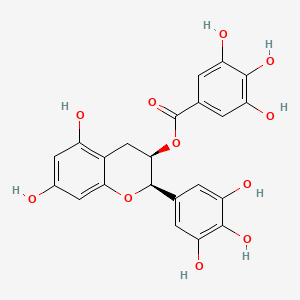
Overview
Epigallocatechin gallate (EGCG) is a major catechin polyphenol found in tea and is widely studied as a bioactive natural product with antioxidant, anti-inflammatory, and putative anticancer properties. In biomedical research, it is often investigated as a small-molecule modulator of signaling pathways, protein-ligand interactions, and oxidative stress responses rather than as a conventional drug.
Recent studies continue to position EGCG as a versatile research compound with relevance to inflammation, infection-resistant biomaterials, reproductive biology, and cancer-oriented delivery systems. Its reported interactions with targets such as RORγ, and its incorporation into nanoparticle, liposomal, and scaffold-based platforms, reflect ongoing efforts to improve its stability, tissue delivery, and therapeutic utility.
Recent Publications Summary (latest 30 papers)
Recent studies have examined epigallocatechin gallate (EGCG) as a bioactive component in several delivery systems and mechanistic contexts. In acne research, EGCG was incorporated with doxycycline into topically applicable nanoparticles, where the combined formulation reduced C. acnes-induced cell death in HaCaT cells, inhibited NF-κB and STAT3 signaling more effectively than doxycycline alone, improved antibacterial and antioxidant activity, and suppressed inflammation and inflammatory cytokine expression in an acne-like mouse model 42358218Jun. In atopic dermatitis, EGCG was used in self-assembling nanoparticles with lactoferrin as part of a microneedle-assisted dual-nanoplatform targeting oxidative stress, and this approach was reported to alleviate disease severity, reduce epidermal thickening and mast cell infiltration, and lower inflammatory cytokines in AD mice 41685363Feb.
EGCG was also studied in reproductive inflammation through a testosterone-modified liposomal system containing an EGCG-zinc complex for testis-targeted delivery. This formulation showed good stability and biocompatibility, scavenged reactive oxygen species, inhibited NLRP3 inflammasome activation, reduced IL-1β and IL-18, and promoted M2 polarization in macrophages; in vivo, it demonstrated strong testicular targeting and therapeutic efficacy in orchitis models 41985533Apr. In another inflammation-focused study, EGCG was identified as a natural orthosteric ligand of RORγ in a fluorescence polarization screening platform, with reported inhibitory activity in reporter, qPCR, and CESTA assays, and it alleviated psoriatic-like skin lesions in a mouse model 41849945Mar.
Beyond inflammatory disease models, EGCG was used as a representative tea polyphenol in an ultrahigh molecular weight polyethylene composite designed for sustained release in infection-resistant joint implant material. The biomimetic pore-throat structure enabled threshold-insensitive EGCG release, and the resulting composites achieved more than 80% antibacterial efficacy against major pathogens 41564650Jan. EGCG also appeared in a 3D bioprinted melanoma study as one of several phytochemicals discussed for anticancer delivery challenges, although the reported experimental comparisons focused on curcumin and thymoquinone rather than EGCG itself 41974179Apr. Separately, a food-science study investigated how sugars and organic acids modulate EGCG-induced astringency in fruit tea, finding that organic acids enhanced astringency in a pH-dependent manner, while sugars reduced it by altering EGCG-mucin interactions and oral lubrication behavior 41895939Mar.
What Changes, What Holds
1. EGCG is now being used as a delivery-platform component that can strengthen anti-inflammatory and antimicrobial performance in skin disease models
NEW DIRECTION EGCG’s established image as a bioactive polyphenol with antioxidant and anti-inflammatory activity is extended here into formulation design, where it appears to add value when paired with other agents and nanocarriers rather than acting only as a free compound 42358218Jun41685363Feb. The main change is practical: its role is increasingly as a stabilizing or enabling ingredient for topical and microneedle-based systems, not a new core mechanism.
2. EGCG is being positioned as a targeted anti-inflammatory ligand and organ-directed therapeutic component beyond the uses already described in the Overview
NEW DIRECTION These studies broaden EGCG from a general signaling modulator to a more specific tool for receptor targeting and tissue-selective delivery, including RORγ engagement and testis-directed liposomal transport 41849945Mar41985533Apr. That does not displace the baseline account of anti-inflammatory and pathway-modulating activity, but it adds a more engineered therapeutic role and suggests its utility may depend heavily on formulation and target tissue.
3. EGCG is also being repurposed as a sustained-release antimicrobial additive in implant materials, while its anticancer role remains more conceptual than demonstrated in these reports
NEW DIRECTION The implant-material work expands EGCG into infection-resistant biomaterials, a use not covered in the baseline, and supports the idea that its value may lie in local release rather than systemic dosing 41564650Jan. By contrast, the melanoma paper does not add direct EGCG efficacy data, so it mainly underscores that anticancer delivery remains an unresolved application rather than a settled one 41974179Apr. The food-science study is separate and does not alter the biomedical account 41895939Mar.
Overview update candidates: EGCG as a component of topical/microneedle delivery systems; EGCG as a targeted anti-inflammatory ligand/organ-directed therapeutic component; EGCG as a sustained-release antimicrobial additive in implant materials.
epigallocatechin gallate
Background Contexts
In the literature, the biological baseline, pathological conditions, or disease models commonly surrounding epigallocatechin gallate are described as follows:
- acne (Disease) — 1 paper: PMIDs 42358218
- atopic dermatitis (Disease) — 1 paper: PMIDs 41685363
- Cutibacterium acnes (Organism) — 1 paper: PMIDs 42358218
- hyperpigmentation (Clinical Metric) — 1 paper: PMIDs 42358218
- methicillin-resistant Staphylococcus aureus (Organism) — 1 paper: PMIDs 41992746
- New-style fruit tea (Other) — 1 paper: PMIDs 41895939
- Post-inflammatory erythema (Clinical Metric) — 1 paper: PMIDs 42358218
- prosthetic joint infections (Disease) — 1 paper: PMIDs 41564650
- Psychosocial distress (Other) — 1 paper: PMIDs 42358218
- scar (Clinical Metric) — 1 paper: PMIDs 42358218
- Skin impairment (Clinical Metric) — 1 paper: PMIDs 42358218
- stage III melanoma (Disease) — 1 paper: PMIDs 41974179
Methodologies & Technologies Used
Researchers utilize the following experimental methods, imaging platforms, computational models, or biological reagents to study epigallocatechin gallate:
- 2,2-diphenyl-1-picrylhydrazyl (Technology) — 1 paper: PMIDs 41875767
- 3D scaffolds (Technology) — 1 paper: PMIDs 41974179
- A-375 (Cell Line) — 1 paper: PMIDs 41974179
- biomimetic pore-throat structure (Technology) — 1 paper: PMIDs 41564650
- Box-Behnken design (Technology) — 1 paper: PMIDs 41875767
- CESTA assays (Technology) — 1 paper: PMIDs 41849945
- CRISPR-CasRx (Technology) — 1 paper: PMIDs 41685363
- Doxycycline-EGCG nanoparticles (Technology) — 1 paper: PMIDs 42358218
- fluorescence polarization (Technology) — 1 paper: PMIDs 41849945
- fluorescent probes (Technology) — 1 paper: PMIDs 41849945
- gold nanoparticles (Technology) — 1 paper: PMIDs 41974179
- HaCaT cells (Cell Line) — 1 paper: PMIDs 42358218
Molecular Interventions & Targets
The primary molecular pathways, regulatory genes, enzymes, or therapeutic agents actively targeted and manipulated in relation to epigallocatechin gallate include:
- 2-phenylchromane flavonoid (Chemical) — 1 paper: PMIDs 41875767
- 8-OHdG (Chemical) — 1 paper: PMIDs 41685363
- betulin (Chemical) — 1 paper: PMIDs 41974179
- choline chloride (Chemical) — 1 paper: PMIDs 41875767
- curcumin (Chemical) — 1 paper: PMIDs 41974179
- doxycycline (Therapy) — 1 paper: PMIDs 42358218
- EGCG-Zn-VAN nanoparticles (Therapy) — 1 paper: PMIDs 41992746
- EGCG-Zn@T-Lipo (Chemical) — 1 paper: PMIDs 41985533
- heme oxygenase 1 (Gene) — 1 paper: PMIDs 41685363
- Ige (Protein) — 1 paper: PMIDs 41685363
- IL13 (Protein) — 1 paper: PMIDs 41685363
- interleukin (IL)-1β (Protein) — 1 paper: PMIDs 41685363
Observed Outcomes & Phenotypes
The phenotypic changes, physiological endpoints, or clinical metrics observed and measured in connection with epigallocatechin gallate include:
- proinflammatory cytokine (Biological Process) — 2 papers: PMIDs 41992746, 41985533
- 80% antibacterial efficacy (Clinical Metric) — 1 paper: PMIDs 41564650
- Antibacterial Efficacy (Other) — 1 paper: PMIDs 42358218
- antioxidant capacity (Clinical Metric) — 1 paper: PMIDs 42358218
- bacterial-induced inflammation (Other) — 1 paper: PMIDs 41564650
- cell death (Biological Process) — 1 paper: PMIDs 42358218
- coefficient of friction (Clinical Metric) — 1 paper: PMIDs 41564650
- Corneal Transparency (Clinical Metric) — 1 paper: PMIDs 41992746
- dose-dependent cytotoxicity (Clinical Metric) — 1 paper: PMIDs 41974179
- EGCG-mucin complexes (Other) — 1 paper: PMIDs 41895939
- epithelial integrity (Clinical Metric) — 1 paper: PMIDs 41992746
- friction coefficients (Clinical Metric) — 1 paper: PMIDs 41895939
General Takeaways & Clinical Potentials
The high-level concepts, clinical translations, and overarching conclusions proposed in the research surrounding epigallocatechin gallate are summarized below:
- Acne local therapy (Therapy) — 1 paper: PMIDs 42358218
- anti-inflammatory mechanisms (Biological Process) — 1 paper: PMIDs 41849945
- delivery-strategy-dependent framework (Other) — 1 paper: PMIDs 41974179
- dose-sparing strategy (Other) — 1 paper: PMIDs 41992746
- EGCG-Zn-VAN nanoparticles (Therapy) — 1 paper: PMIDs 41992746
- formulation strategies (Other) — 1 paper: PMIDs 41895939
- high-value utilization (Other) — 1 paper: PMIDs 41875767
- infection-resistant orthopedic devices (Other) — 1 paper: PMIDs 41564650
- preclinical evaluation of phytochemical nanomedicines (Other) — 1 paper: PMIDs 41974179
- sustainable and efficient green strategy (Other) — 1 paper: PMIDs 41875767
- taste modulation (Other) — 1 paper: PMIDs 41895939
- testicular inflammation (Disease) — 1 paper: PMIDs 41985533