doxycycline
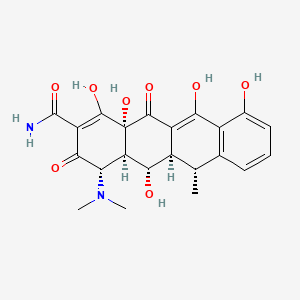
Overview
Doxycycline is a broad-spectrum tetracycline-class antibiotic used in therapy for a range of bacterial infections and inflammatory conditions. It acts primarily by inhibiting bacterial protein synthesis through binding to the 30S ribosomal subunit, which makes it active against many Gram-positive and Gram-negative organisms as well as atypical pathogens. In clinical practice, doxycycline is also valued for its oral bioavailability, tissue penetration, and utility as an alternative when other antibiotics are unsuitable.
Beyond its antimicrobial role, doxycycline is frequently studied as a platform drug in drug-delivery systems and localized formulations. Recent research contexts also reflect interest in its anti-inflammatory and tissue-modulating properties, including applications in periodontal disease and experimental prevention strategies for sexually transmitted infections. Its use in children and in combination regimens continues to be evaluated, particularly where macrolides such as azithromycin are standard comparators.
Recent Publications Summary
Recent studies have explored doxycycline in several delivery and combination strategies aimed at improving local efficacy and broadening its therapeutic applications. In acne, doxycycline was incorporated with epigallocatechin gallate into topically applicable nanoparticles, which reduced C. acnes-induced HaCaT cell death, inhibited NF-κB and STAT3 signaling more effectively than doxycycline alone, improved antibacterial activity against C. acnes, and enhanced antioxidant capacity; in an acne-like mouse model, the formulation also suppressed skin inflammation and lowered inflammatory cytokine expression 42358218Jun. In periodontitis, doxycycline was paired with miRNA-126 nanoparticles in a dissolving microneedle patch designed for gingival delivery, with the system providing sufficient penetration, resistance to salivary washout, prolonged tissue retention, and protection of miRNA-126 from degradation while both agents modulated the reactive oxygen species/NF-κB pathway to reduce inflammation and support periodontal tissue regeneration 42007801Apr. A separate collagen-gel study showed that entrapping γ-cyclodextrin oligomers in collagen increased the releasable amount of doxycycline by 220% and reduced its release rate fivefold, highlighting affinity-based control of drug release for sustained local delivery 42097227May.
Doxycycline has also been investigated in antimicrobial prevention and targeting platforms. A formulation study developed topical vaginal and rectal inserts containing doxycycline alone or combined with tenofovir alafenamide and elvitegravir; the inserts showed accurate drug loading, rapid disintegration, and more than 95% drug release within 60 minutes, supporting their intended use for on-demand prevention of bacterial sexually transmitted infections and, in the multi-active product, HIV/STI prevention 42091755May. For bacterial targeting, cyclodextrin-siderophore conjugates were evaluated as doxycycline carriers in Escherichia coli and Staphylococcus aureus, and a cyclodextrin deferoxamine derivative improved doxycycline efficacy by fourfold against E. coli based on minimal inhibitory concentration 41724131Feb. In pediatric respiratory infection, a multicenter randomized trial protocol was published to compare doxycycline with azithromycin for children with suspected macrolide-resistant Mycoplasma pneumoniae infection, reflecting ongoing efforts to define its efficacy and safety in this setting 42191206May.
Beyond direct antimicrobial use, doxycycline appeared as a comparator or mechanistic reference in studies of mitochondrial stress and cancer-related delivery systems. One study on mitochondrial stress responses noted that terbinafine and miglustat activated mitochondrial stress pathways and modulated mitochondrial function across species similarly to doxycycline, underscoring doxycycline’s established ability to induce mitochondrial stress responses in experimental systems 41913053Mar. In a melanoma nanotherapy study, a doxorubicin prodrug was bioorthogonally activated within palladium nanoparticle-loaded microneedles, but doxycycline itself was not the therapeutic focus; this publication is relevant only insofar as it reflects the broader trend toward localized, triggerable drug delivery platforms 42378371Jun.
What Changes, What Holds
1. Local delivery systems are now doing the main therapeutic work, not doxycycline alone
NEW DIRECTION Topical nanoparticles, microneedles, and collagen-based release control move doxycycline from a conventional systemic antibiotic toward a locally engineered agent whose value depends on formulation. That broadens the baseline’s “platform drug” role into concrete, disease-specific delivery strategies for acne and periodontitis, while also showing that combination design can amplify anti-inflammatory and antioxidant effects beyond doxycycline monotherapy 42358218Jun42007801Apr42097227May.
2. Doxycycline is being positioned for on-demand STI prevention and targeted antibacterial delivery
NEW DIRECTION Vaginal and rectal inserts extend the baseline beyond treatment into prevention, including a multi-active product aimed at HIV/STI prophylaxis, which is a new use direction rather than a refinement of existing therapy. The carrier work also suggests that cyclodextrin-based targeting can materially improve antibacterial potency, but that remains a formulation advance rather than a change to doxycycline’s core antimicrobial identity 42091755May41724131Feb.
3. Doxycycline’s mitochondrial stress effects remain a useful reference point, but the cancer delivery study does not change its role
REINFORCES The mitochondrial-stress comparison strengthens the established view that doxycycline can perturb mitochondrial function in experimental systems, which is already part of its broader mechanistic profile 41913053Mar. The melanoma microneedle paper does not add a doxycycline-specific claim; it mainly reflects the wider trend toward localized triggerable delivery, so it leaves the baseline unchanged 42378371Jun.
Overview update candidates: local combination delivery for acne and periodontitis; on-demand vaginal/rectal STI-prevention inserts; cyclodextrin-based targeting that improves doxycycline antibacterial activity; doxycycline as a reference inducer of mitochondrial stress responses.
doxycycline
Background Contexts
In the literature, the biological baseline, pathological conditions, or disease models commonly surrounding doxycycline are described as follows:
- Alzheimer's disease (Disease) — 1 paper: PMIDs 42440182
- ANCA-associated glomerulonephritis (Disease) — 1 paper: PMIDs 42107047
- antimicrobial resistance (Other) — 1 paper: PMIDs 41724131
- Bartonella species (Organism) — 1 paper: PMIDs 42107047
- Caenorhabditis elegans (Organism) — 1 paper: PMIDs 41913053
- chronic antigenic stimulation (Biological Process) — 1 paper: PMIDs 42457339
- chronic peri-implantitis (Disease) — 1 paper: PMIDs 42097227
- collagenase inhibitors (Therapy) — 1 paper: PMIDs 42097227
- community-acquired pneumonia (Disease) — 1 paper: PMIDs 42191206
- disulfidptosis (Biological Process) — 1 paper: PMIDs 42464330
- Ewing sarcoma (Disease) — 1 paper: PMIDs 42390889
- Human heavy-chain ferritin (Protein) — 1 paper: PMIDs 42383853
Methodologies & Technologies Used
Researchers utilize the following experimental methods, imaging platforms, computational models, or biological reagents to study doxycycline:
- TCGA primary brain tumors (Technology) — 2 papers: PMIDs 42467708, 42464330
- triple-negative breast adenocarcinoma (Cell Line) — 2 papers: PMIDs 42467708, 42360283
- acetylcholinesterase (Protein) — 1 paper: PMIDs 42440182
- azithromycin (Therapy) — 1 paper: PMIDs 42191206
- B16-OVA melanoma model (Cell Line) — 1 paper: PMIDs 42457339
- Beta amyloid (Protein) — 1 paper: PMIDs 42440182
- bioorthogonal activation (Biological Process) — 1 paper: PMIDs 42378371
- Broilers (Organism) — 1 paper: PMIDs 42406229
- CAR-T cells (Therapy) — 1 paper: PMIDs 42457339
- ceftriaxone (Therapy) — 1 paper: PMIDs 42055759
- Cerebrospinal fluid (CSF) (Other) — 1 paper: PMIDs 42055759
- Childhood Cancer Survivor Study (Other) — 1 paper: PMIDs 42390889
Molecular Interventions & Targets
The primary molecular pathways, regulatory genes, enzymes, or therapeutic agents actively targeted and manipulated in relation to doxycycline include:
- ATP binding cassette subfamily C member 1 (Protein) — 1 paper: PMIDs 42467708
- azithromycin (Therapy) — 1 paper: PMIDs 42191206
- BACH2 (Gene) — 1 paper: PMIDs 42457339
- Bartonella henselae (Organism) — 1 paper: PMIDs 42107047
- Borrelia IgG (Protein) — 1 paper: PMIDs 42055759
- cyclodextrin deferoxamine derivative (Chemical) — 1 paper: PMIDs 41724131
- cyclophosphamide (Therapy) — 1 paper: PMIDs 42390889
- deferoxamine (Therapy) — 1 paper: PMIDs 41724131
- DOX@FTn-EGFRAfb (Therapy) — 1 paper: PMIDs 42383853
- elvitegravir (Therapy) — 1 paper: PMIDs 42091755
- etoposide (Therapy) — 1 paper: PMIDs 42390889
- FOXO transcription factor DAF-16 (Protein) — 1 paper: PMIDs 41913053
Observed Outcomes & Phenotypes
The phenotypic changes, physiological endpoints, or clinical metrics observed and measured in connection with doxycycline include:
- tumor cell proliferation (Clinical Metric) — 2 papers: PMIDs 42467708, 42383853
- 2023 Duke-ISCVID criteria (Other) — 1 paper: PMIDs 42107047
- 4-fold improvement of its minimal inhibitory concentration (Clinical Metric) — 1 paper: PMIDs 41724131
- Adra (Gene) — 1 paper: PMIDs 42406229
- afatinib (Therapy) — 1 paper: PMIDs 42464330
- Akt inhibitor VIII (Therapy) — 1 paper: PMIDs 42464330
- alveolar bone regeneration (Biological Process) — 1 paper: PMIDs 42007801
- ATP binding cassette subfamily B member 1 (Protein) — 1 paper: PMIDs 42467708
- beneficial and safe (Clinical Metric) — 1 paper: PMIDs 42191206
- BNIP3 (Protein) — 1 paper: PMIDs 42467708
- C-X-C motif chemokine ligand 13 (Protein) — 1 paper: PMIDs 42055759
- cardiac-related mortality (Clinical Metric) — 1 paper: PMIDs 42390889
General Takeaways & Clinical Potentials
The high-level concepts, clinical translations, and overarching conclusions proposed in the research surrounding doxycycline are summarized below:
- 3D-bioprinted hydrogel platform (Other) — 1 paper: PMIDs 42360283
- asymptomatic infection (Biological Process) — 1 paper: PMIDs 42107047
- controlled drug-release approach (Other) — 1 paper: PMIDs 42097227
- disulfidptosis-related molecular heterogeneity (Other) — 1 paper: PMIDs 42464330
- four-gene prognostic signature (Other) — 1 paper: PMIDs 42464330
- glioma (Disease) — 1 paper: PMIDs 42383853
- inappropriate immunosuppression (Clinical Metric) — 1 paper: PMIDs 42107047
- Irreversible Organ Damage (Clinical Metric) — 1 paper: PMIDs 42107047
- KRT6A (Gene) — 1 paper: PMIDs 42464330
- lifelong survivorship care (Other) — 1 paper: PMIDs 42390889
- local delivery (Other) — 1 paper: PMIDs 42097227
- localized therapeutic strategy (Other) — 1 paper: PMIDs 42007801