celastrol
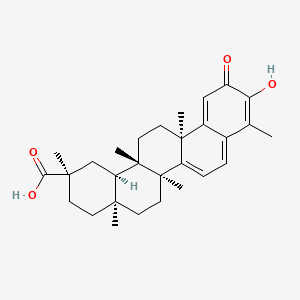
Overview
Celastrol is a naturally occurring triterpenoid compound isolated from Tripterygium wilfordii and studied as a bioactive therapeutic candidate in inflammation- and cancer-related disease models. In the recent literature provided, it is described as having anti-inflammatory, antioxidant, and antitumor properties, with particular interest in its ability to disrupt tumor redox homeostasis and modulate immune and stress-response pathways. These properties make celastrol relevant to conditions in which oxidative stress, immune escape, and aberrant cell survival signaling contribute to disease progression.
Across the studies summarized here, celastrol is being investigated as a pharmacologic modulator of pathways such as LKB1-AMPK-PD-L1/MYC proto-oncogene (MYC), NOX2-related oxidative injury, ferroptosis, and macrophage polarization. Its reported activity includes amplifying oxidative stress to promote apoptosis in tumor cells, interfering with immune escape in triple-negative breast cancer (TNBC), and mitigating inflammatory injury in ulcerative colitis and early diabetic kidney disease (DKD). It is also being explored as a lead structure for derivative synthesis in hepatic fibrosis research.
Recent Publications Summary
Recent studies have characterized celastrol as a potent therapeutic agent with anti-inflammatory and antioxidant properties, demonstrating efficacy across multiple disease models through distinct molecular mechanisms. Celastrol's therapeutic activity frequently involves modulation of ferroptosis, a regulated form of cell death dependent on iron dysregulation and lipid peroxidation. In rheumatoid arthritis, celastrol attenuated synovial inflammation and experimental arthritis by modulating PTGS2-associated ferroptosis resistance in fibroblast-like synoviocytes, reducing paw swelling, arthritis severity, synovial hyperplasia, inflammatory cell infiltration, and cartilage and bone destruction in collagen-induced arthritis rats 42525168Jul. Similarly, in early diabetic kidney disease, celastrol protected against renal tubular injury through modulation of NOX2 expression and ferroptosis pathways, reducing iron deposition and lipid peroxide accumulation 41861539Mar.
Celastrol has demonstrated promising activity in neurodegenerative and inflammatory bowel conditions. Using integrative multi-omics approaches, celastrol yielded cognitive and memory improvements in an Alzheimer's disease rat model, significantly reducing escape latency while altering transcriptomic, metabolomic, and gut microbiota profiles at doses of 0.7 and 2.8 mg/kg 42477465Jul. In ulcerative colitis, celastrol mitigates disease progression by modulating macrophage polarization, though its clinical application has been limited by poor aqueous solubility and lack of specific targeting 41740512Feb. Celastrol similarly addresses acute kidney injury by mitigating oxidative damage, inhibiting renal cell apoptosis, and reducing inflammatory responses in renal ischemia-reperfusion injury models 42301266Jun.
In cancer applications, celastrol exhibits dual mechanisms of direct tumor inhibition and immune modulation. In triple-negative breast cancer, celastrol inhibits proliferation and immune escape through the LKB1-AMPK-PD-L1/MYC signaling pathway, offering potential therapeutic targets for this aggressive cancer subtype 41966774Apr. A multimodal approach integrated celastrol into a thermosensitive hydrogel incorporating copper-doped Prussian blue nanoparticles, achieving approximately 84.9% tumor growth inhibition and extensive tumor necrosis when combined with near-infrared irradiation by amplifying oxidative stress through chemodynamic and photothermal mechanisms 42177922May.
To overcome celastrol's limited bioavailability and toxicity concerns, recent studies have developed advanced drug delivery platforms. macrophage membrane-camouflaged, ROS-responsive liposomal nanoplatforms successfully targeted inflamed renal tissues, enabling rapid local drug release in response to elevated reactive oxygen species and achieving superior improvements in renal function in acute kidney injury models 42301266Jun. macrophage-mimetic, glycyrrhizic acid-functionalized liposomes have similarly been engineered to enhance celastrol targeting in ulcerative colitis 41740512Feb. Chemical optimization through bromination of celastrol's C-ring has yielded improved derivatives with enhanced safety profiles; brominated derivative 5 demonstrated superior efficacy by suppressing NLRP3 inflammasome activation and inducing hepatic stellate cell apoptosis in CCl4-induced hepatic fibrosis models, while exhibiting no significant hepatotoxicity at effective doses 41844113Mar.
What Changes, What Holds
1. Celastrol’s anti-inflammatory profile now includes ferroptosis-linked protection in arthritis and diabetic kidney disease
REINFORCES These studies sharpen the baseline by tying celastrol’s anti-inflammatory and antioxidant actions to ferroptosis control in two additional inflammatory injury models, rather than replacing the established account. They fit the existing view that celastrol modulates oxidative stress and cell-death pathways, while extending the mechanistic detail to PTGS2-associated ferroptosis resistance in synoviocytes and NOX2-linked renal tubular injury 42525168Jul41861539Mar.
2. Celastrol’s therapeutic reach now clearly extends into neurodegeneration, but its bowel and kidney effects still fit the same stress-response framework
NEW DIRECTION Celastrol is being positioned beyond the baseline’s inflammation, cancer, and kidney-disease framing by showing cognitive benefit in an Alzheimer’s disease model, a role the Overview does not cover 42477465Jul. The ulcerative colitis and ischemia-reperfusion findings still reinforce the established anti-inflammatory, macrophage-modulating, and anti-apoptotic profile rather than displacing it 41740512Feb42301266Jun.
3. Celastrol now appears to suppress triple-negative breast cancer through immune escape control and can be amplified by engineered oxidative-stress delivery systems
REINFORCES The cancer work strengthens the baseline’s account of celastrol as an antitumor agent that disrupts immune escape and redox balance, especially in triple-negative breast cancer and oxidative-stress-driven tumor killing 41966774Apr42177922May. Nothing here overturns the established view; instead, the hydrogel platform shows how the same biology can be intensified for local tumor control.
4. Celastrol’s translational bottleneck is now more clearly formulation and toxicity, and brominated derivatives may be the more actionable lead for fibrosis
NEW DIRECTION These studies shift attention from celastrol’s pharmacology to how it must be delivered or modified, which the Overview only mentions in passing as lead-structure work for hepatic fibrosis 42301266Jun41740512Feb41844113Mar. The delivery platforms address poor solubility and targeting, while the brominated derivative suggests that optimized analogs may outperform the parent compound in fibrosis with less toxicity.
Overview update candidates: ferroptosis-linked anti-inflammatory activity in arthritis and early diabetic kidney disease; Alzheimer’s disease activity; continued support for macrophage-polarizing and renal-protective effects; none beyond further support for TNBC immune-escape inhibition and oxidative-stress amplification; advanced delivery systems for inflamed tissues; brominated celastrol derivatives for hepatic fibrosis.
celastrol
Background Contexts
In the literature, the biological baseline, pathological conditions, or disease models commonly surrounding celastrol are described as follows:
- reactive oxygen species (Chemical) — 2 papers: PMIDs 42301266, 41914238
- acute kidney injury (Disease) — 1 paper: PMIDs 42301266
- Anti-inflammatory Activity (Biological Process) — 1 paper: PMIDs 42525168
- cys (Gene) — 1 paper: PMIDs 41833828
- diabetic nephropathy (Disease) — 1 paper: PMIDs 41861539
- ferroptosis (Biological Process) — 1 paper: PMIDs 41861539
- inflammatory response (Biological Process) — 1 paper: PMIDs 42301266
- lack of specific targeting (Other) — 1 paper: PMIDs 41740512
- liver fibrosis (Disease) — 1 paper: PMIDs 41844113
- locally advanced or metastatic breast cancer (Disease) — 1 paper: PMIDs 42177922
- multiple myeloma (Disease) — 1 paper: PMIDs 41914238
- poor solubility (Other) — 1 paper: PMIDs 41740512
Methodologies & Technologies Used
Researchers utilize the following experimental methods, imaging platforms, computational models, or biological reagents to study celastrol:
- 4T1 tumor-bearing mice (Organism) — 1 paper: PMIDs 42177922
- A549 xenograft models (Cell Line) — 1 paper: PMIDs 41833828
- Aβ25-35 (Other) — 1 paper: PMIDs 42477465
- BGC-823 (Cell Line) — 1 paper: PMIDs 41833828
- Bioinformatic Screening (Technology) — 1 paper: PMIDs 42525168
- CEL thiazole derivatives (Chemical) — 1 paper: PMIDs 41833828
- Collagen-induced arthritis (Disease) — 1 paper: PMIDs 42525168
- copper-doped Prussian blue nanoparticles (Chemical) — 1 paper: PMIDs 42177922
- Cyclooxygenase 2 (COX-2) (Protein) — 1 paper: PMIDs 42525168
- D-galactose (Chemical) — 1 paper: PMIDs 42477465
- dithiothreitol (Chemical) — 1 paper: PMIDs 41833828
- drug delivery system (Therapy) — 1 paper: PMIDs 41740512
Molecular Interventions & Targets
The primary molecular pathways, regulatory genes, enzymes, or therapeutic agents actively targeted and manipulated in relation to celastrol include:
- Alzheimer's disease (Disease) — 1 paper: PMIDs 42477465
- AMPKα (Pathway) — 1 paper: PMIDs 41966774
- brominated derivatives (Therapy) — 1 paper: PMIDs 41844113
- compound 28 (Chemical) — 1 paper: PMIDs 41833828
- Cyclooxygenase 2 (COX-2) (Protein) — 1 paper: PMIDs 42525168
- cytochrome b-245 beta chain (Gene) — 1 paper: PMIDs 41861539
- ferroptosis resistance (Biological Process) — 1 paper: PMIDs 42525168
- hetrombopag (Therapy) — 1 paper: PMIDs 41914238
- liver stellate cell (Cellular Component) — 1 paper: PMIDs 41844113
- MYC proto-oncogene (MYC) (Protein) — 1 paper: PMIDs 41966774
- NLRP3 inflammasome (Protein) — 1 paper: PMIDs 41844113
- Nrf-2-SLC7A11-GSH pathway (Pathway) — 1 paper: PMIDs 42177922
Observed Outcomes & Phenotypes
The phenotypic changes, physiological endpoints, or clinical metrics observed and measured in connection with celastrol include:
- oxidative stress (Biological Process) — 2 papers: PMIDs 42301266, 42177922
- 16:0-22:6 PE (Chemical) — 1 paper: PMIDs 42477465
- 18:0-22:6 PC (Chemical) — 1 paper: PMIDs 42477465
- 309 differentially expressed genes (Gene) — 1 paper: PMIDs 42477465
- 96 differentially expressed metabolites (Chemical) — 1 paper: PMIDs 42477465
- anti-inflammatory effects (Biological Process) — 1 paper: PMIDs 42525168
- arthritis severity (Clinical Metric) — 1 paper: PMIDs 42525168
- Aβ1-42 (Other) — 1 paper: PMIDs 42477465
- Bone Destruction (Clinical Metric) — 1 paper: PMIDs 42525168
- Cartilage Destruction (Biological Process) — 1 paper: PMIDs 42525168
- CCl4-induced hepatic damage (Disease) — 1 paper: PMIDs 41844113
- Cellular Apoptosis (Biological Process) — 1 paper: PMIDs 41833828
General Takeaways & Clinical Potentials
The high-level concepts, clinical translations, and overarching conclusions proposed in the research surrounding celastrol are summarized below:
- brominated derivative of Celastrol (Therapy) — 1 paper: PMIDs 41844113
- cancer immunotherapy (Biological Process) — 1 paper: PMIDs 41833828
- celastrol's mechanistic role against early DKD (Other) — 1 paper: PMIDs 41861539
- cognitive and memory dysfunction (Biological Process) — 1 paper: PMIDs 42477465
- compound 28 (Chemical) — 1 paper: PMIDs 41833828
- Cyclooxygenase 2 (COX-2) (Protein) — 1 paper: PMIDs 42525168
- experimental arthritis (Disease) — 1 paper: PMIDs 42525168
- ferroptosis-mediated renal tubular injury (Biological Process) — 1 paper: PMIDs 41861539
- Ferroptosis-resistant Phenotype (Biological Process) — 1 paper: PMIDs 42525168
- hetrombopag (Therapy) — 1 paper: PMIDs 41914238
- intestinal microbiota (Cellular Component) — 1 paper: PMIDs 42477465
- multimodal breast cancer treatment (Other) — 1 paper: PMIDs 42177922