bisphenol A
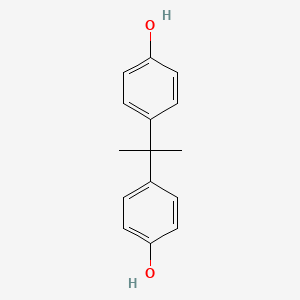
Overview
Bisphenol A (BPA; IUPAC name: 4,4'-(propane-2,2-diyl)diphenol; Wikidata: Q271980) is a synthetic organic compound belonging to the bisphenol chemical family. It was first synthesized in the 1890s and has since become one of the most extensively produced industrial chemicals globally, serving primarily as a monomer in the manufacture of polycarbonate (PC) plastics and epoxy resins. Its widespread use in food packaging, thermal paper, medical devices, and consumer goods has led to ubiquitous human exposure through ingestion, dermal contact, and inhalation of contaminated environmental media.
BPA is classified as an environmental endocrine-disrupting chemical (EDC) owing to its structural similarity to 17β-estradiol, which enables it to bind to and activate estrogen receptors, thereby interfering with hormonal signaling cascades. Beyond classical estrogenic activity, BPA has been shown to interact with a broad range of nuclear receptors and signaling proteins—including members of the STAT family and components of the PI3K/Akt signaling pathway—making its toxicological profile highly pleiotropic. At trace environmental concentrations, BPA can perturb gene expression, epigenetic regulation (notably via EZH2-mediated histone methylation), cell cycle control (implicating Cyclin-dependent kinase 1 (CDK1)), and immune homeostasis, with downstream associations spanning hepatocellular carcinoma, breast cancer, and systemic inflammatory diseases.
Recent Publications Summary
Recent studies have used multi-omics, network toxicology, and machine-learning-based analyses to map potential molecular mechanisms linking BPA exposure to disease. In gestational diabetes mellitus, an integrative bioinformatics workflow identified 34 overlapping BPA- and GDM-related genes enriched in insulin signaling, AMPK signaling, and inflammatory responses, with HSPA8, NR3C1, ITGB1, NOTCH2, and POU5F1 emerging as core diagnostic features validated using RT-qPCR, external GEO data, and single-cell RNA sequencing 42552472Aug. In hepatocellular carcinoma, intersecting BPA-related targets with HCC genes highlighted 15 overlapping genes involved in cell cycle regulation, p53 signaling, and viral carcinogenesis, while six hub genes, including MKI67, CCNA2, EZH2, CCNB1, CDK1, and BIRC5, showed high diagnostic performance in the computational framework 42118483May.
Other studies linked BPA to chronic inflammatory and metabolic injury phenotypes. In COPD, cross-sectional NHANES analysis and Mendelian randomization supported a positive association between BPA exposure and COPD risk, and network toxicology plus machine learning identified NQO1, HSPA5, and CXCL12 as hub targets; docking and molecular dynamics suggested the strongest binding affinity for NQO1, with single-cell transcriptomic analysis and in vitro validation supporting airway epithelial injury as a key mechanism 42489718Jul. In diabetic foot ulcers, BPA was associated with disruption of immune microenvironment and repair processes, with 51 common BPA-DFU targets enriched in inflammatory responses, extracellular matrix remodeling, angiogenesis, PI3K-Akt signaling, and MAPK signaling; BCL2, EGFR, and MMP9 were identified as core targets, and single-cell analysis localized their expression to B cells, macrophages, fibroblasts, and epithelial cells 42298305Jun.
BPA was also implicated in cancer-related oxidative and proliferative signaling in thyroid carcinoma. A combined in vitro and in vivo study reported BPA enrichment in tumor-bearing mice, alongside increased reactive oxygen species and lipid indices, reduced PTEN expression, and increased PI3K/AKT phosphorylation, consistent with enhanced proliferative and invasive phenotypes in papillary thyroid carcinoma cells 41985638Apr. The same study tested a curcumin-modified quercetin-loaded chitosan nanomicelle system, which restored PTEN levels, reduced PI3K/AKT activation, attenuated redox and lipid abnormalities, and promoted caspase-3-dependent apoptosis 41985638Apr.
In spinal cord injury, BPA was studied in a different context and was reported to have a protective effect rather than a harmful one. Using murine SCI models with integrated transcriptomic and metabolomic profiling, BPA treatment improved locomotor recovery and histopathological outcomes, while Ndufs1, Ndufa11, and Ndufb10 were identified as pivotal genes linked to oxidative phosphorylation and leukotriene B4 and prostaglandin B2 were highlighted as key metabolites associated with arachidonic acid metabolism 42201472May.
BPA has also been examined in prostate cancer exposure research and in analytical biosensing. In a Western China exposome case-control study, urinary concentrations of nine bisphenols, including BPA, were measured alongside phthalates and air pollutants to evaluate associations with localized prostate cancer and combined mixed exposures 42532568Jul. Separately, a universal ratiometric fluorescence biosensor was developed for ultrasensitive detection of endocrine-disrupting chemicals such as BPA, using aptamer recognition, a DNA walker, and an enzyme-nanozyme redox cascade for self-calibrated sensing 41604759Jan.
What Changes, What Holds
1. BPA-linked disease signatures now extend into gestational diabetes and hepatocellular carcinoma risk stratification
NEW DIRECTION Integrative omics points to BPA as part of a broader disease-network story rather than only an endocrine disruptor tied to receptor signaling and general carcinogenicity. In gestational diabetes, the signal centers on insulin, AMPK, and inflammatory pathways 42552472Aug. In hepatocellular carcinoma, the work sharpens the existing cancer association by converging on cell-cycle and p53-linked hubs, including EZH2 and CDK1 42118483May. These are still computationally driven associations, so they suggest mechanistic priorities more than settled causation.
2. BPA is now tied to chronic inflammatory and metabolic injury phenotypes in lung and wound disease
NEW DIRECTION Airway injury in COPD and impaired repair in diabetic foot ulcers broaden BPA’s relevance beyond the baseline’s cancer and immune-homeostasis framing, without contradicting it. The COPD findings support a toxicologic link to chronic pulmonary disease and point to epithelial stress responses 42489718Jul. The ulcer work adds dysregulated inflammation, matrix remodeling, angiogenesis, and PI3K-Akt/MAPK signaling in a poor-healing niche 42298305Jun. Together, they make BPA look less like a cancer-only exposome factor and more like a multi-organ injury modifier.
3. BPA can intensify PI3K/AKT-driven oxidative stress and invasion in papillary thyroid carcinoma
NEW DIRECTION BPA’s enhancement of redox injury, PTEN suppression, and PI3K/AKT activation extends the baseline’s pleiotropic signaling profile into thyroid cancer biology 41985638Apr. This does not overturn the established account; it strengthens the idea that BPA can feed into proliferative and survival pathways across tumor contexts. The same paragraph also reports a curcumin-modified quercetin-loaded chitosan nanomicelle that counteracted those effects, but that is a therapeutic proof-of-concept rather than a new baseline property of BPA itself.
4. BPA may have context-dependent benefit in spinal cord injury, opposing its usual toxic framing
NEW DIRECTION BPA treatment improving recovery in spinal cord injury is a notable directional departure from the established account, which emphasizes BPA as a harmful environmental EDC and carcinogenic cofactor 42201472May. The most important implication is not that BPA is generally protective, but that its biological effects may be injury- and context-specific, with oxidative phosphorylation and arachidonic-acid metabolism implicated here. Because this is a murine model with omics profiling, it is hypothesis-generating and needs replication before it can revise the broader safety narrative.
5. BPA research is expanding into mixed-exposure epidemiology and biosensor development without changing the toxicology baseline
METHOD Urinary bisphenol measurement within a broader exposome study adds a newer epidemiologic exposure-assessment context for prostate cancer research 42532568Jul, but it does not itself establish a new disease role for BPA beyond the baseline’s exposure-associated risk framing. The fluorescence biosensor work is more clearly methodological, improving ultra-sensitive detection of BPA and related endocrine disruptors 41604759Jan. Taken together, these papers mainly change how BPA is measured and studied, not what is already known about its biological effects.
Overview update candidates: spinal cord injury context-dependent benefit; broader disease-network associations for gestational diabetes; COPD; diabetic foot ulcers; papillary thyroid carcinoma; and prostate cancer exposure assessment.
bisphenol a
Background Contexts
In the literature, the biological baseline, pathological conditions, or disease models commonly surrounding bisphenol a are described as follows:
- 17β-estradiol (Chemical) — 1 paper: PMIDs 42217488
- agroecology (Other) — 1 paper: PMIDs 42217488
- BPA exposure (Chemical) — 1 paper: PMIDs 42552472
- chronic obstructive pulmonary disease (Disease) — 1 paper: PMIDs 42489718
- Diabetic Foot Wounds (Disease) — 1 paper: PMIDs 42298305
- Endocrine-disrupting chemicals (Chemical) — 1 paper: PMIDs 41604759
- gestational diabetes (Disease) — 1 paper: PMIDs 42552472
- liver cancer (Disease) — 1 paper: PMIDs 42118483
- metabolic alterations (Biological Process) — 1 paper: PMIDs 41985638
- metabolic dysfunction–associated steatotic liver disease (Disease) — 1 paper: PMIDs 42476233
- neuropsychiatric systemic lupus erythematosus (Disease) — 1 paper: PMIDs 42216358
- Nocardia (Organism) — 1 paper: PMIDs 42297994
Methodologies & Technologies Used
Researchers utilize the following experimental methods, imaging platforms, computational models, or biological reagents to study bisphenol a:
- differential expression analysis (Technology) — 2 papers: PMIDs 42216358, 42201343
- immune infiltration (Biological Process) — 2 papers: PMIDs 42552472, 42476233
- machine learning (Technology) — 2 papers: PMIDs 42552472, 42476233
- machine learning algorithms (Technology) — 2 papers: PMIDs 42216358, 42201343
- molecular docking (Technology) — 2 papers: PMIDs 42489718, 42476233
- molecular docking studies (Technology) — 2 papers: PMIDs 42216358, 42201343
- Molecular dynamics simulations (Technology) — 2 papers: PMIDs 42476233, 42201343
- reverse transcription-quantitative polymerase chain reaction (Clinical Metric) — 2 papers: PMIDs 42552472, 42216358
- single-cell RNA-seq (Technology) — 2 papers: PMIDs 42552472, 42476233
- Weighted Gene Co-Expression Network Analysis (Technology) — 2 papers: PMIDs 42476233, 42201343
- 16S rRNA gene (Gene) — 1 paper: PMIDs 42297994
- Acute urinary infection (Disease) — 1 paper: PMIDs 42532568
Molecular Interventions & Targets
The primary molecular pathways, regulatory genes, enzymes, or therapeutic agents actively targeted and manipulated in relation to bisphenol a include:
- 17β-estradiol (Chemical) — 1 paper: PMIDs 41604759
- abscisic acid (Chemical) — 1 paper: PMIDs 41962883
- adrenoceptor beta 2 (Gene) — 1 paper: PMIDs 42201343
- air pollutant (Other) — 1 paper: PMIDs 42532568
- alpha,alpha-trehalose (Chemical) — 1 paper: PMIDs 41962883
- aromatic hydrocarbons (Chemical) — 1 paper: PMIDs 42297994
- Baculoviral IAP repeat-containing protein 5 (BIRC5) (Protein) — 1 paper: PMIDs 42118483
- BCL2 apoptosis regulator (Protein) — 1 paper: PMIDs 42298305
- bisphenol Z (Chemical) — 1 paper: PMIDs 42532568
- C-X-C motif chemokine ligand 10 (CXCL10) (Protein) — 1 paper: PMIDs 42216358
- C-X-C motif chemokine ligand 12 (Protein) — 1 paper: PMIDs 42489718
- CCNA2 (Gene) — 1 paper: PMIDs 42118483
Observed Outcomes & Phenotypes
The phenotypic changes, physiological endpoints, or clinical metrics observed and measured in connection with bisphenol a include:
- PI3K/Akt signaling pathway (Pathway) — 2 papers: PMIDs 42298305, 42201343
- Protein-ligand binding affinity (Clinical Metric) — 2 papers: PMIDs 42216358, 42201343
- 17β-estradiol (Chemical) — 1 paper: PMIDs 42217488
- active ingredients (Other) — 1 paper: PMIDs 42297994
- AMPK pathway (Pathway) — 1 paper: PMIDs 42552472
- Ant Colony Optimization (Gene) — 1 paper: PMIDs 41962883
- apoptotic process (Biological Process) — 1 paper: PMIDs 41985638
- arachidonic acid metabolism pathway (Pathway) — 1 paper: PMIDs 42201472
- ATOH1 (Gene) — 1 paper: PMIDs 41962883
- ATP (Chemical) — 1 paper: PMIDs 42489718
- biosynthetic gene clusters (Gene) — 1 paper: PMIDs 42297994
- bisphenol Z (Chemical) — 1 paper: PMIDs 42532568
General Takeaways & Clinical Potentials
The high-level concepts, clinical translations, and overarching conclusions proposed in the research surrounding bisphenol a are summarized below:
- airway epithelial cell (Cellular Component) — 1 paper: PMIDs 42489718
- biomarker (Other) — 1 paper: PMIDs 42552472
- bioremediation (Other) — 1 paper: PMIDs 42297994
- BPA exposure (Chemical) — 1 paper: PMIDs 42118483
- clinical diagnosis and intervention (Other) — 1 paper: PMIDs 42201343
- clinical relevance (Other) — 1 paper: PMIDs 42216358
- Cyclin B1 (CCNB1) (Protein) — 1 paper: PMIDs 42118483
- disulfidptosis (Biological Process) — 1 paper: PMIDs 42201472
- Endocrine-disrupting chemicals (Chemical) — 1 paper: PMIDs 42532568
- Enhancer of Zeste Homolog 2 (EZH2) (Protein) — 1 paper: PMIDs 42118483
- estrogen pollution (Other) — 1 paper: PMIDs 42217488
- Immune-metabolic dysregulation (Biological Process) — 1 paper: PMIDs 42552472