azithromycin
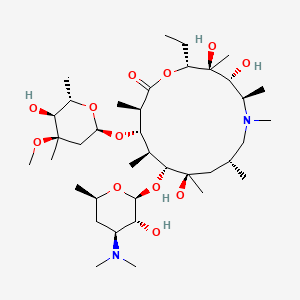
Overview
Azithromycin is a macrolide antibiotic used in the treatment of a range of bacterial infections. It acts by inhibiting bacterial protein synthesis through binding to the 50S ribosomal subunit, thereby suppressing bacterial growth. Clinically, it is valued for its broad antibacterial activity, convenient dosing, and tissue penetration, and it is also studied in formulations designed to improve local delivery and antimicrobial performance.
Beyond its established role as an anti-infective agent, azithromycin continues to be investigated in contexts involving respiratory infection, biofilm-associated disease, and drug resistance. Recent research has also examined its use alongside other therapies such as menadione, doxycycline, cefdinir, and intravenous immunoglobin, as well as in settings where cardiac safety concerns such as QT interval prolongation and comorbid conditions like arterial hypertension, heart failure, and obesity may be relevant to treatment decisions.
Recent Publications Summary
Recent studies have examined azithromycin in several therapeutic and formulation contexts. In chronic obstructive pulmonary disease, a target trial emulation compared new users of maintenance azithromycin versus roflumilast in routine clinical practice, using propensity score matching in a large claims database; the analysis included 7,550 matched pairs of patients aged over 40 years with active COPD 42556860Aug. Azithromycin was also evaluated in a planned multicentre pediatric trial protocol for Mycoplasma pneumoniae pneumonia, where it serves as the active comparator to doxycycline for suspected macrolide-resistant infection 42191206May.
Multiple publications focused on azithromycin as an antibacterial and antibiofilm agent in localized delivery systems. An inhalable nano-in-micro dry powder formulation combined azithromycin with the adjuvant menadione to enhance activity against pulmonary Pseudomonas aeruginosa biofilms under biorelevant aerosol exposure conditions, while assessing epithelial safety in Calu-3 cells 42097470May. In another biofilm-oriented approach, biodegradable PLGA micromotors encapsulating azithromycin and catalase were designed to penetrate biofilms, release azithromycin over several weeks, eradicate residual bacteria, and inhibit biofilm regrowth 42217811May. A separate oral regenerative platform incorporated azithromycin into chitosan composite films, with the formulations showing sustained zero-order drug release, preserved fibroblast and osteoblast viability, and antimicrobial and anti-inflammatory properties relevant to oral tissue repair 41833846Mar.
Other studies addressed azithromycin-related safety and resistance issues. In COVID-19 patients treated with lopinavir/ritonavir, researchers examined QT interval prolongation in relation to concomitant azithromycin and/or hydroxychloroquine use; QTc prolongation was reported in the cohort overall, but it was observed only in patients receiving lopinavir/ritonavir monotherapy with cardiovascular disease or hypomagnesemia, not in those receiving azithromycin or hydroxychloroquine alongside lopinavir/ritonavir 42067143May. A microbiology study in Rickettsia typhi reported that a repetitive nucleotide insertion in the rplV gene was associated with in vitro azithromycin resistance, addressing azithromycin treatment failure in murine typhus and the genetic basis of resistance 42044123Apr.
Across these reports, azithromycin was studied as a systemic COPD maintenance therapy, a comparator in pediatric pneumonia, a component of inhaled and polymer-based delivery platforms for pulmonary and oral infections, and a drug relevant to cardiac safety and antimicrobial resistance 42556860Aug42191206May42097470May42217811May41833846Mar42067143May42044123Apr.
What Changes, What Holds
1. Azithromycin is being used as an active comparator and maintenance option, not just a treatment standard
NEW DIRECTION Azithromycin here is positioned against roflumilast in routine COPD care and against doxycycline in suspected macrolide-resistant pediatric pneumonia, which extends the baseline beyond antibacterial use into comparative effectiveness and treatment selection. The COPD analysis does not overturn its established role, but it does suggest azithromycin is being considered as a long-term maintenance strategy in practice 42556860Aug42191206May.
2. Local delivery platforms are expanding azithromycin’s antibacterial and anti-biofilm use
REINFORCES Azithromycin in inhalable, micromotor, and chitosan-based systems strengthens the established account of broad antibacterial activity, tissue penetration, and formulation work aimed at improving local delivery and antimicrobial performance. The new studies add delivery sophistication and biofilm targeting, but they do not change the core understanding of the drug; they refine how that role may be implemented in pulmonary and oral settings 42097470May42217811May.
3. Cardiac risk assessment and resistance mechanisms remain active concerns for azithromycin
REINFORCES Azithromycin’s involvement in QT monitoring alongside lopinavir/ritonavir and the identification of a resistance-associated rplV insertion in Rickettsia typhi both sharpen issues already flagged in the baseline: cardiac safety concerns and antimicrobial resistance. The QT finding is narrower than a general toxicity warning, and the resistance report adds a molecular explanation for treatment failure without displacing azithromycin’s established anti-infective role 42067143May42044123Apr.
4. Azithromycin is now being studied across maintenance therapy, comparator use, delivery engineering, and safety rather than as a single-purpose antibiotic
NEW DIRECTION Across these reports, the baseline’s description of azithromycin as a broad-spectrum macrolide is left intact, but its research identity broadens into chronic COPD management, pediatric trial design, biofilm-directed formulation science, and safety/resistance surveillance. None of these findings contradict the overview; together they show a widening set of contexts in which azithromycin is being positioned and tested 42556860Aug42191206May42097470May42217811May41833846Mar42067143May42044123Apr.
Overview update candidates: azithromycin as an active comparator and possible maintenance therapy in COPD; expanded formulation strategies for biofilm-directed local delivery; QT-safety and resistance-mechanism findings.
azithromycin
Background Contexts
In the literature, the biological baseline, pathological conditions, or disease models commonly surrounding azithromycin are described as follows:
- angina pectoris (Disease) — 1 paper: PMIDs 42067143
- arterial hypertension (Disease) — 1 paper: PMIDs 42067143
- atovaquone (Therapy) — 1 paper: PMIDs 41932198
- Babesia microti (Organism) — 1 paper: PMIDs 41932198
- bacterial biofilms (Other) — 1 paper: PMIDs 42217811
- cardiovascular conditions (Disease) — 1 paper: PMIDs 42067143
- chronic obstructive pulmonary disease (Disease) — 1 paper: PMIDs 42556860
- clindamycin (Therapy) — 1 paper: PMIDs 41932198
- community-acquired pneumonia (Disease) — 1 paper: PMIDs 42191206
- COVID-19 (Disease) — 1 paper: PMIDs 42067143
- Cytochrome P450 3A4 (CYP3A4) (Protein) — 1 paper: PMIDs 41944476
- electrolyte imbalances (Disease) — 1 paper: PMIDs 42067143
Methodologies & Technologies Used
Researchers utilize the following experimental methods, imaging platforms, computational models, or biological reagents to study azithromycin:
- absorption, distribution, metabolism, excretion, and toxicity (ADMET) (Other) — 1 paper: PMIDs 41932198
- aerosol exposure models (Technology) — 1 paper: PMIDs 42097470
- Anti-Inflammatory Drugs Remodel the Tumor Immune Environment to Enhance Immune Checkpoint Blockade Efficacy (Therapy) — 1 paper: PMIDs 42054279
- antibiotic susceptibility testing (Technology) — 1 paper: PMIDs 42044123
- azithromycin-resistant (Disease) — 1 paper: PMIDs 42044123
- Calu-3 cells (Cell Line) — 1 paper: PMIDs 42097470
- cefdinir (Therapy) — 1 paper: PMIDs 42054279
- chitosan (Chemical) — 1 paper: PMIDs 41833846
- Cox proportional hazards model (Technology) — 1 paper: PMIDs 42556860
- cytotoxicity studies (Other) — 1 paper: PMIDs 42097470
- density functional theory (DFT) calculations (Technology) — 1 paper: PMIDs 41932198
- Design-of-experiments (DoE) model (Technology) — 1 paper: PMIDs 41833846
Molecular Interventions & Targets
The primary molecular pathways, regulatory genes, enzymes, or therapeutic agents actively targeted and manipulated in relation to azithromycin include:
- clarithromycin (Therapy) — 1 paper: PMIDs 41944476
- computed tomography (Other) — 1 paper: PMIDs 42217811
- doxycycline (Therapy) — 1 paper: PMIDs 42191206
- erythromycin (Chemical) — 1 paper: PMIDs 41944476
- hydroxychloroquine (Therapy) — 1 paper: PMIDs 42067143
- L-lactate dehydrogenase (Clinical Metric) — 1 paper: PMIDs 41932198
- lopinavir/ritonavir (Therapy) — 1 paper: PMIDs 42067143
- macrolides (Chemical) — 1 paper: PMIDs 41944476
- menadione (Therapy) — 1 paper: PMIDs 42097470
- Mycoplasma pneumoniae (Disease) — 1 paper: PMIDs 42054279
- QT-prolonging medications (Therapy) — 1 paper: PMIDs 42067143
- rplV gene (Gene) — 1 paper: PMIDs 42044123
Observed Outcomes & Phenotypes
The phenotypic changes, physiological endpoints, or clinical metrics observed and measured in connection with azithromycin include:
- 1.2 per Person Year (Clinical Metric) — 1 paper: PMIDs 42556860
- 10.6% of patients (Clinical Metric) — 1 paper: PMIDs 42067143
- 7550 Matched Pairs (Clinical Metric) — 1 paper: PMIDs 42556860
- adjusted odds ratio (Clinical Metric) — 1 paper: PMIDs 41944476
- aerodynamic properties (Other) — 1 paper: PMIDs 42097470
- antibiofilm efficacy (Clinical Metric) — 1 paper: PMIDs 42097470
- azithromycin treatment failure (Disease) — 1 paper: PMIDs 42044123
- bacterial survival rate (Clinical Metric) — 1 paper: PMIDs 42217811
- beneficial and safe (Clinical Metric) — 1 paper: PMIDs 42191206
- biofilm regrowth (Biological Process) — 1 paper: PMIDs 42217811
- Candida albicans (Organism) — 1 paper: PMIDs 41833846
- CAT activity retention rate (Clinical Metric) — 1 paper: PMIDs 42217811
General Takeaways & Clinical Potentials
The high-level concepts, clinical translations, and overarching conclusions proposed in the research surrounding azithromycin are summarized below:
- anti-parasitic drug (Therapy) — 1 paper: PMIDs 41932198
- Antibacterial and anti-inflammatory bioactivity (Biological Process) — 1 paper: PMIDs 41833846
- Biofilm Infections (Disease) — 1 paper: PMIDs 42217811
- careful monitoring of cardiac health (Other) — 1 paper: PMIDs 42067143
- clinical development (Other) — 1 paper: PMIDs 41932198
- CYP3A4 inhibitors (Other) — 1 paper: PMIDs 41944476
- disruption-sustained inhibition strategy (Other) — 1 paper: PMIDs 42217811
- effective aerosol delivery (Other) — 1 paper: PMIDs 42097470
- Hydration-triggered conformability (Other) — 1 paper: PMIDs 41833846
- Moderate or Severe COPD Exacerbation (Clinical Metric) — 1 paper: PMIDs 42556860
- Multidisciplinary Care (Therapy) — 1 paper: PMIDs 42054279
- Mycoplasma pneumoniae-associated SJS (Disease) — 1 paper: PMIDs 42054279